Need Counselling
Fashion Styling
 Job Pressure
Medium
 Academic Pressure
Medium
 Early Salary
1 L LPA - 2 L LPA
Mid Level Salary2.5 L LPA - 3.5 L LPA
Senior Salary9.5 L LPA - 11 L LPA
Table of Contents
- Fashion Styling Course Overview
- Life as a Fashion Stylist
- Types of Fashion Styling Courses
- Getting paid for creativity
- Required skills
- Fashion Styling Syllabus
- Paving the way
- Colleges helping you with the career
- Fashion Styling Career Options and Job Prospects
- Advantages and Disadvantages
- FAQs about Fashion Styling
Fashion Styling Course Overview
Ever wondered where your favorite celebrities got their breathtaking looks from? Fashion stylists are responsible for the hot and sexy looks of celebrities all over the world. It is a career path that many individuals are now taking up. Fashion styling is about everything the makeup, attire, hairstyle, and other factors that are required to complete a look. In this field, creativity is more important and vital than knowledge.
Life as a Fashion Stylist
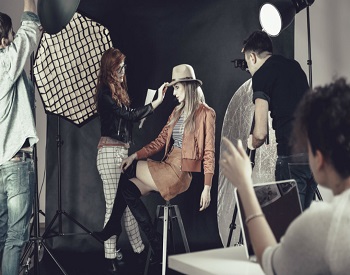
Imagine yourself as a fashion stylist. The first advantage that you have is it's not really necessary to work in cinemas and televisions because magazines also require fashion stylists. Even in the same field, you get to choose where you want to work. Getting into the office at 8.30 and stepping out at 7.30 in the evening is quite a normal thing in the current working scenarios. In your work hours, all that you need to do is get a brief from the editor in chief and work with your team to come up with trendy and fashionable looks for the subject. As a fashion stylist, you will have to work with not only your team but also the makeup team and the hairstylist's team along with designers, photographers, and other technicians. It is an exciting career indeed. But all that one needs, is a passion for fashion and a unique sense of creativity.
Types of Fashion Styling Courses
| Name of the Programme | Type of Programme | Duration |
| Fashion Styling Short Term Programme | Certificate | 24 weeks |
| Post Graduate Diploma in Fashion Styling | Post Graduate Diploma | 2 years |
| Certificate in Creative Fashion Styling | Certificate | 6 months |
| Fashion Styling and Forecasting | Diploma | 1 year |
| Diploma in Fashion Styling | Diploma | 9 & 6 months |
| Online Course in Fashion Styling | Diploma | 6 months |
Getting paid for creativity
As it is a career that requires a great deal of creativity, the salary is also very much profitable. If you decide to start working as an assistant for a renowned stylist, you will be rewarded with pay of Rs.10, 000 to Rs.15, 000 per month. With more experience, one can even demand hourly pays. Taking up a job in a fashion magazine will pay you anything between Rs25, 000 to Rs.1.5 lakhs per month.
Required skills
The only skill required is creativity. Apart from this, other skills that are necessary include time management, teamwork, tenacity, curiosity about trends, etc.
Fashion Styling Syllabus
Popular Subjects for Fashion Styling Course:
| Editorial Fashion Styling | History of Fashion |
| Art Direction | Fashion Blogging |
| Commercial Styling | Personal/ Celebrity Styling |
| Vintage Clothing & Street Style | Customization |
| Wardrobe Edit | Personal Shopping |
| Colour Analysis | Shoots |
| Industry Level Professional Photo | Professional Protocols & Etiquette |
| Fashion Feature Writing | Model Agencies & Bookings |
| Working With Public Relations | Art Direction |
| Historical Referencing in Fashion | Draping Technology |
| Visual Merchandising | Style Trunk |
Paving the way
Most of the stylists today are not equipped with a degree in fashion. Their sense of style is the only thing that helped them to excel. For the start, working with an established stylist is recommended as it gives you the required training and experience to start on your own.
Colleges helping you with the career
If you want a degree to go on with the career, you can pursue it either online or in institutes such as Institute Callegari, Mumbai; Pearl Academy of Fashion, Delhi; The National Institute of Fashion Technology.
Fashion Styling Career Options and Job Prospects
There is a wide range of job opportunities available for candidates with fashion styling diplomas and certifications.
Listed below are some of the most sorted and popular job roles for fashion stylists:
- Fashion Stylists
- Fashion Illustrators
- Fashion Merchandisers
- Creative Pattern Makers
- Trend Analyst
- Forecast Analyst
Some of the popular recruiters across the country who hire fashion stylists are:
- Vogue
- Snapdeal
- Myntra
- GAP
- H&M
- Marks & Spencer
- Amazon
- Tommy Hilfiger
- United Colors of Benetton
The average starting of a fashion stylist may range between Rs. 2 lakh to Rs. 3 lakh initially. With experience in the industry, it may go up to Rs. 6 lakh to Rs. 10 lakh per annum as well.
Advantages and Disadvantages
To start with, there aren't many disadvantages. However, while you are starting off on your own, you may face some lean periods and work stress.
The advantages are:
- Realizing a vision
- A high degree of subjectivity
- Traveling for the job
- Profitable if you can make your mark
Not everyone has a creative side and the ability to flaunt beautiful clothes. Hence fashion styling is not a career that everyone can succeed in. Moreover, in a country like India, where education and academics refer to major degrees like B.E and MBBS, fashion styling is a course that is out of the box. That's exactly what the career is all about- out of the box. Life gets exciting when you are a fashion stylist.
Frequently Asked Questions (FAQs)
What is Fashion Styling?
Fashion Styling is the art and practice of creatively putting together clothing, accessories and looks for editorial shoots, advertising campaigns, fashion shows, personal styling and visual story‑telling. Stylists work behind the scenes to shape how fashion is presented visually.What does a Fashion Stylist actually do?
A fashion stylist selects wardrobes, accessories, colours and themes for models, celebrities or clients, collaborates with photographers and designers, and creates cohesive looks for photoshoots, runway shows, media campaigns or personal events.What will I learn in a Fashion Styling course?
Students typically learn trend analysis, colour and silhouette theory, mood‑boarding and concept creation, wardrobe curation, shoot production basics, editorial and commercial styling techniques — blending creative and practical skills.What are the eligibility requirements for this course?
Many certificate or diploma Fashion Styling courses require at least 10+2 (senior secondary) education from a recognised board. Some advanced or degree‑level programmes may have additional criteria.How long do Fashion Styling programmes usually take?
Fashion Styling courses vary in length — short‑term certificate courses can be around a few weeks to six months, while more comprehensive diplomas or degrees may take one year or longer.What skills will I develop in this programme?
You’ll build creative direction and visual storytelling skills, wardrobe planning, trend forecasting, communication, teamwork and on‑set coordination — all essential for working with clients, photographers and brands.What career options are available after studying Fashion Styling?
Graduates can work as Editorial Stylist, Personal Stylist, Celebrity Stylist, Commercial/Advertising Stylist, Wardrobe Consultant, Visual Merchandiser or Fashion Content Creator. Freelancing and entrepreneurial opportunities are also common.Do I need a fashion degree to become a stylist?
A formal degree helps but isn’t strictly mandatory. Many stylists build careers through short courses, practical experience, portfolios and networking — though structured education gives a competitive edge.What industries hire Fashion Stylists?
Fashion Stylists are hired by magazines, advertising agencies, fashion brands, media houses, e‑commerce companies, film and TV productions, event planners and personal clients.
10. What is the future scope of a career in Fashion Styling?
With the explosion of digital content, social media fashion trends, e‑commerce branding and influencer culture, demand for creative visual storytellers and stylists continues to evolve, offering versatile opportunities.
Other Popular Courses
Applications for Admissions are open
 Kalka Group of InstitutionsMeerut
 Atria UniversityBangalore
 ITS Dental College, Greater NoidaGreater Noida
 Sunder Deep Group of InstitutionsGhaziabad
 Centurion University of Technology and Management, BhubaneswarBhubaneswar
 Greater Noida Institute of TechnologyGreater Noida
 JK Business School GurugramGurgaon
 Gokul Global UniversitySiddhpur
 Acharya Bangalore Business SchoolBangalore
 GD Goenka University, GurgaonGurgaon
 Manav Rachna University, FaridabadFaridabad
 IILM University, GurugramGurgaon
 Chandigarh University OnlineMohali
 Apeejay Stya UniversitySohna
 Pimpri Chinchwad UniversityPune
 Vidya Siri College of PharmacyBangalore
 Nims UniversityJaipur
 Presidency UniversityBangalore
 Amity University, GurugramGurgaon
 Guru Nanak Dev Dental College & Research InstitutePatiala
 DBS Global UniversityDehradun
 Saraswati Group of Colleges, MohaliMohali
 Somnath Goel Paramedical InstituteYamunanagar
 Om Sterling Global UniversityHisar
 Ajeenkya DY Patil UniversityPune
 Guru Kashi UniversityBathinda
 Rai Technology UniversityBangalore
 HRIT UniversityGhaziabad
 Institute of Management StudiesNoida
 I.T.S Dental college, Murad NagarGhaziabad