Need Counselling
B.Tech Electronics & Media Technology
 Job Pressure
Medium
 Academic Pressure
Medium
 Early Salary
1.8 LPA LPA - 3 LPA LPA
Mid Level Salary3.2 LPA LPA - 4.8 LPA LPA
Senior Salary6 LPA LPA - 17 LPA LPA
Table of Contents
- B.Tech Electronics and Media Technology Course Highlights
- About B.Tech in Electronics & Media Technology
- Purpose of B.Tech in Electronics & Media Technology
- B.Tech in Electronics & Media Technology Eligibility
- B.Tech Electronics and Media Technology Syllabus
- How to apply for B.Tech in Electronics Media Technology
- B.Tech in Electronics Media Technology Scope (Job Types)
- Top Recruiting Companies
- B.Tech in Electronics Media Technology Salary
B.Tech Electronics and Media Technology Course Highlights
| Full-Form | Bachelor of Technology in Electronics and Media Technology |
| Course Level | Undergraduate |
| Duration | 4 years |
| Examination Type | JEE Main/ JEE Advanced/ KEAM etc. |
| Eligibility Criteria | Passed Class 12 or equivalent from a recognized board |
| Admission Process | Merit-Based |
| Average Annual Salary | INR 3,00,000 to 6,00,000 |
| Average Annual Fees | INR 30,000 to 1,00,000 |
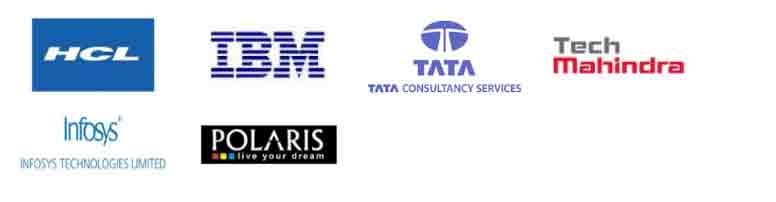
| Top Recruiting Companies | HCL Technologies, Infosys, Cognizant, Wipro, Accenture, Viacom 18 etc. |
| Job Positions | Technical Director, Software Analyst, Communication Designer, Software Engineer, Digital Marketing Executive, Service Engineer, Video and Sound Director, Digital Marketing Executive etc. |
About B.Tech in Electronics & Media Technology
The B.Tech in Electronics and Media Technology is an undergraduate, four-year program, which offers an education with a blend of knowledge in media skills and engineering. Very few Institutes or Universities offer this course at present.
The course provides complete knowledge with regard to audio and visual processes integrated with engineering techniques. The students not only get knowledge about professional media skills but also get to know about various technical issues behind the same. After successful completion of this course, graduates can make their career with branded media companies as electronics and communication consultants or engineers. They can also opt for research or higher studies in the field of their interest.
The fee structure for this undergraduate program in Electronics and Media Technology is approximately INR 5 lakhs.
Purpose of B.Tech in Electronics & Media Technology
The undergraduate program in Electronics and Media Technology enables a student to handle their responsibilities in their respective field efficiently and become sound professionals. Nowadays, electronic media is at its peak, and students after successful completion of their course, make a great career in this field. Various job avenues in the field of video production, sound designing, media electronics, computing technologies, etc are awaiting deserving candidates. There is no denying the fact that student gets a fair knowledge about technical skills in the field of electronics and media technology along with creative aesthetics through this course.
B.Tech in Electronics & Media Technology Eligibility
In order to apply for this course, a student must possess 50% marks in aggregate in Physics, Chemistry, and Math in their higher secondary examination.
B.Tech Electronics and Media Technology Syllabus
| Semester I | Semester II |
|---|---|
| Applied Physics | Video Production |
| English | Programming in C |
| Applied Chemistry | Audio Studio Production |
| Mathematics | Audio & Video Technology |
| Semester III | Semester IV |
| Outside Broadcasting | Video Codes and Standards |
| Radio Production | Media Law and Ethics |
| Audio Post Production | Advanced Photography |
| Media Electronics | Sound Design |
| Semester V | Semester VI |
| Audio Systems | Light and Sound |
| Six Core Units | Video Systems |
| Media Formats | Electronic Applications |
| Digital Audio | Media Computing |
| Semester VII | Semester VIII |
| Film and Video Technology | Project |
| Three Core units and Two option Units | Broadcast Systems Engineering |
How to apply for B.Tech in Electronics Media Technology
Students who have applied for this course need to undergo an entrance examination conducted by the University, though the selection is based purely on a merit basis. With the advent of the internet, it has really become easier for a student to enroll for the entrance test online.
B.Tech in Electronics Media Technology Scope (Job Types)
1) Private Sector Career options after B.Tech in Electronics Media Technology
- Media Planning Manager
- Media Relations Manager
- Media Buying Manager
- Electronic Design Engineer
- Technical Head Service Engineer
- Software Analyst Field Test Engineer
- Network Planning Engineer
- Research Analyst
2) Private Sector Employment areas after B.Tech in Electronics Media Technology
- Electronics and Communications
- Consultant Digital Marketing
- Organizations
- Visual Communication Designing Organizations
- Service Management
- Public Relation Management Companies
3) Public Sector Employment areas after B.Tech in Electronics Media Technology
- Ministry of Culture
- Ministry of Information and Broadcasting
Top Recruiting Companies
B.Tech in Electronics Media Technology Salary
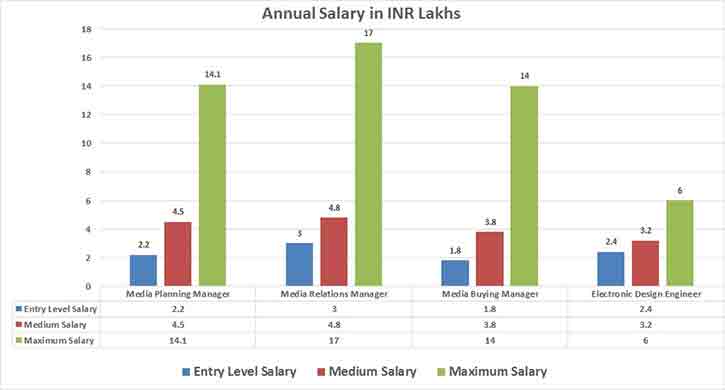
| Bachelor of Technology [B.Tech] (Electronics Media Technology) | Entry Level Salary (LPA) | Medium Salary (LPA) | Maximum Salary (LPA) |
|---|---|---|---|
| Media Planning Manager | 2.2 | 4.5 | 14.1 |
| Media Relations Manager | 3 | 4.8 | 17 |
| Media Buying Manager | 1.8 | 3.8 | 14 |
| Electronic Design Engineer | 2.4 | 3.2 | 6 |
Frequently Asked Questions (FAQs) 2. Who can apply for this course? 3. How long does the course last? 4. What subjects are studied in this programme? 5. How do admissions work for this course? 6. What skills will I gain from this degree? 7. What career options are available after this degree? 8. Which industries hire graduates of this programme? 9. What is the average starting salary after this course? 10. Is B.Tech in Electronics & Media Technology a good career choice?
1. What is B.Tech in Electronics & Media Technology?
B.Tech in Electronics & Media Technology is a 4‑year undergraduate engineering programme that blends electronics engineering with media and communication technologies, teaching students how to work with modern electronic systems and digital media platforms.
Students who have completed Class 12 (10+2) with Physics, Chemistry, and Mathematics (PCM) and achieved at least 50% marks from a recognised board are eligible to apply.
The programme lasts 4 years, typically divided into eight semesters of theory, practical labs, and project work.
Students study a mix of electronics fundamentals, digital signal processing, communication systems, media production (audio/video), radio and broadcast technology, and media laws, along with hands‑on training.
Admissions are generally based on entrance exam scores like JEE Main, JEE Advanced, BITSAT, VITEEE, SRMJEEE or state‑level engineering entrance exams, plus counselling.
You will develop skills in electronics systems design, media technology integration, broadcast engineering, audio/video processing, embedded systems, communication technologies, and project development.
Graduates can work as Broadcast Engineer, Media Systems Engineer, Signal Processing Engineer, Embedded Systems Developer, IoT Solutions Engineer, Hardware Design Engineer, Technical Support Engineer, or Telecom Product Manager.
Jobs are available in telecom and communications companies, broadcast and media houses, electronics firms, digital media companies, IT and networking organisations, and consumer electronics industries.
Starting salaries for fresh graduates are typically around ₹4–8 lakh per year, and experienced professionals in media or advanced technology roles can earn higher packages, sometimes up to ₹12+ lakh.
Yes — it’s a promising choice if you enjoy electronics, communication systems, digital media, broadcast technologies, and innovation, as demand is growing in sectors like media, telecom, consumer tech, and content delivery networks.
Other Popular Courses
Applications for Admissions are open
 Swami Devi Dyal Hospital and Dental CollegePanchkula
 Chandigarh University OnlineMohali
 Bennett University, Greater NoidaGreater Noida
 UNITEDWORLD INSTITUTE OF DESIGNAhmedabad
 Om Sterling Global UniversityHisar
 Bhagwant Institute of TechnologyMuzaffarnagar
 IILM University, Greater NoidaGreater Noida
 Greater Noida Institute of TechnologyGreater Noida
 Guru Kashi UniversityBathinda
 Shoolini UniversitySolan
 GNIOT Institute of Management Studies (GIMS)Greater Noida
 Rai Technology UniversityBangalore
 Manav Rachna University, FaridabadFaridabad
 Manav Rachna International Institute Of Research And StudiesFaridabad
 Amity University, GurugramGurgaon
 Harmony Ayurvedic Medical College & HospitalFirozpur
 Solan Homoeopathic Medical College & HospitalSolan
 Kalka Group of InstitutionsMeerut
 Apeejay Stya UniversitySohna
 Kalka Dental collegeMeerut
 Nims UniversityJaipur
 Somnath Goel Paramedical InstituteYamunanagar
 Vidya Siri College of PharmacyBangalore
 GD Goenka University, GurgaonGurgaon
 Gokul Global UniversitySiddhpur
 MERI CollegeNew Delhi
 Institute of Management StudiesNoida
 HRIT UniversityGhaziabad
 I.T.S Engineering CollegeGreater Noida
 SDGI Global UniversityGhaziabad