Need Counselling

MBA Health Care Administration
 Job Pressure
Medium
 Academic Pressure
Medium
 Early Salary
3.3 LPA - 4.7 LPA
Mid Level Salary5.3 LPA - 6.8 LPA
Senior Salary11.4 LPA - 13.2 LPA
Table of Contents
- MBA Health care Administration Course Highlights
- About MBA in Health Care Administration Course
- Why MBA in Health Care Administration?
- MBA in Health Care Administration Eligibility
- MBA Healthcare Administration Syllabus
- MBA in Health Care Administration Career Options
- MBA in Health Care Administration Scope (Job Types)
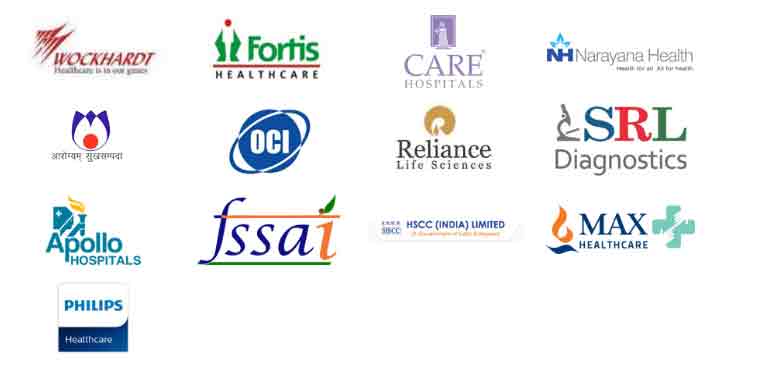
- Top Recruiting Companies
- MBA in Health Care Administration Salary
- Watch the video
MBA Health care Administration Course Highlights
| Duration | 2 years |
| Course level | Postgraduate |
| Examination Type | Semester |
| Eligibility | Bachelor’s degree in any discipline with 50% aggregate marks |
| Admission process | Entrance exam conducted by colleges, GD & PI |
| Entrance Exams | CAT, MAT, XAT,GMAT, CMAT etc. |
| Course Fee | INR 2 to 10 LPA |
| Average salary | INR 5-12 LPA |
| Top Recruiting Companies | Cipla, Apollo Life, Wipro GE Healthcare, Cadila Healthcare, etc |
| Job Positions | Hospital Administrator, Healthcare Manager, Hospital CFO & CEO, Pharmaceutical Production Manager, Medical Practice Manager |
About MBA in Health Care Administration Course
MBA with a specialization in Healthcare Administration is a post graduate degree course which is offered at the university level. It generally requires two years to complete when done on a regular basis. The duration of the course may vary when done through distance learning.
This course is designed to provide students advanced business training in healthcare management.
Why MBA in Health Care Administration?
MBA in Healthcare Administration introduces students to the advanced level of management skills required to organize and resolve complex healthcare systems. Students who are willing to pursue their career in this field can opt for this course.
It develops their analytical and research skills. It also improves their critical thinking ability.
MBA in Health Care Administration Eligibility
- Students must have completed their Bachelor’s degree or any equivalent from a recognized university.
- They must have scored a minimum of 55% aggregate. Some of the colleges hold their own eligibility test for MBA applicants whereas a common entrance test is also held at the national level in the performance of which students are admitted to colleges.
MBA Healthcare Administration Syllabus
| Semester 1 | Semester 2 |
|---|---|
| Fundamentals of Communication | Cost Accounting |
| Principle of management | Strategic Management |
| Managerial Economics | Innovation Management |
| Marketing Management | Quantitative Techniques |
| Human Resource Management | The Integrative Manager |
| Financial Accounting | Interview Preparation |
| Semester 3 | Semester 4 |
| Essentials of Healthcare Administration | HR in Hospitals |
| Planning & Designing of Healthcare Facilities | Material Management |
| Hospital Operation | Legal Aspects of Healthcare |
| Customer-Centric Organization (CCO) | Revenue Cycle Management in Healthcare |
| Quality Management in Hospitals | Projects/Seminars/Case Studies |
| Projects/Seminars/Case Studies | Healthcare Equipment Management |
MBA in Health Care Administration Career Options
There are many organizations where the graduates are preferred options such as Public Health Organizations, Medical Tourism Companies, Health Insurance Companies, Wellness Centers, Social Enterprises in Health, NRHM etc.
MBA in Health Care Administration Scope (Job Types)
1) Private Sector Career options after MBA in Health Care Administration
- Hospital Consultant
- Health Administrator
- Business Development Manager
- Marketing Manager
- Service Manager
- Operation Manager
- Customer Relationship Manager
- Chief Nursing Officer
- Ambulatory Clinic Management
Apply Now Get More Information
2) Private Sector Employment areas after MBA in Health Care Administration
- Hospitals
- NGOs
- Healthcare marketing industries
- Healthcare diagnostic chains
- Rehabilitation centre
3) Public Sector Employment areas after MBA in Health Care Administration
- Government Healthcare Projects
- Ministry of Health and Family Welfare
Top Recruiting Companies
MBA in Health Care Administration Salary
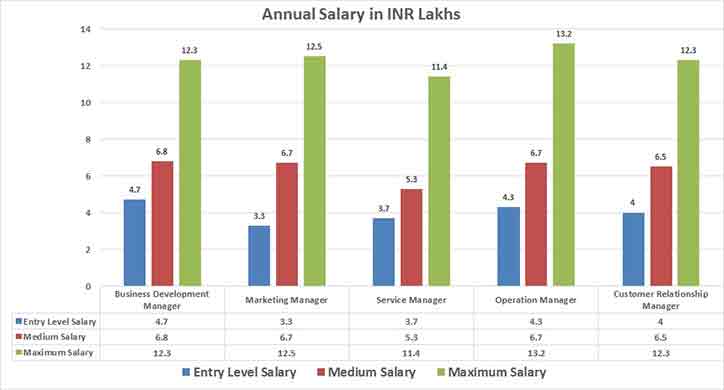
| Master of Business Administration [MBA] (Health Care Administration) | Entry Level Salary (LPA) | Medium Salary (LPA) | Maximum Salary (LPA) |
|---|---|---|---|
| Business Development Manager | 4.7 | 6.8 | 12.3 |
| Marketing Manager | 3.3 | 6.7 | 12.5 |
| Service Manager | 3.7 | 5.3 | 11.4 |
| Operation Manager | 4.3 | 6.7 | 13.2 |
| Customer Relationship Manager | 4 | 6.5 | 12.3 |
Frequently Asked Questions (FAQs)
1. What is an MBA in Health Care Administration?
MBA in Health Care Administration is a two-year postgraduate programme that combines advanced management skills with healthcare system insights to prepare students for leadership roles in hospitals, healthcare organisations, clinics and health-related services.
2. Who is eligible to apply for this course?
Candidates must hold a bachelor’s degree in any discipline from a recognised university with a minimum required aggregate (often around 50 %). Admission may be through merit or entrance exams such as CAT, MAT, XAT, CMAT and others, along with group discussion and interview rounds in some institutes.
3. What subjects are included in the MBA in Health Care Administration syllabus?
The curriculum blends core business management subjects with healthcare-specific topics such as hospital operations, healthcare finance, quality management, hospital planning, legal aspects of healthcare, human resource management, customer-centric services and material management.
4. What skills will I develop during this programme?
Students develop leadership, strategic planning, healthcare operations management, financial analysis, organisational behaviour, communication, decision-making and problem-solving skills tailored to the health services sector.
5. Is work experience required to join this MBA?
Work experience is not mandatory for most regular MBA in Health Care Administration programmes, although some executive or specialised formats may prefer or require relevant professional experience.
6. What career opportunities are available after completing this degree?
Graduates can pursue roles such as Hospital Administrator, Healthcare Manager, Operations Manager, Quality Assurance Executive, Medical Practice Manager, Healthcare Consultant, Clinic Manager and Health Policy Analyst in hospitals, diagnostic centres, clinics, NGOs, insurance and public health organisations.
7. Which industries hire MBA Health Care Administration graduates?
This MBA opens opportunities in multi-speciality hospitals, healthcare chains, wellness centres, medical tourism companies, health insurance firms, government health departments and healthcare consultancies.
8. Are internships or practical experiences part of the programme?
Many colleges include internships, industry projects, case studies and fieldwork to give students practical exposure to real-world healthcare challenges and systems, enhancing their employability.
9. Can I pursue higher studies after this MBA?
Yes. Graduates can opt for specialised master’s degrees, doctoral research, or professional certifications in areas such as hospital management, public health policy, healthcare analytics and health services research.
10. What is the scope and future growth for professionals in health care administration?
With expanding healthcare services, increased hospitalisation needs, digital health technologies and growing demand for efficient health systems, professionals trained in both management and health administration are increasingly in demand for strategic leadership and operational roles.
Watch the video
MBA in Health Care Administration full details in Hindi || Top Colleges, Job, Salary, Scope
Other Popular Courses
Applications for Admissions are open
 Himachal Institute of Dental Sciences, SirmaurSirmaur
 Bhagwant Institute of TechnologyMuzaffarnagar
 Chandigarh University OnlineMohali
 Bhojia Dental College and HospitalSolan
 Institute of Management StudiesNoida
 Acharya Bangalore Business SchoolBangalore
 GNIOT Institute of Management Studies (GIMS)Greater Noida
 Karnavati UniversityGandhinagar
 Guru Nanak Dev Dental College & Research InstitutePatiala
 Amity University, MohaliMohali
 I.T.S College of Health and Wellness Sciences, Greater NoidaGreater Noida
 Manav Rachna International Institute Of Research And StudiesFaridabad
 Sri Sukhmani Institute of ManagementNew Delhi
 Sunder Deep Group of InstitutionsGhaziabad
 I.T.S Dental college, Murad NagarGhaziabad
 Mai Bhago Ayurvedic Medical CollegeFirozpur
 JK Business School GurugramGurgaon
 NIIT UniversityAlwar
 Desh Bhagat UniversityFatehgarh Sahib
 Nims UniversityJaipur
 ATLAS SkillTech UniversityMumbai
 Chanakya UniversityBangalore
 Gian Sagar medical College & HospitalPatiala
 Swami Devi Dyal Hospital and Dental CollegePanchkula
 SRM University - APGuntur
 Hierank Business SchoolNoida
 MERI CollegeNew Delhi
 IILM University, GurugramGurgaon
 Rai Technology UniversityBangalore
 Apeejay Stya UniversitySohna