Need Counselling

MBA IT
 Job Pressure
Medium
 Academic Pressure
Medium
 Early Salary
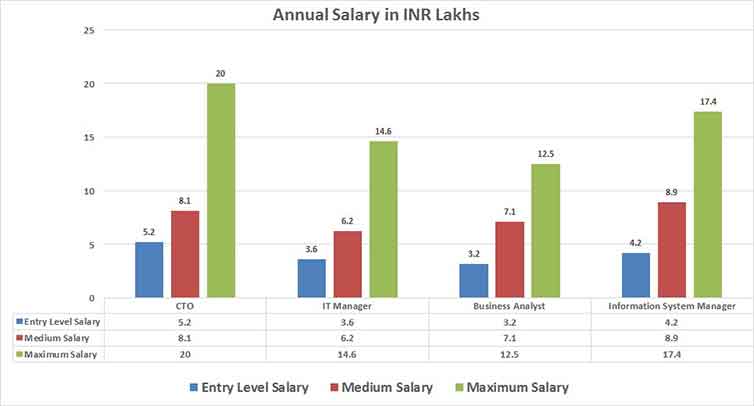
3.2 LPA - 5.2 LPA
Mid Level Salary6.2 LPA - 8.9 LPA
Senior Salary12.5 LPA - 20 LPA
Table of Contents
- MBA IT Course Highlights
- About MBA in Information Technology Course
- Why MBA in Information Technology?
- MBA in Information Technology Eligibility
- MBA IT Syllabus
- MBA in Information Technology Career Options
- MBA in Information Technology Scope (Job Types)
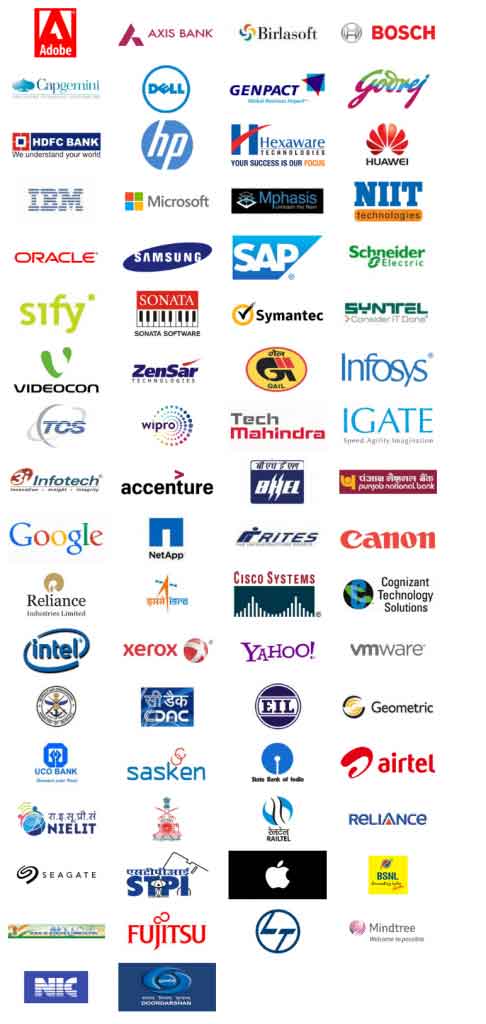
- Top Recruiting Companies
- MBA in Information Technology Salary
- Watch the video
MBA IT Course Highlights
| Duration | 2 years (4 semesters or 6 trimesters) |
| Course Name | MBA IT |
| Eligibility | Graduation in any discipline |
| Admission Process | Entrance test+GD+PI |
| Top Entrance Exams | CAT, XAT, NMAT, CMAT, SNAP, MAT, etc. |
| Average Course Fee | INR 12-15 Lakhs |
| Average Salary after the course | INR 10,00,000 |
| Top Recruiting companies | Google, Amazon, Microsoft, Facebook, Accenture, IBM etc. |
About MBA in Information Technology Course
MBA with a specialization in Information Technology is a postgraduate degree course. It is offered in many universities in India. The course generally requires two years to complete when done on a regular basis. Students can pursue this course through distance learning however the duration of the course can vary in this case.
The course is designed to provide students the management skills needed in IT field.
Why MBA in Information Technology?
MBA in IT focuses on the study of data modeling and concepts of technology. It helps students learn strategies to incorporate technology resources in the company by analyzing the benefits and needs of employees.
MBA in Information Technology Eligibility
- Students applying for this course must have a Bachelor’s degree or any equivalent from a recognized university.
- They must have scored a minimum of 55% aggregate. There is an entrance exam for MBA applicants in the performance of which students are admitted.
- Some of the colleges hold their own eligibility test.
MBA IT Syllabus
| Semester I | Semester II |
|---|---|
| Quantitative Methods | Management Science |
| Organizational Behaviour | Organization Effectiveness and Change |
| Managerial Economics | Economic Environment of Business |
| Financial Accounting | Financial Management |
| Marketing Management | Management Accounting |
| Human Resource Management | Operation Management |
| Business Communication | Marketing Research |
| Information Technology Management | Management of Information System |
| Semester III | Semester IV |
| Business Ethics & Corporate Social Responsibility | Project Study |
| Legal Environment of Business | Strategic Management |
| Strategic Analysis | International Business Environment |
| Elective Course | Elective Course |
MBA in Information Technology Career Options
Products Manager, IT Manager, IT Consultant, Data Processing Manager, Business Development Manager, Analytics Manager, Business Analyst, Database Administrators.
MBA in Information Technology Scope (Job Types)
1) Private Sector Career options after MBA in Information Technology
- CTOs (Chief Technology Officers)
- CIOs (Chief Information Officers)
- Information Technology Directors
- Information System Managers
- Project Manager -IT Software
- Program Manager
- Corporate Strategy Manager
2) Private Sector Employment areas after MBA in Information Technology
- IT Governance
- IT Financial Management
- IT Service Management
- IT Configuration management
3) Public Sector Employment areas after MBA in Information Technology
- Ministry of Defence
- Ministry of Communications and Information Technology
- Ministry of Information and Broadcasting
- Ministry of Railways
Apply Now Get More Information
Top Recruiting Companies
MBA in Information Technology Salary
| Master of Business Administration [MBA] (Information Technology) | Entry Level Salary (LPA) | Medium Salary (LPA) | Maximum Salary (LPA) |
|---|---|---|---|
| CTO | 5.2 | 8.1 | 20 |
| IT Manager | 3.6 | 6.2 | 14.6 |
| Business Analyst | 3.2 | 7.1 | 12.5 |
| Information System Manager | 4.2 | 8.9 | 17.4 |
Frequently Asked Questions (FAQs)
What is MBA in Information Technology (MBA IT)? Who is eligible to apply for this course? What subjects are typically included in the MBA IT curriculum? What skills will I develop in this programme? Is prior IT or coding experience required for MBA IT? Will I get practical experience during the course? What career opportunities are available after MBA in IT? Which industries hire MBA IT graduates? Can I pursue higher education after this MBA?
10. What is the future scope for MBA IT graduates?
MBA in Information Technology is a two-year postgraduate programme that blends advanced business management training with specialised learning in IT systems, digital strategy, project management, cybersecurity, IT consulting and technology-driven business decision-making.
To pursue MBA IT, you generally need a bachelor’s degree from a recognised university with a minimum aggregate (often around 50 %). Many institutes also consider scores in management entrance exams such as CAT, MAT, XAT, GMAT or CMAT during admissions.
Students study a mix of core business subjects (like finance, marketing and strategic management) and IT-focused topics such as IT systems management, database systems, e-business, software project management, digital transformation, cybersecurity, data analytics and business intelligence.
This MBA helps you build leadership, strategic IT planning, technology management, data analysis, project coordination, problem-solving and digital business strategy skills that are valuable across sectors.
No — formal programming background is not mandatory. The focus is on managing technology in business contexts rather than deep technical coding, making the programme suitable for students from diverse undergraduate streams as long as they are willing to learn digital concepts.
Many colleges include internships, industry projects, case studies and hands-on assignments to help students apply IT management concepts to real-world business and technology challenges.
Graduates can pursue roles such as IT Manager, IT Project Manager, Business Analyst, IT Consultant, Systems Analyst, Digital Transformation Specialist, Technology Strategy Lead and Cybersecurity Manager in organisations across industries.
Professionals with this degree are in demand in information technology firms, consulting companies, banks and financial services, healthcare, retail, e-commerce, manufacturing and government technology teams that rely on strategic use of IT.
Yes. Many students choose specialised master’s degrees, executive courses, professional certifications (in project management, cybersecurity, cloud computing) or doctoral research to deepen their knowledge and advance their careers.
With rapid digitisation across industries, the demand for tech-savvy managers who can bridge business goals and technology solutions continues to grow. Roles such as IT leadership, strategy, digital transformation and business analytics are expected to expand.
Watch the video
MBA in IT, MBA in Information Technology Eligibility, Admission, Fee, Scope
Other Popular Courses
Applications for Admissions are open
 ITS Dental College, Greater NoidaGreater Noida
 Swami Devi Dyal Hospital and Dental CollegePanchkula
 Sri Sukhmani Institute of ManagementNew Delhi
 Amity University, MohaliMohali
 JK Business School GurugramGurgaon
 Bhojia Dental College and HospitalSolan
 Atria UniversityBangalore
 City College JayanagarBengaluru
 Vidya Siri College of PharmacyBangalore
 NIIT UniversityAlwar
 Chanakya UniversityBangalore
 Himachal Institute of Dental Sciences, SirmaurSirmaur
 Lovely Professional UniversityJalandhar
 Centurion University of Technology and Management, BhubaneswarBhubaneswar
 Manav Rachna University, FaridabadFaridabad
 Amity University, GurugramGurgaon
 Kalka Group of InstitutionsMeerut
 Apeejay Stya UniversitySohna
 Guru Nanak Ayurvedic Medical College & HospitalMuktsar
 Mai Bhago Ayurvedic Medical CollegeFirozpur
 Shoolini UniversitySolan
 Manav Rachna International Institute Of Research And StudiesFaridabad
 Harmony Ayurvedic Medical College & HospitalFirozpur
 SDGI Global UniversityGhaziabad
 HRIT UniversityGhaziabad
 Desh Bhagat UniversityFatehgarh Sahib
 IILM University, GurugramGurgaon
 IIFA Lancaster Institute of DesignBangalore
 K.R. Mangalam University, GurgaonGurgaon
 Om Sterling Global UniversityHisar