Need Counselling
MBA Operations Management
 Job Pressure
Medium
 Academic Pressure
Medium
 Early Salary
3.1 LPA - 7.8 LPA
Mid Level Salary7.2 LPA - 15.3 LPA
Senior Salary18.4 LPA - 28.6 LPA
Table of Contents
- MBA in Operations Management Course Highlights
- About MBA in Operations Management Course
- Why MBA in Operations Management?
- MBA in Operations Management Eligibility
- MBA Operations Management Syllabus
- MBA in Operations management Career Options
- MBA in Operations Management Scope (Job Types)
- Top Recruiting Companies
- MBA in operations management Salary
- Watch the video
MBA in Operations Management Course Highlights
| Degree | Masters |
| Full Form | Master of Business Administration in Operations Management |
| Duration | Course Duration of Master of Business Administration [MBA] (Operations Management) is 2 Years. |
| Age | No specific age limit |
| Minimum Percentage | 50% marks in bachelors degree |
| Average Fees Incurred | INR 3 - 27 Lakhs |
| Average Salary Offered | INR 1.5 - 18 LPA (Source: Payscale) |
| Employment Roles | Operations Manager, Operations Analyst, Management Consultant, Business Operations Manager, Purchasing Manager, Materials Manager, Supply Chain Manager |
About MBA in Operations Management Course
MBA with a major in Operations Management is a postgraduate degree course offered at the university level in India. It generally requires two years to complete when done on a regular basis. Students can also pursue this course through distance learning.
Why MBA in Operations Management?
The course has a variety of specializations in it. It improves the critical thinking ability of students. It prepares them for leadership roles in the field of operations management. Students who are willing to pursue their career in this field can opt for this course.
MBA in Operations Management Eligibility
- Students applying for this course must have a Bachelor’s degree or any equivalent from a recognized university. They must have scored a minimum of 55% aggregate.
- There is a common entrance exam for MBA at the national level in the performance of which students are admitted.
- Some colleges hold their own eligibility test for MBA applicants.
MBA Operations Management Syllabus
| Semester 1 | Semester 2 |
|---|---|
| Corporate Environment | Corporate legal Environment |
| Managerial Economics | Project Management |
| Demand and Business Forecasting | Business Communication |
| Accounting for Managers | Production Management |
| Business Skills Development | Business Policy and Strategic Management |
| Management of Organizations | Enterprise Resource Planning |
| Quantitative Techniques & Methods | Production Planning and Control |
| Communication Skill Development | Business Process Modelling |
| Semester 3 | Semester 4 |
| Logistics & Supply Chain Management | Management of International Business |
| Operations Management and Strategy | Seminar |
| Project - 1 | Project - 2 |
| Specialization Group A - Human Resource Management | Specialization Group A - Human Resource Management |
| Marketing | Finance |
| Finance | Sales |
| Information Technology | Information Management |
| Material Management | Operation Management |
MBA in Operations management Career Options
There is a wide range of career options available for MBA (Operations Management) graduates. They can seek employment as an operations manager, warehouse manager, quality manager, production control manager, logistics manager, consultant, inventory control manager and supply chain manager.
MBA in Operations Management Scope (Job Types)
1) Private Sector Career options after MBA in operations management
- Operations Manager
- General Operations Manager
- Area Operations Manager
- Plant Manager
- Process Managers
- Supply Chain Program Manager
- Logistics Manager
- Supply Chain Program Manager
2) Private Sector Employment areas after MBA in operations management
- Consulting Firms
- Hospitality
- Information Technology
- Manufacturing & Retail
- E-Commerce
- Warehousing
- Store Operation Management
- Customer Management
- Supplier Management
- Logistic Management
- Promotions Management
3) Public Sector Employment areas after MBA in operations management
- Ministry of Agriculture
- Ministry of Coal
- Ministry of Communications and Information Technology
- Ministry of Food Processing Industries
- Ministry of Housing and Urban Poverty Alleviation
- Ministry of Human Resource Development
- Ministry of Skill Development and Entrepreneurship
Apply Now Get More Information
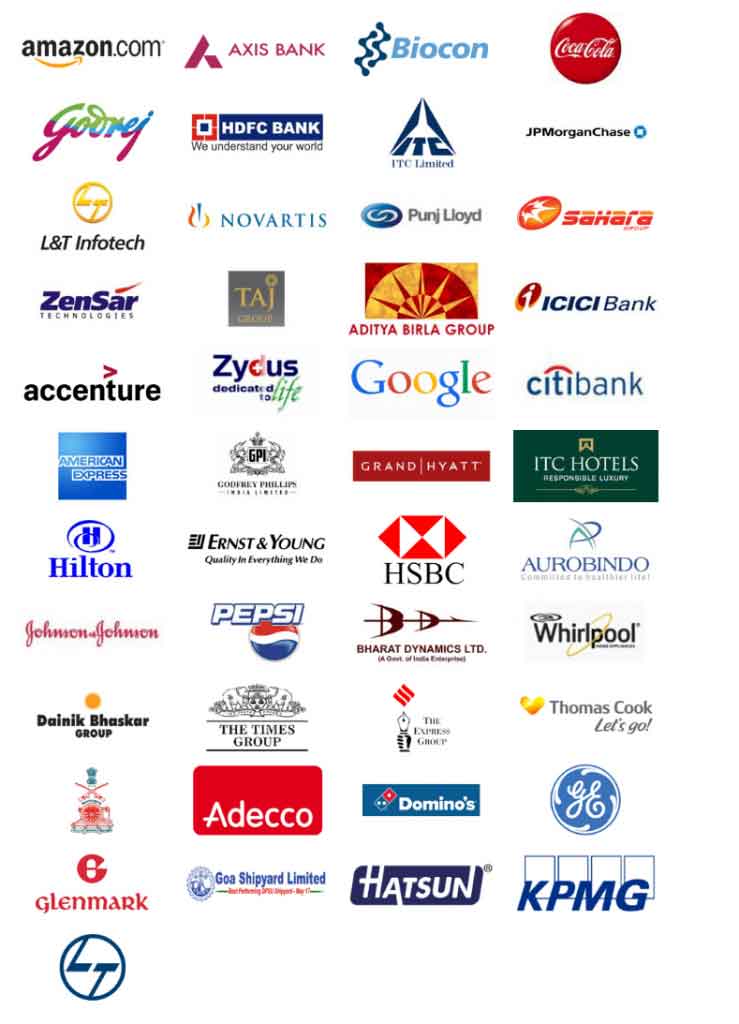
Top Recruiting Companies
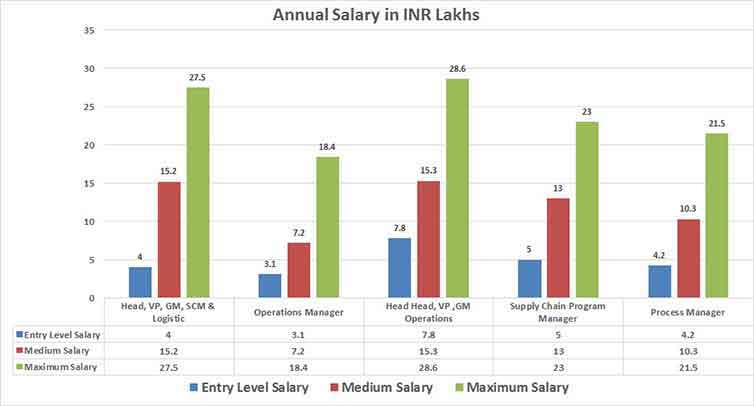
MBA in operations management Salary
| Master of Business Administration [MBA] (Operations Management) | Entry Level Salary (LPA) | Medium Salary (LPA) | Maximum Salary (LPA) |
|---|---|---|---|
| Head, VP, GM, SCM & Logistic | 4 | 15.2 | 27.5 |
| Operations Manager | 3.1 | 7.2 | 18.4 |
| Head Head, VP ,GM Operations | 7.8 | 15.3 | 28.6 |
| Supply Chain Program Manager | 5 | 13 | 23 |
| Process Manager | 4.2 | 10.3 | 21.5 |
Frequently Asked Questions (FAQs)
What is MBA in Operations Management? Who is eligible to apply for this course? What subjects will I study in this programme? What skills will I develop during the course? Is practical exposure or internship part of the programme? What career opportunities are available after this MBA? Which industries hire MBA Operations Management graduates? Can I pursue higher studies after completing this MBA? What is the salary range after MBA in Operations Management? How does this MBA prepare me for the future job market?
MBA in Operations Management is a two-year postgraduate management programme that trains students to plan, organise, optimise and manage the processes that keep businesses running efficiently — from production and supply chains to quality control and project execution.
To enrol in MBA in Operations Management, candidates generally need a bachelor’s degree from a recognised university. Many colleges also consider scores from management entrance exams (such as CAT, MAT, XAT or CMAT) as part of the admission process.
The curriculum combines core management subjects with specialised topics like Supply Chain Management, Project Management, Quality Management, Logistics, Operations Strategy, Materials and Inventory Management, Lean & Six Sigma, and Service Operations.
Students gain practical and managerial skills including analytical thinking, process planning, supply chain optimisation, quality control, strategic decision-making, leadership and project coordination, which are essential for operational roles in diverse industries.
Many operations management MBA programmes include internships, industry projects, case studies and simulations, helping students apply classroom learning to real-world problems.
Graduates can work in roles such as Operations Manager, Supply Chain Analyst, Project Manager, Logistics Coordinator, Quality Assurance Manager, Production Manager, Process Improvement Consultant and Materials Manager.
Operations management professionals are in demand across manufacturing, retail, healthcare, e-commerce, logistics and supply companies, consulting firms, technology and service sectors, as every business needs efficient operations.
Yes. Graduates often choose further education such as specialised master’s degrees, PhD programmes, executive diplomas or professional certifications (e.g., Six Sigma Green Belt, PMP) to enhance expertise and career prospects.
Salaries vary by role, industry and experience. Entry-level positions often start with competitive packages, and with experience and leadership responsibilities, professionals can command higher pay in operations, supply chain, consulting and project management roles.
This programme equips students with both management fundamentals and specialised operational expertise, enabling them to improve efficiency, reduce costs, manage complex supply networks, and lead teams — all skills that are in high demand across global business environments.
Watch the video
MBA in Operations management, Course, Eligibility, Fee, Scope and Salary
Other Popular Courses
Applications for Admissions are open
 Gian Sagar medical College & HospitalPatiala
 Greater Noida Institute of TechnologyGreater Noida
 NIIT UniversityAlwar
 Nims UniversityJaipur
 Karnavati UniversityGandhinagar
 GD Goenka University, GurgaonGurgaon
 Acharya Bangalore Business SchoolBangalore
 Alliance UniversityBangalore
 Lamrin Tech Skill UniversityRupnagar
 Solan Homoeopathic Medical College & HospitalSolan
 Kalka Group of InstitutionsMeerut
 ATLAS SkillTech UniversityMumbai
 Apeejay Stya UniversitySohna
 MERI CollegeNew Delhi
 I.T.S Dental college, Murad NagarGhaziabad
 IILM University, GurugramGurgaon
 DBS Global UniversityDehradun
 Gokul Global UniversitySiddhpur
 Sunder Deep Group of InstitutionsGhaziabad
 Om Sterling Global UniversityHisar
 I.T.S Engineering CollegeGreater Noida
 Rai Technology UniversityBangalore
 UID Ahemdabad & Delhi NCRGurgaon
 IILM University, Greater NoidaGreater Noida
 Harmony Ayurvedic Medical College & HospitalFirozpur
 HRIT UniversityGhaziabad
 Mai Bhago Ayurvedic Medical CollegeFirozpur
 Chandigarh University OnlineMohali
 I.T.S College of Health and Wellness Sciences, Greater NoidaGreater Noida
 Sri Sukhmani Institute of ManagementNew Delhi