Need Counselling

M.Sc in Aviation Management
 Job Pressure
Medium
 Academic Pressure
Medium
 Early Salary
1.5 LPA - 3.1 LPA
Mid Level Salary3.5 LPA - 8.5 LPA
Senior Salary6 LPA - 17.5 LPA
Table of Contents
M.Sc in Aviation Management Course Overview
Aviation can be defined as the learning of practical facet of the designing, development, production, and operation of Aircraft that can be entitled as a subunit of Aeronautics.
M.Sc in Aviation Management Course Description:
The course curriculum of Master degree in Aviation is of 2 years that can be divided into four semesters. Very selected Universities and colleges offer this course in India. This can be done through distant learning program too.
The purpose of the course in M.Sc in Aviation Management Course
As it is one of the most challenging sectors growing constantly seeks for the skilled experts. This course offers to meet the needs of qualified and competent professionals in the aviation industry.
What is M. Sc. Aviation about?
As it is a Master Degree program it delivers a broader picture of the subject. It deals with the core knowledge of working and maintenance of an aircraft. Main topics covered by this course are related to airport designing, air traffic control, aircraft designing, strategic management of aviation and aircraft safety.
M.Sc in Aviation Management Course Eligibility Criteria
- Candidate must be a graduate from a recognized university.
- Candidate must have secured minimum 50% in graduation.
- Mathematics is a mandatory subject in the higher secondary curriculum with a science background.
- Admission is on the basis of entrance exam and merits.
M.Sc in Aviation Management Course Syllabus
The syllabus for the course includes various topics ranging from the engineering design to management courses. An overview of the syllabus is as follows:
| Name of the course | Description |
|---|---|
|
Aircraft Operations
Topics covered Flight mechanics, navigation, meteorology, operations. |
The students are made aware of the main physical phenomena of flight.
|
|
Air traffic management services
Introduction to air traffic management, basic regulation, air traffic services description. Air traffic flow management, demonstrations on air traffic control. |
This paper deals with the study of the air traffic through managerial concepts and a practical knowledge of the same.
|
|
Institutional and regulatory framework
Safety objectives, operations regulations, maintenance regulations, type certificate holder duties, Certification and continued airworthiness procedures, standards in aviation/ air traffic management regulations |
The paper deals with the air transport safety objectives and their implementations.
|
|
Communication, navigation and surveillance means for air traffic management services
Communication, navigation, surveillance. |
The main aim of this course is to understand the communication, navigation and surveillance infrastructure and its impact on operational objectives.
|
|
System engineering
General introduction, system engineering processes, need analysis and design, system engineering implementation |
The aim of the paper is to make the students acquainted with the concepts related to system engineering and the major technical processes.
|
|
Towards the business trajectory
Institutional aspects, methodological aspects, planning phase, execution phase, civil military interactions. |
The paper deals with the aspects related to the technical and operational elements enabling the business trajectory concepts.
|
|
Project management
Techniques and tools, intercultural communication, team building, industrial feedbacks |
This paper provides the important tools and techniques required for the organization and management of the original project goals and objectives.
|
|
Air traffic management safety culture
Fundamental safety concepts, regulations, air traffic management safety culture, accidents and incidents investigations, human factors in training, safety assessment in air traffic management. |
This paper deals with the safety studies as well as regulatory requirements in air transport effective system safety management.
|
|
Flight control systems
Global view of flight control channels, handling qualities, automatic flight control systems, trajectory based guidance systems, simulation session. |
The paper makes the students aware of the present handling qualities through stability and defining flight control systems.
|
|
Integration of air traffic management in airport design and operations
Airport design, airport operations, air traffic management integration. |
The paper focuses on the main characteristics of the airport design and operations in the airport environment.
|
|
Stakeholders business models
Economic rules, Regulation and Deregulation of Air Transport Economy, Executive airline management, Alliance and major airlines strategy, Aircraft Financing, The low cost airline strategy |
The main aim of the paper is to make the students aware of the present economics applied to the air transport and relevant business models.
|
|
Air traffic management sustainable development
Sustainable development concept, Gas and noise emissions, sustainable Aircraft Design and Alternative fuels, Incentive mechanisms and environmental financing, More environmentally efficient air operations, Future technology challenges. |
This paper deals with the present environmental impacts of aeronautical activities and detailed actions taken towards sustainable development of the sector.
|
|
Air traffic management operations
Airspace structure, Phraseology, paper strip process, Phone coordination |
The focus of the paper is to make the students understand the techniques and workings of the air traffic controllers to safely and efficiently manage the air traffic in real-time positions.
|
M.Sc in Aviation Management Course Scope (Job Types)
Private Sector Career options M.Sc in Aviation Management Course
- Design Engineer
- Quality control executive
- Production manager
- Aircraft maintenance officer
- Aviation operations specialist
Private Sector Employment areas M.Sc in Aviation Management Course
- Airport Designing Agencies
- Aircraft Maintenance Companies
- Transportation Supervision Department
- Airport Employee Managing Systems
Apply Now Get More Information
Public Sector Employment areas M.Sc in Aviation Management Course
Ministry of Civil Aviation
Top Recruiting Companies

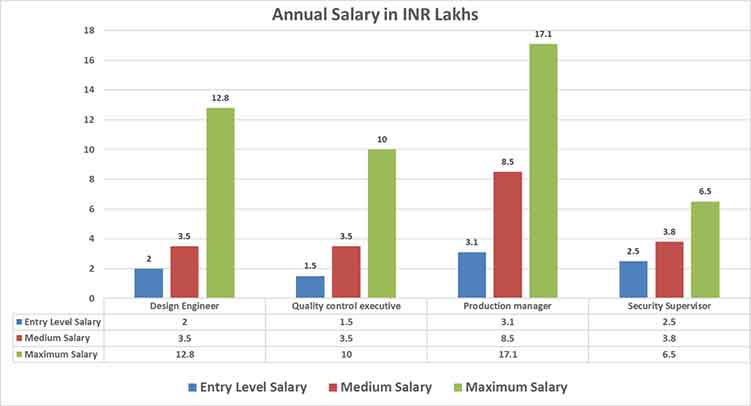
Salary Trends
| Master of Science [M.Sc] (Aviation) | Entry Level Salary (LPA) | Medium Salary (LPA) | Maximum Salary (LPA) |
|---|---|---|---|
| Design Engineer | 2 | 3.5 | 12.8 |
| Quality control executive | 1.5 | 3.5 | 10 |
| Production manager | 3.1 | 8.5 | 17.1 |
| Security Supervisor | 2.5 | 3.8 | 6.5 |
Watch the video:M Sc in Aviation Management Course, colleges, Fee, Scope and Salary
Other Popular Courses
Applications for Admissions are open
 JK Business School GurugramGurgaon
 Guru Nanak Dev Dental College & Research InstitutePatiala
 Centurion University of Technology and Management, BhubaneswarBhubaneswar
 IILM University, GurugramGurgaon
 ITS Dental College, Greater NoidaGreater Noida
 Saraswati Group of Colleges, MohaliMohali
 Desh Bhagat UniversityFatehgarh Sahib
 Vidya Siri College of PharmacyBangalore
 Chanakya UniversityBangalore
 Shoolini UniversitySolan
 Bennett University, Greater NoidaGreater Noida
 Kalka Dental collegeMeerut
 Om Sterling Global UniversityHisar
 Amity University, MohaliMohali
 Pimpri Chinchwad UniversityPune
 Somnath Goel Paramedical InstituteYamunanagar
 GNIOT Institute of Management Studies (GIMS)Greater Noida
 Gian Sagar medical College & HospitalPatiala
 Sri Sukhmani Institute of ManagementNew Delhi
 Institute of Management StudiesNoida
 Karnavati UniversityGandhinagar
 ATLAS SkillTech UniversityMumbai
 I.T.S Dental college, Murad NagarGhaziabad
 I.T.S Engineering CollegeGreater Noida
 Guru Kashi UniversityBathinda
 Lamrin Tech Skill UniversityRupnagar
 SDGI Global UniversityGhaziabad
 I.T.S College of Health and Wellness Sciences, Greater NoidaGreater Noida
 Swami Devi Dyal Hospital and Dental CollegePanchkula
 Himachal Institute of Dental Sciences, SirmaurSirmaur