Need Counselling
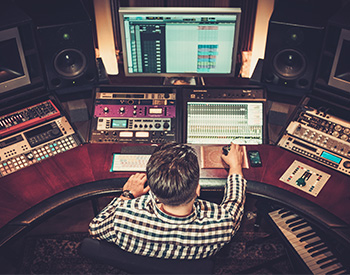
B.Sc in Sound Engineering
 Job Pressure
Medium
 Academic Pressure
Medium
 Early Salary
2 LPA LPA - 3 LPA LPA
Mid Level Salary4 LPA LPA - 5 LPA LPA
Senior Salary7 LPA LPA - 9 LPA LPA
Table of Contents
- Highlights about the Sound Engineering
- B.Sc in Sound Engineering Production Course Overview
- Eligibility Criteria for Sound Engineer
- B.Sc in Sound Engineering Production Course Syllabus
- Types of Sound Engineering Courses
- A Career in B.Sc in Sound Engineering Production as a Job Role
- Top Employment Areas after Completing Sound Engineering Course
- Frequently Asked Questions (FAQs)
Highlights about the Sound Engineering
| Branch Name | Sound Engineering |
| Degree | B.Sc |
| Duration | B.Sc. : 3 years |
| Eligibility | B.Sc. : 10+2 in PCM |
| Admission Process | B.Sc: Entrance Exam or 10+2 merit based |
| Course Fee | INR 20,000- INR 8 LPA |
| Top Colleges |
CMR University Vijaybhoomi University Rayat Bahra University Sage University |
| Career Options |
Audio Engineer Sound Engineer Studio Designer Mixing Engineer Sound Recorder Live Sound Engineer |
| Average Salary | INR 2 to 9 LPA |
| Recruiting Companies |
Dharma Productions Yashraj Productions Balaji Telefilms Zee Media |
B.Sc in Sound Engineering Production Course Overview
Sound engineering is the study of recording the production of music and many more. The candidates get to learn more about how the thing works in the audio industry. With the help of sound how they can create a high-quality recording of speech music and sound effects for slim television web series cartoons, etc. According to a report India is expected to be among the top 10 Entertainment and media industry in the world by 2023. The revenue is also exceeding more than US dollars 40 billion from television cinema games music animation, etc.
For the past 6-7 years the demand for digital content is consumed by users at a large rate. Furthermore making highly good content with the best audio engineers then it will be high demand for sound engineers in the future. Also, the industry offers highly career opportunities in the film live event advertising online media games animation industry, etc. Below we have concluded B.Sc in Sound Engineering Production 2022 Course Details, Overview, Eligibility Criteria
Moreover, the course includes the structural and progressive learning of Engineering skills in live concert studio sound Studio for visuals such as film television and the TV industry. For the duration of the courses of 3 years, the candidate must have passed the class 12th examination from the recognized state of Central Board. The course fees are 25 to 2.5 lakh per year. Some of the career options are after completing the course is sound engineer audio engineer Studio designer sound recorder mixing engineer live sound engineering, etc.
Eligibility Criteria for Sound Engineer
- The duration of the courses of 3 years.
- Furthermore, the candidates must have to pass the class 12th examination from the state or central Examination Board.
- Moreover, admission will be done based on merit or entrance exam.
- The candidates must have to pass the class 12th examination with 50% marks.
B.Sc in Sound Engineering Production Course Syllabus
| Physics of Sound | Software Training : Nuendo |
|---|---|
| 1 Surround Sound Mixing | Sound Designing for Films & Games |
| Music Mastering | MIDI Technology for Music Production |
| Musical Instruments Sampling | Sound Measuring Techniques (Decibels and Metering) |
| Audio Post Production for Films | Microphones & Monitors |
| Software Training : Pro Tools 110 | Live Sound |
| Studio Recording & Mixing Sessions | Sound Synthesis |
| Pro Tools (100 Level Avid Certification Course) | Studio Construction & Acoustics |
| Analog & Digital Consoles | Software Training : Pro Tools 101 |
| 7.1 Surround Sound Mixing | Sound Signal Processing Techniques |
| Music Business | Basic Electronics for Sound Engineering |
| Software Training : Ableton Live | Software Training : Logic Pro (Apple Certification Course) |
Types of Sound Engineering Courses
- Certificate Sound Engineering Courses
The certificate course is for a short period the course duration is of 6 months to 1 year approx. The course helps to understand the important aspects of recording music speech and sound effects in the film and television industry. The course provides basic to intermediate knowledge of the course curriculum. Some of the certificate courses are also provided from basic to advance in a short duration of time. Moreover, the sound engineers record for advertisement films web series video games animated cartoons, etc. - Bachelor's sound engineering courses
The bachelor's course duration is of 3 years in India there are only a few colleges that are providing courses in sound engineering. With the help of a Bachelor's course, one can understand and practically learn the course curriculum topics. Furthermore, the courses are suitable for the candidate who is Innovative and has a keen interest in Sound Engineering. moreover, the candidates will get to learn how sound can affect the knowledge of sound engineering and their software. Additionally, the candidates must have to pass the class 12th examination from the state of Central Board with a minimum of 55 to 60% depending from college to college. Also, any candidates who want to pursue the course from top colleges then they must have to appear for the entrance exam. - Master course in Sound Engineering
In India, there are very few colleges that have their own master's programs in Sound engineering. The duration of the courses is of 2 years. For post-graduation candidates must have to appear for the GATE entrance exam test to get into top colleges in India. Also, candidates must have Octane more than 60% marks integration course to be eligible for taking admission to any college.
A Career in B.Sc in Sound Engineering Production as a Job Role
- Audio Engineer
- Studio Technician
- Sound Engineer
- Live Sound Engineer
- Studio Sound Recordist
- Acoustic Consultant
- Studio Manager, etc.
Top Employment Areas after Completing Sound Engineering Course
- Sound Engineer: Some of the types of sound engineer which are the only expert is in one of these fields are Advertising, Radio, Television, Studio Recording, Live Events, etc. They also have to communicate with all the team members such as the director-producer and singer so they can make a good film or web series. They also must have to do check all the equipment before recording any shot of the film or song. Additionally, the average salary of a Sound Engineer is 5-7 lakh per annum.
- Acoustic Consultants: Acoustic Consultants are sound experts, they identify any error in the instruments that may it can affect the process of making music. They use many soundproof systems, so they can get a good quality of recording for TV, films, serials, video games, etc. Furthermore, the primary work is to reduce noise cancellation. Moreover, the experts sound engineers work closely with Government officials, Business owners, Directors, Producers, etc. Additionally, the average salary of an Acoustic Consultant is 3.5-7.5 lakh per annum.
- Audio Engineer: Audio Engineer helps to improve the recording of a live performance, balancing and adjusting the sound system, etc. Some of the responsibilities include are minimize unwanted sounds, collaborating with producers and performers, etc. Additionally, the average salary of an Audio Engineer is 3-8 lakh per annum.
Frequently Asked Questions (FAQs)
Q1.What are the job roles in Sound Engineering after completing the course?
Ans. Some of the job roles in Sound Engineering after completing the course are:
- Audio Engineer
- Studio Technician
- Sound Engineer
- Live Sound Engineer
- Studio Sound Recordist
- Studio Manager, etc.
Q2.What does a Sound Engineer do?
Ans. Sound Engineers must be responsible for recording and planning the session with the musician, artist, and team members. They must also have to check the equipment and the instruments separately so they can produce high-quality recording audio.
Q3.Is the role of a Sound Engineer is limited to the Music Industry?
Ans. No, Sound Engineer has a great scope working in different industry such as Radio, Television, Films, Advertisements, Animation sector, Gaming sector, and many more.
Q4.Is there is any difference between an Audio Engineer and a Sound Engineer?
Ans. No, there is not any difference between Audio Engineer and a Sound Engineer.
Q5.What is the per annum salary after the completion of the Sc in Sound Engineering Course?
Ans. The average salary candidates can get after the completion of a B.Sc in Sound Engineering Course is INR 4 lakh per annum to INR 8 lakh per annum.
6. What career options are available after B.Sc in Sound Engineering? 7. Where can sound engineering graduates find jobs? 8. What is the average salary after graduating? 9. Can I pursue higher studies after this degree? 10. Do I need a musical background to join this course?
Graduates can work as Sound Engineer, Audio Engineer, Studio Technician, Live Sound Engineer, Sound Designer, Mixing Engineer, Acoustic Consultant and other audio/production-focused roles.
Employment opportunities exist in music production studios, film and TV post-production houses, live event firms, radio stations, gaming and animation studios, advertising agencies and media companies.
In India, typical entry-level salaries for sound engineering graduates range from around ₹2 LPA up to ₹9 LPA, depending on role, experience and employer.
Yes. Graduates can pursue advanced diplomas, specialised master’s degrees in sound production or audio technology, film production, or related fields to deepen expertise and expand career options.
Not necessarily — many programmes start with foundational concepts. Interest in sound, technology and creative audio work is more important, though some familiarity with music or software tools can be helpful.
Other Popular Courses
Applications for Admissions are open
 Greater Noida Institute of TechnologyGreater Noida
 SRM University - APGuntur
 Presidency UniversityBangalore
 Chandigarh University OnlineMohali
 GNIOT Institute of Management Studies (GIMS)Greater Noida
 JK Business School GurugramGurgaon
 Atria UniversityBangalore
 Bhojia Dental College and HospitalSolan
 Harmony Ayurvedic Medical College & HospitalFirozpur
 K.R. Mangalam University, GurgaonGurgaon
 Shri Bhawani Niketan Shiksha Samitijaipur
 Sunder Deep Group of InstitutionsGhaziabad
 I.T.S Dental college, Murad NagarGhaziabad
 Bhagwant Institute of TechnologyMuzaffarnagar
 Pimpri Chinchwad UniversityPune
 Kalka Dental collegeMeerut
 Apeejay Stya UniversitySohna
 Centurion University of Technology and Management, BhubaneswarBhubaneswar
 IIFA Lancaster Institute of DesignBangalore
 City College JayanagarBengaluru
 IILM University, Greater NoidaGreater Noida
 Muthoot Business SchoolKochi
 Nims UniversityJaipur
 Manav Rachna University, FaridabadFaridabad
 Vidya Siri College of PharmacyBangalore
 Somnath Goel Paramedical InstituteYamunanagar
 Mai Bhago Ayurvedic Medical CollegeFirozpur
 Gian Sagar medical College & HospitalPatiala
 Solan Homoeopathic Medical College & HospitalSolan
 Manav Rachna International Institute Of Research And StudiesFaridabad