Need Counselling

B.Tech in Computer Science
 Job Pressure
Medium
 Academic Pressure
Medium
 Early Salary
1.4L LPA - 16L LPA
Mid Level Salary2L LPA - 18L LPA
Senior Salary2.8L LPA - 29.9 LPA
Table of Contents
- B.Tech in Computer Science Highlights
- B.Tech in Computer Science Overview
- Eligibility Criteria for B.Tech in Computer Science
- B.Tech CSE Syllabus
- Why B.Tech in Computer Science?
- Require Skills set
- Top Recruiting Companies
- B.Tech Computer Science Approx. Salary Trends in Lakh Per Annum*
- Annual Salary Trend
- Video B.Tech in Computer Science | eligibility, Top Colleges, Fees Structure, Scope and Salary
B.Tech in Computer Science Highlights
| Course Level | Graduate |
| Duration | 4 Years |
| Examination type | Semester System |
| Eligibility | 10+2, PCM with Minimum score of 55% |
| Admission Process | Entrance Exam Based/Merit Based |
| Course Fee | Public Colleges: Between INR 3,00,000 to 7,00,000 (Approx.) Private Colleges: Between INR 5,00,000 to 10,00,000(Approx.) |
| Average Starting Salary | INR 1,50,000 to 3,50,000 |
| Job Profiles | Software Developer, Testing Engineer, Project Manager-IT Software, System Analyst, Technical Support Engineer, IT Technical Content Developer, etc. |
B.Tech in Computer Science Overview
This course entitles a student to understand the scientific and practical approach toward computers and their applications. It is an undergraduate program. This course curriculum follows an eight-semester program spanning across four years. The tuition fee ranges between INR 1to 3 lakhs. After successful completion of the course, graduates can apply in the field of software programming; hardware development, e-commerce, and web development, etc. with a salary starting from INR 30,000.
Nowadays, avenues are also open in the field of telecom and sales and marketing for software professionals. They can easily market software and hardware products as they have a strong understanding of the same. In telecom, they can work in satellite communication systems designing new software for big cellular brands.
Eligibility Criteria for B.Tech in Computer Science
- Students who are interested in making a name in the software industry can opt for B.Tech Computer science.
- The eligibility for the same is a minimum of 50% marks in a higher secondary examination in PCM (Physics, Chemistry, and Maths) stream.
B.Tech CSE Syllabus
| Semester 1 | Semester 2 |
|---|---|
| Digital logic | Computer organization |
| Computational mathematics -I | Computational mathematics -II |
| Communication skill | Operating systems |
| Systems programming | Microprocessor & microcontroller |
| Semester 3 | Semester 4 |
| Computer architecture | Software engineering -I |
| Compiler design | Object oriented system |
| Database management systems | Optimization techniques |
| Design & analysis of algorithms | Computer networks |
| Semester 5 | Semester 6 |
| VLSI technology | Industrial management |
| Business process logic | Digital signal processing |
| Soft computing | - |
| Semester 7 | Semester 8 |
| Internet technology | Artificial intelligence |
| Multimedia technology | Economics |
| Elective - I | Elective - II |
| Practical’s | - |
B.Tech Computer Science Admission
Why B.Tech in Computer Science?
The course enables candidates to understand various aspects of computer operations, software programming, system networking, managing web portals, and understanding various aspects of computational processes.
The course helps in creating a firm foundation of the student in the field of computer science and turning them into professional programmers. They will be able to understand computer software languages and their programming methodology, computer networking, database management, etc. There is no denying the fact that they will be capable of doing multitasking once they get graduated.
Require Skills set
- Project Management
- Planning and conducting research
- Teamwork
- Leadership
- Professional Communication
- Critical thinking
- Data Analysis and Interpretation
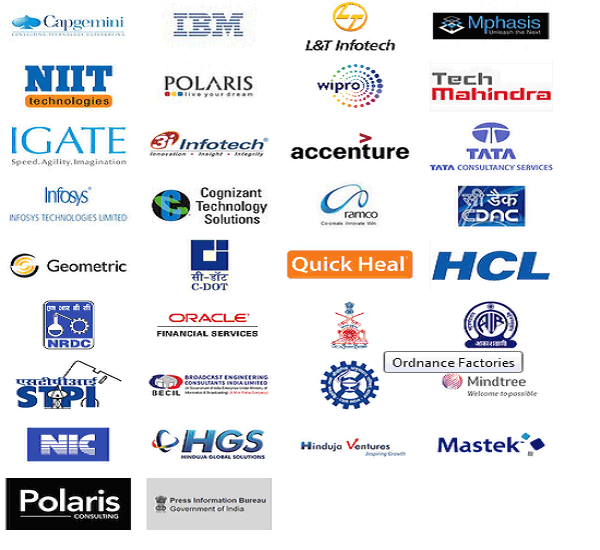
Top Recruiting Companies
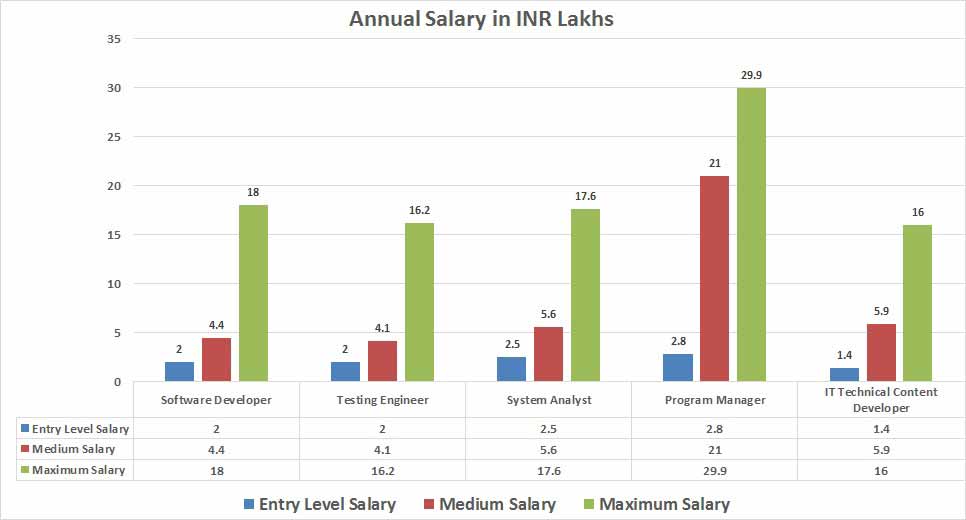
B.Tech Computer Science Approx. Salary Trends in Lakh Per Annum*
| Job Profile | Average Entry Level Salary | Average Medium Salary | Average Maximum Salary |
| Software Developer | 2 | 4.4 | 18 |
| Testing Engineer | 2 | 4.1 | 16.2 |
| System Analyst | 2.5 | 5.6 | 17.6 |
| Program Manager | 2.8 | 21 | 29.9 |
| IT Technical Content Developer | 1.4 | 5.9 | 16 |
Annual Salary Trend
Frequently Asked Questions (FAQs)
1. What is B.Tech in Computer Science? 2. Who can apply for B.Tech in Computer Science? 3. How long does the B.Tech Computer Science course last? 4. What subjects are taught in this course? 5. How do I get admission into B.Tech in Computer Science? 6. What skills will I learn from this program? 7. What career options are available after B.Tech in Computer Science? 8. Which industries hire Computer Science graduates? 9. What is the average starting salary after B.Tech in Computer Science? 10. Is B.Tech in Computer Science a good career choice?
B.Tech in Computer Science is a 4-year undergraduate engineering degree that teaches students how computers, software, and technology work and how to build advanced computer systems and applications.
Students who have completed Class 12 with Physics, Chemistry, and Mathematics from a recognised board are eligible to apply.
The program typically lasts 4 years, divided into eight semesters.
Students study subjects such as programming (Java, Python, C++), data structures, algorithms, operating systems, database systems, networks, AI, and cybersecurity.
Admission is usually based on entrance exam scores like JEE Main or state-level exams, and sometimes through institute-specific tests or merit lists.
You will gain skills in programming, problem-solving, data analysis, software development, logical thinking, and use of modern computing tools.
Graduates can work as Software Developer, Data Scientist, Cybersecurity Analyst, Cloud Engineer, Full Stack Developer, AI/ML Engineer, and IT Consultant.
IT companies, e-commerce firms, fintech, healthcare tech, telecom, manufacturing, government IT departments, and startups all hire computer science engineers.
Entry-level salaries typically range around ₹3–6 lakh per year, and can rise significantly with skills, experience, and specialisation.
Yes, it is a strong choice for students who love technology, coding, innovation, and problem-solving, as demand for tech professionals continues to grow globally.
Video B.Tech in Computer Science | eligibility, Top Colleges, Fees Structure, Scope and Salary
Other Popular Courses
Applications for Admissions are open
 Chandigarh University OnlineMohali
 Manav Rachna University, FaridabadFaridabad
 Sage University, IndoreIndore
 Greater Noida Institute of TechnologyGreater Noida
 UNITEDWORLD INSTITUTE OF DESIGNAhmedabad
 Apeejay Stya UniversitySohna
 Om Sterling Global UniversityHisar
 UID Ahemdabad & Delhi NCRGurgaon
 Institute of Management StudiesNoida
 Vidya Siri College of PharmacyBangalore
 GD Goenka University, GurgaonGurgaon
 Sunder Deep Group of InstitutionsGhaziabad
 St Andrews Institute Of Technology And ManagementGurgaon
 Guru Kashi UniversityBathinda
 Sri Sukhmani Institute of ManagementNew Delhi
 Guru Nanak Dev Dental College & Research InstitutePatiala
 Shri Bhawani Niketan Shiksha Samitijaipur
 Kalka Group of InstitutionsMeerut
 Presidency UniversityBangalore
 Lovely Professional UniversityJalandhar
 Manav Rachna International Institute Of Research And StudiesFaridabad
 Gian Sagar medical College & HospitalPatiala
 Harmony Ayurvedic Medical College & HospitalFirozpur
 Acharya Bangalore Business SchoolBangalore
 K.R. Mangalam University, GurgaonGurgaon
 Somnath Goel Paramedical InstituteYamunanagar
 Baddi University of Emerging Sciences & TechnologySolan
 SRM University - APGuntur
 Desh Bhagat UniversityFatehgarh Sahib
 Woxsen UniversityHyderabad