Need Counselling
B.Tech in Mechanical Engineering
 Job Pressure
Medium
 Academic Pressure
Medium
 Early Salary
4L LPA - 10L LPA
Mid Level Salary6L LPA - 15L LPA
Senior Salary9L LPA - 18L LPA
Table of Contents
- B.Tech in Mechanical Engineering Highlights
- B.Tech in Mechanical Engineering Overview
- Eligibility Criteria for B.Tech in Mechanical Engineering
- B.Tech Mechanical Engineering Syllabus
- Require Skills set
- Top Recruiting Companies
- B.Tech in Mechanical Engineering Approx. Salary Trends in Lakh Per Annum*
- Annual Salary Trend
- Watch the video BTech in Mechanical Engineering, Eligibility, Career Options, Employment Area
- Watch the video Mechanical Engineering, Mechanical Engineering Course, Job Scope, Salary, Top Mechanical Engineering
B.Tech in Mechanical Engineering Highlights
| Course Level | Graduate |
| Duration | 4 Years |
| Examination type | Semester System |
| Eligibility | 10+2, PCM with Minimum score of 55% |
| Admission Process | Entrance Exam Based/Merit Based |
| Course Fee | INR 4,00,000 to 10,00,000 |
| Average Starting Salary | INR 2,50,000 to 5,00,000 |
| Job Profiles | Production Engineer, Maintenance Engineer, Team Lead – Production, Professor, Design Engineer, Quality Auditor, Sales Engineer, etc. |
B.Tech in Mechanical Engineering Overview
Students of Mechanical engineering are amongst the highest paid engineering candidates currently. This is one of the only engineering streams where the demand for skilled professionals will never diminish. Engineering became a popular choice of study after IIT Roorkee was established in the 1860s. Today, one of the most popular streams, mechanical engineering has been structured into a 4-year long course, which is divided into 8 semesters. The average tuition fee for this course is between 4 to 10 Lakh INR. A semester system of examination is followed in this course with 8 semesters.
In very simple terms, mechanical engineering is the study of machines. This branch helps students learn about the design, operation, and production of different types of machines. Students are prepared to apply these principles to create and maintain novel mechanical systems. This course allows students to choose from a host of career options including various sectors ranging from the construction, automobiles, steels, and even software.
Eligibility Criteria for B.Tech in Mechanical Engineering
- Students who are interested in making a name in the software industry can opt for B.Tech Computer science.
- The eligibility for the same is a minimum of 50% marks in a higher secondary examination in PCM (Physics, Chemistry, and Maths) stream.
B.Tech Mechanical Engineering Syllabus
| Year I | Year II |
|---|---|
| Environmental Studies | Dynamics of Machinery |
| Electrical Technology | Manufacturing Processes |
| English | Applied Thermodynamics |
| Mathematics-I | Mathematics-II |
| Introduction to Information Technology | Material Technology |
| Physics | Mechanics of Solids |
| Engineering Materials | Fluid Mechanics |
| Electronics & Instrumentation | Electrical Machines & Control |
| Engineering Mechanics | Metrology & Instrumentation |
| Chemistry | Theory of Machines |
| Engineering Graphics | Numerical & Statistical Methods |
| Modern Biology | Kinematics |
| Value Education & HR | Industrial Drafting & Machine Design |
| Practical Sessions | - |
| Workshops-I | - |
| Year III | Year IV |
| Industrial Engineering & Management | Energy Conservation |
| Heat and Mass Transfer | Measurement & Instrumentation |
| Computer Aided Design (CAD) | Waste Heat Utilization |
| Control Engineering | Fracture Mechanics |
| Production Technology | Ergonomics |
| Internal Combustion Engines | Utilisation of Non-Conventional Energy |
| Advanced Solid Mechanics | Operations Research |
| Thermal Engineering | Maintenance Engineering |
| Advanced Mechanical Engineering Design | Mechanical Handling Equipment |
| Mechanical Vibration | Production & Industrial Management |
| Power Plant Engineering | Organizational Behaviour |
| Law for Engineers | Project Work |
| Practical Sessions | Summer Training |
| Mini projects | Practical Sessions |
| Workshops | - |
Require Skills set
- Project Management
- Planning and conducting research
- Teamwork
- Leadership
- Professional Communication
- Critical thinking
- Data Analysis and Interpretation
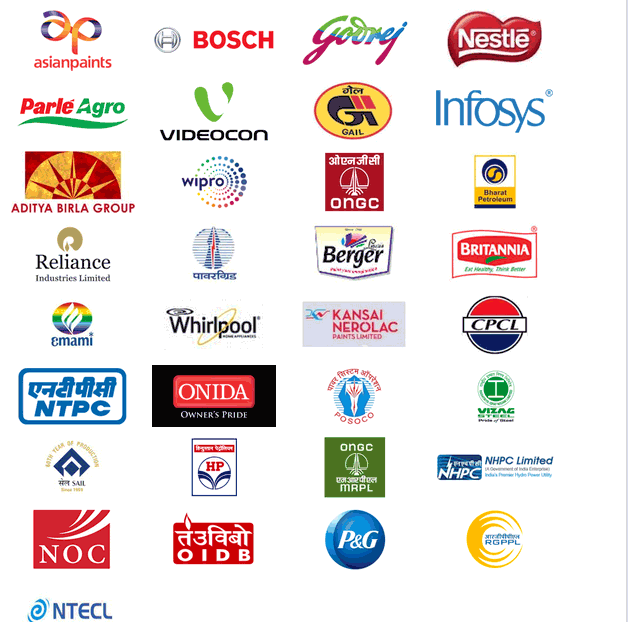
Top Recruiting Companies
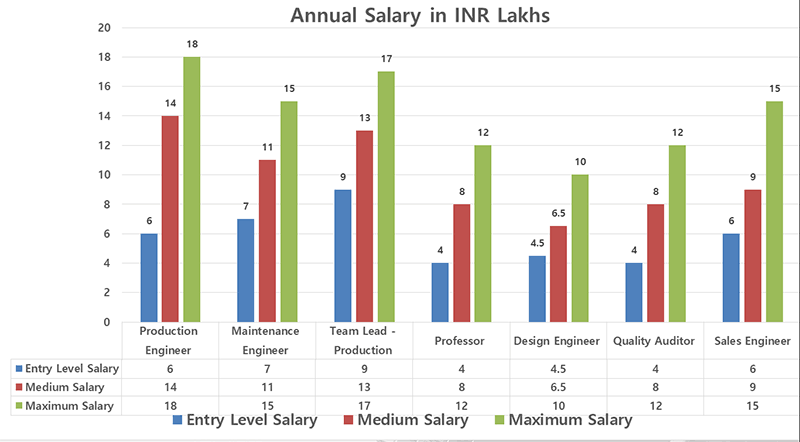
B.Tech in Mechanical Engineering Approx. Salary Trends in Lakh Per Annum*
| Job Profile | Average Entry Level Salary | Average Medium Salary | Average Maximum Salary |
| Production Engineer | 6 | 14 | 18 |
| Maintenance Engineer | 7 | 11 | 15 |
| Team Lead – Production | 9 | 13 | 17 |
| Professor | 4 | 8 | 12 |
| Design Engineer | 4.5 | 6.5 | 10 |
| Quality Auditor | 4 | 8 | 12 |
| Sales Engineer | 6 | 9 | 15 |
Annual Salary Trend
Frequently Asked Questions (FAQs)
1. What is B.Tech in Mechanical Engineering? 2. Who can apply for B.Tech in Mechanical Engineering? 3. How long does the B.Tech in Mechanical Engineering course last? 4. What subjects do students study in this course? 5. What skills will I learn in this programme? 6. How do I get admission into B.Tech in Mechanical Engineering? 7. What career options are available after this degree? 8. Which industries hire Mechanical Engineering graduates? 9. What is the average starting salary after B.Tech in Mechanical Engineering? 10. Can I pursue higher studies after B.Tech in Mechanical Engineering?
B.Tech in Mechanical Engineering is a 4-year undergraduate engineering degree that teaches you how to design, develop, test, and maintain machines and mechanical systems used in different industries.
You can apply if you have completed Class 12 with Physics, Chemistry, and Mathematics (PCM) from a recognised board with the required minimum marks.
The course generally lasts 4 years and is divided into eight semesters.
Students study subjects like thermodynamics, fluid mechanics, machine design, manufacturing processes, material science, and CAD/CAM, along with practical lab work.
You will develop skills such as problem-solving, design thinking, technical drawing, use of engineering tools (like AutoCAD and SolidWorks), teamwork, and analytical thinking.
Admission is usually based on entrance exam scores (like JEE Main or other state/university exams) and/or Class 12 merit, depending on the college.
After graduation, you can work as a Mechanical Engineer, Design Engineer, Production Engineer, Maintenance Engineer, Project Engineer, R&D Engineer, and many more roles in industries like automotive, energy, manufacturing, and aerospace.
Mechanical engineers are hired in automotive, aerospace, manufacturing, construction, energy and power, robotics, and industrial automation sectors.
Starting salaries for graduates often range around ₹3–6 lakh per year in India, and can increase with experience, skills, and higher qualifications.
Yes, you can go for M.Tech, MBA, or research degrees in specialised areas like thermal engineering, design, robotics, or aerospace for better career growth.
Watch the video BTech in Mechanical Engineering, Eligibility, Career Options, Employment Area
Watch the video: B.Tech in Mechanical Engineering
Watch the video Mechanical Engineering, Mechanical Engineering Course, Job Scope, Salary, Top Mechanical Engineering
Watch the video: B.Tech in Mechanical Engineering
Other Popular Courses
Applications for Admissions are open
 I.T.S Engineering CollegeGreater Noida
 Gokul Global UniversitySiddhpur
 Bhojia Dental College and HospitalSolan
 SDGI Global UniversityGhaziabad
 Chanakya UniversityBangalore
 Amity University, GurugramGurgaon
 Amity University, MohaliMohali
 Guru Nanak Ayurvedic Medical College & HospitalMuktsar
 Karnavati UniversityGandhinagar
 Swami Devi Dyal Hospital and Dental CollegePanchkula
 IILM University, Greater NoidaGreater Noida
 Chandigarh University OnlineMohali
 Muthoot Business SchoolKochi
 City College JayanagarBengaluru
 Shoolini UniversitySolan
 Ajeenkya DY Patil UniversityPune
 Guru Nanak Dev Dental College & Research InstitutePatiala
 Greater Noida Institute of TechnologyGreater Noida
 Vidya Siri College of PharmacyBangalore
 I.T.S College of Health and Wellness Sciences, Greater NoidaGreater Noida
 Kalka Dental collegeMeerut
 UPES UniversityDehradun
 Doon Business SchoolDehradun
 Manav Rachna International Institute Of Research And StudiesFaridabad
 Shri Bhawani Niketan Shiksha Samitijaipur
 Alliance UniversityBangalore
 Woxsen UniversityHyderabad
 Hierank Business SchoolNoida
 IILM University, GurugramGurgaon
 Mai Bhago Ayurvedic Medical CollegeFirozpur