Need Counselling
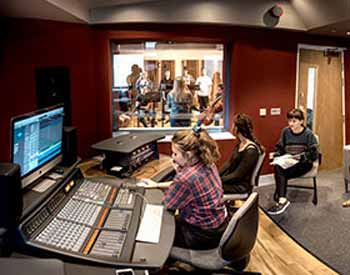
B.A Music
 Job Pressure
Medium
 Academic Pressure
Medium
 Early Salary
3.2L LPA - 5L LPA
Mid Level Salary4.2L LPA - 6.5L LPA
Senior Salary7.2L LPA - 8.9L LPA
Table of Contents
BA Music Course Highlights
| Duration | Course Duration of Bachelor of Arts [BA] (Music Vocal) is 3 Years. |
| Degree | Bachelors |
| Full Form | Bachelor of Arts in Music Vocal |
| Age | No specific age |
| Minimum Percentage | 50% |
| Subjects Required | 10+2 or equivalent examination in any stream |
| Average Fees Incurred | INR 5000 - 1 LPA |
| Similar Options of Study | MA (Music) |
| Average Salary Offered | INR 3 LPA |
| Employment Roles | Artist & Repertoire Person, Band Leader, Composer/Arranger, Music Attorney, Assist. Art Director, Concert Promoter, Disc Jockey, Film Music Director/Editor, Music Teacher, Recording Technician etc |
| Placement Opportunities | Music Industry, Films, Production Houses, TV Channels, Advertisement Companies, Colleges, Music Teaching Centres etc |
About the Programme B.A in Music Course
If you are musically inclined and do not want to join the rat race of becoming an engineer or a doctor or pursuing an MBA, then B.A in Music is the right degree for you. B.A in Music is an undergraduate degree in Music. The duration of the course is 3 years. The course would provide you with formal education in Music and serve as a platform for you to create a career in the field of Music. The course would teach you the theory of music, its history, interpretation, voice instructions as well as the art and practical skills of composing music, playing musical instruments, and singing.
Eligibility B.A in Music Course
- Anyone who has passed their 10+2 exams in any stream with Music as an additional subject from any recognized board or university can seek admission in this course.
- Some institutes may also allow students who have not studied Music as a subject in their 10+2 to seek admission in this course if they pass the audition or an aptitude test administered by the institute.
BA Music Course Syllabus
|
Semester I |
Semester II |
|---|---|
|
Appreciation of Music |
Classification of Music |
|
Bada Khayal and Chhota Khayal |
Concepts of Ragas and Tala in Indian Music |
|
Brief History of Bharat Nayat Shastra and Sangeet Ratnagar |
Classifications of Ragas |
|
Semester III |
Semester IV |
|
Concert Singing |
Forms of light music |
|
Different Gharanas and their history |
History of Indian Music |
|
Evolution of Notation System |
Importance of Music festivals |
|
Semester V |
Semester VI |
|
Laws of Acoustics |
Place of Music in Fine Arts |
|
Musical Sound, Frequency, Wave motion, Pitch and Motion |
Role of Music in Multimedia |
|
Music and Literature |
Taal Study |
Apply Now Get More Information
B.A in Music Course Course Content
- Music Appreciation
- Bada Khayal and Chhota Khayal
- History of Bharat Natya Shastra and Sangeet Ratnakar
- History of Indian Music
- Classification of Music
- Concept of Ragas and Taal in Indian Music
- Classification of Ragas
- Concert Singing Different Gharanas of Music and their History
- Evolution of Notation System
- Forms of Light Music
- Importance of Music Festivals, Cultural Events, and Concerts.
- Laws of Acoustics
- Study of Musical Sound, Wave Motion, Frequency, Pitch, and Volume
- Music and Literature
- Role of Music in Fine Arts and Multi-media
- Vocal and Instrumental Music
B.A in Music Course Career Perspective
After completing your B.A in Music, you can pursue an M.A in Music. B.A in Music also allows you to teach Music both privately and in schools or institutes. The degree would help you to improve and polish your musical talent and skills. You can also work in the department of cultural affairs. Working in the Entertainment Industry can also be an option. You can also become a professional music composer or singer. You can also play musical instruments professionally. You can also work as a live performer or join a music band.
Frequently Asked Questions (FAQs) B.A in Music is a 3‑year undergraduate degree that teaches both theory and practical skills in music, including music history, performance, vocal or instrumental training, composition, rhythm, notation and related arts. The course typically lasts 3 years (6 semesters) as a full‑time undergraduate degree. You must have passed 10+2 (higher secondary) from a recognised board (any stream). Some colleges may require a minimum percentage (e.g., ~50%) or an audition/aptitude test to assess your musical skills. Key subjects typically include: Courses also develop critical listening, stage performance, rhythm control and musical analysis. You’ll develop: After completing B.A in Music, you can work in diverse roles including: You can find work in: Earnings vary widely by role, experience and industry: Yes — you can continue with: Yes — if you are passionate about music, performance, composition or creative arts. This degree gives you both academic grounding and practical performance ability, preparing you for careers in education, entertainment, production, media and cultural management.1. What is B.A in Music?
2. How long is the programme?
3. What are the eligibility requirements?
4. What subjects are studied?
• Music Theory & History
• Ragas, Tala & Notation
• Vocal or Instrumental Performance
• Classification of Music
• Sound & Acoustics Fundamentals
• Music and Literature/Media
5. What skills will I gain?
• Musical proficiency (vocal/instrumental)
• Music theory and notation comprehension
• Performance and stage confidence
• Creative composition and arranging ability
• Communication, teamwork and discipline — valuable across music and arts careers.
6. What career options are available after this course?
• Music Performer (solo/ensemble)
• Music Teacher / Private Tutor
• Composer / Arranger
• Music Director / Conductor
• Sound Designer / Music Producer
• Recording Technician / Studio Musician
• Music Therapist
• Music Journalist / Critic
• Event Manager / Concert Promoter
• Arts Administrator or Cultural Program Coordinator
7. Where can I work after graduating?
• Music and performance studios
• Recording and production houses
• Film and entertainment industry
• Schools, colleges and music academies
• Media companies (radio/TV/digital)
• Event and festival organisations
• Hospitals/clinics (music therapy)
• Your own music business or freelance practice
8. What salary can I expect?
• Entry‑level jobs may start around ₹2 LPA to ₹4 LPA or more in education, recording or media.
• Experienced performers, producers or directors in films and large studios can earn substantially higher, often project‑based or freelance.
9. Can I pursue higher studies after B.A in Music?
• M.A in Music / Musicology
• M.Mus (Master of Music)
• M.Phil / Ph.D. in Music
• Specialised courses in music therapy, sound engineering or music production
• Professional diplomas or certifications enhancing your skills and career prospects.
10. Is B.A in Music a good career choice?
Other Popular Courses
Applications for Admissions are open
 Ganga Group Of InstitutionsNew Delhi
 Gokul Global UniversitySiddhpur
 Guru Nanak Ayurvedic Medical College & HospitalMuktsar
 Alliance UniversityBangalore
 Chanakya UniversityBangalore
 Mai Bhago Ayurvedic Medical CollegeFirozpur
 IIFA Lancaster Institute of DesignBangalore
 Rai Technology UniversityBangalore
 Amity University, GurugramGurgaon
 Muthoot Business SchoolKochi
 I.T.S Engineering CollegeGreater Noida
 Shri Bhawani Niketan Shiksha Samitijaipur
 IILM University, Greater NoidaGreater Noida
 Solan Homoeopathic Medical College & HospitalSolan
 ITS Dental College, Greater NoidaGreater Noida
 Sunder Deep Group of InstitutionsGhaziabad
 Institute of Management StudiesNoida
 Ajeenkya DY Patil UniversityPune
 Ramkumari College of Veterinary SciencesJhunjhunu
 Atria UniversityBangalore
 Lovely Professional UniversityJalandhar
 Nims UniversityJaipur
 Gian Sagar medical College & HospitalPatiala
 Greater Noida Institute of TechnologyGreater Noida
 Pimpri Chinchwad UniversityPune
 UID Ahemdabad & Delhi NCRGurgaon
 Baddi University of Emerging Sciences & TechnologySolan
 Guru Kashi UniversityBathinda
 I.T.S Dental college, Murad NagarGhaziabad
 Manav Rachna University, FaridabadFaridabad