Need Counselling
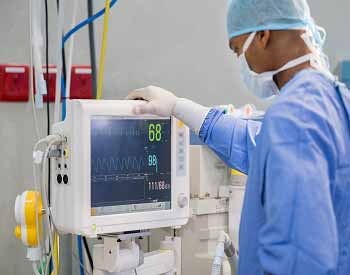
B.Sc in Cardiac Technology
 Job Pressure
Medium
 Academic Pressure
Medium
 Early Salary
3LPA LPA - 5LPA LPA
Mid Level Salary5LPA LPA - 9LPA LPA
Senior Salary9LPA LPA - 15LPA LPA
Table of Contents
- B.Sc in Cardiac Technology Course Highlights
- B.Sc in Cardiac Technology Course Overview
- Eligibility Criteria for B.Sc in Cardiac Technology Course
- Require Skills set B.Sc in Cardiac Technology Course
- B.Sc in Cardiac Technology Course Syllabus
- Job Profile after B.Sc in Cardiac Technology Course
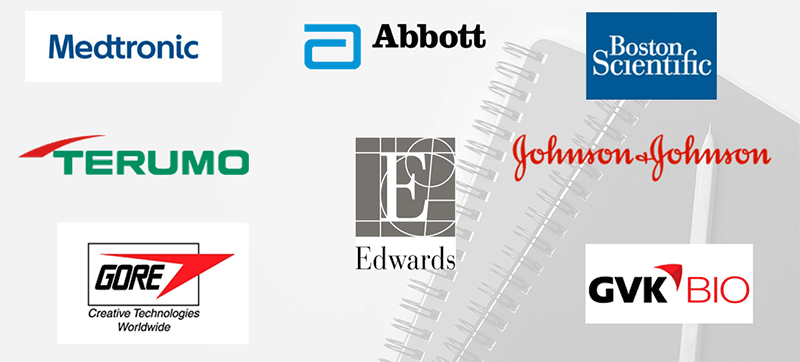
- Top Recruiting Companies
- B.Sc in Cardiac Technology Course Approx. Salary Trends in Lakh Per Annum*
- Video BSc in Cardiac Technology Course, Job Scope, Salary, Top Recruiting Companies
B.Sc in Cardiac Technology Course Highlights
| Course Level | Under Graduate |
| Duration | 3 Years |
| Examination type | Semester System |
| Eligibility | 10+2 with recognized board |
| Admission Process | Counselling after taking Entrance Examination |
| Course Fee | INR 1,00,000 to 4,00,000 |
| Average Starting Salary | INR 2,00,000 to 15,00,000 |
| Employment Areas | Academic Institutes, Govt./Pvt. Hospitals & Clinics, Healthcare offices, Mentally disabled Centers, NGOs, Nursing care Homes, Rehabilitation Centers, etc. |
| Job Profiles | Cardiologist, Cardiovascular Technician, Cath Lab Technician, Consultant Nephrologist, Dialysis Technician, Echocardiographer, ICU-intensivist, Medical Sonographer, Registered Cardiac Electrophysiology Specialist, Registered Cardiac Sonographer, Registered Cardiovascular Invasive Specialist, Registered Vascular Specialist, etc. |
| Top Recruiting Organizations | Medtronic, Abbott, Boston Scientific, Jhonson and Jhonson, Edwards, Terumo, Gore, GVK Bio, Hospitals, etc. |
B.Sc in Cardiac Technology Course Overview
B. Sc (Cardiac Technology) better understood as Bachelor of Science in Cardiac Technology, is a three-year under-graduation medical specialization course designed for allied health professionals. After having studied this course, cardiovascular technologists can assist doctors and physicians in diagnosing and treating heart-related and peripheral vascular conditions.
They can further help in preparing patients for by-pass and open-heart surgeries and also in the implantation of pacemaking machines, thereby monitoring patients closely at every stage of these procedures. Having completed the course successfully, at the end of three years, students have many job opportunities open for them to get indulged in.
Eligibility Criteria for B.Sc in Cardiac Technology Course
- 10+2 education completed in the Science stream from a recognized educational Board.
- Physics, Chemistry, English, and Biology as the main subjects of study at the 10+2 level.
- A minimum aggregate score of 50% (45% for SC/ST/OBC candidates) at the 10+2 level.
Require Skills set B.Sc in Cardiac Technology Course
- Good communication and observation
- Ability to answer questions and offer advice
- Dealing with emotionally charged situations
- Decision Making Skills
- Organizational Skills
B.Sc in Cardiac Technology Course Syllabus
| YEAR I | YEAR II |
|---|---|
| Human anatomy | Medicine relevant cardiac care |
| Physiology | Applied pathology |
| Biochemistry | Applied pharmacology |
| Pathology | Introduction to cardiac technology |
| Microbiology | - |
| YEAR III | |
| Cardiac care technology clinical | |
| Cardiac care technology applied | |
| Cardiac care technology advanced | |
Job Profile after B.Sc in Cardiac Technology Course
- Cardiologist
- Cardiovascular Technician
- Cath Lab Technician
- Consultant Nephrologist
- Dialysis Technician
- Echocardiographer
- ICU-intensivist
- Medical Sonographer
- Registered Cardiac Electrophysiology Specialist
- Registered Cardiac Sonographer
- Registered Cardiovascular Invasive Specialist
- Registered Vascular Specialist
Top Recruiting Companies
B.Sc in Cardiac Technology Course Approx. Salary Trends in Lakh Per Annum*
| Job Profile | Average Entry Level Salary | Average Medium Salary | Average Maximum Salary |
| Cardiovascular Technologist | 6.0 | 6.5 | 8.0 |
| Medical Sonographer | 6.0 | 7.5 | 9.0 |
| Cardiologist | 15 | 15.5 | 17 |
| Dialysis Technician | 5.0 | 5.5 | 7.0 |
| Nephrologist Technician | 13 | 13.5 | 15 |
Annual Salary Trend
Frequently Asked Questions (FAQs) 2. How long is the B.Sc Cardiac Technology course? 3. Who is eligible to study this course? 4. What subjects are studied in B.Sc Cardiac Technology? 5. How do admissions to this course work? 6. What skills will I gain from this degree? 7. What career options are available after B.Sc Cardiac Technology? 8. Where can B.Sc Cardiac Technology graduates work? 9. What is the average starting salary after this course? 10. Is B.Sc in Cardiac Technology a good career choice?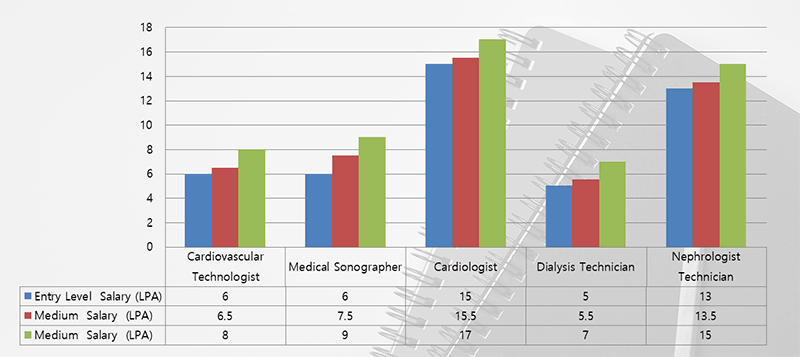
1. What is B.Sc in Cardiac Technology?
B.Sc in Cardiac Technology is an undergraduate allied health science programme that trains students to assist doctors and cardiologists in diagnosing and treating heart and vascular (blood‑related) diseases using modern medical equipment.
The programme typically lasts 3 years, and many colleges also include a 6‑month to 1‑year internship to give hands‑on clinical experience.
To be eligible, students need to have completed Class 12 (10+2) with Physics, Chemistry, Biology (PCB) and English from a recognised board, usually with a minimum 50% aggregate marks (and sometimes 45% for reserved categories).
Key subjects include human anatomy, physiology, biochemistry, pathology, microbiology, applied pharmacology, and specialised cardiac technology topics such as ECG, echocardiography, and clinical cardiac care procedures.
Admissions are generally based on Class 12 merit, and some institutes may conduct entrance exams or counselling for selection.
You’ll develop skills in operating cardiac diagnostic equipment (like ECG and echo machines), patient monitoring, clinical support procedures, critical thinking, communication, teamwork, and emergency response.
Graduates can work as Cardiac Technologist, Cardiovascular Technician, Cath Lab Technician, Echocardiographer, Cardiac Sonographer, Catheterization Lab Technologist, ICU Cardiac Care Technologist, and other allied health roles.
Job opportunities exist in hospitals, cardiac and multi‑speciality clinics, diagnostic labs, cardiac centres, rehabilitation units, research labs, and healthcare training institutions.
In India, entry‑level salaries typically range from around ₹2.5 LPA to ₹5 LPA, and with experience, specialisation, or advanced roles (like echocardiography specialist) it can rise further.
Yes — it’s a good course if you’re interested in healthcare technology, cardiac care, and patient support, especially given the rising prevalence of heart diseases and the ongoing demand for trained cardiac care professionals in clinical settings.
Video BSc in Cardiac Technology Course, Job Scope, Salary, Top Recruiting Companies
Watch the video: BSc in Cardiac Technology Course
Other Popular Courses
Applications for Admissions are open
 Sri Sukhmani Institute of ManagementNew Delhi
 JK Business School GurugramGurgaon
 IIFA Lancaster Institute of DesignBangalore
 JK Lakshmipat Universityjaipur
 St Andrews Institute Of Technology And ManagementGurgaon
 Pimpri Chinchwad UniversityPune
 K.R. Mangalam University, GurgaonGurgaon
 Solan Homoeopathic Medical College & HospitalSolan
 Jayoti Vidyapeeth Women’s UniversityJaipur
 Karnavati UniversityGandhinagar
 Atria UniversityBangalore
 SRM University - APGuntur
 ATLAS SkillTech UniversityMumbai
 IILM University, Greater NoidaGreater Noida
 Sunder Deep Group of InstitutionsGhaziabad
 Gokul Global UniversitySiddhpur
 Guru Nanak Dev Dental College & Research InstitutePatiala
 Woxsen UniversityHyderabad
 Chandigarh University OnlineMohali
 I.T.S College of Health and Wellness Sciences, Greater NoidaGreater Noida
 Himachal Institute of Dental Sciences, SirmaurSirmaur
 Ajeenkya DY Patil UniversityPune
 Rai Technology UniversityBangalore
 Manav Rachna University, FaridabadFaridabad
 UPES UniversityDehradun
 UID Ahemdabad & Delhi NCRGurgaon
 Presidency UniversityBangalore
 I.T.S Engineering CollegeGreater Noida
 Sage University, IndoreIndore
 Lamrin Tech Skill UniversityRupnagar