Need Counselling
B.Tech Engineering Physics
 Job Pressure
Medium
 Academic Pressure
Medium
 Early Salary
2.4 LPA LPA - 4.6 LPA LPA
Mid Level Salary6 LPA LPA - 10.2 LPA LPA
Senior Salary9 LPA LPA - 16 LPA LPA
Table of Contents
- B.Tech Engineering Physics Course Highlights
- About B.Tech in Engineering Physics
- Purpose of B.Tech in Engineering Physics
- B.Tech in Engineering Physics Eligibility
- B.Tech in Engineering Physics Syllabus
- How to apply for B.Tech in Engineering Physics
- B.Tech in Engineering Physics Scope (Job Types)
- Top Recruiting Companies
- B.Tech in Engineering Physics Salary
- Watch the video
B.Tech Engineering Physics Course Highlights
| Examination Type | Semester System |
| Course Level | Undergraduate |
| Duration | 4 years |
| Eligibility | 10+2 with science from a recognized university |
| Admission Process | Based on counseling after qualification of entrance test |
| Course Fee | NR 2.5 to 5 LPA |
| Average Starting salary | INR 3.6 to 6 LPA |
| Top recruiting companies | TATA (all sectors, Motors, Steel, Communications etc.), Reliance Industries ltd., Maruti Udyog, TCS, Infosys, Wipro, etc. |
| Job Roles | Industrial Engineer, Research Scientist, Physicists, Financial Analyst, etc |
| BTech Engineering Physics Scope | MTech or MBA |
About B.Tech in Engineering Physics
The Bachelor of Technology Engineering Physics course is specially designed to provide specialization to students in physics and applied physics. This is a course that is mostly offered by the Indian Institute of Technology, with an exception of other colleges like DTU.
This is an under graduation course that is spread across a 4-year curriculum. Besides this students are expected to complete several on-field internships and training programs in order to improve their knowledge about the subject. You can study further after completing this course. M.Tech courses are offered for specialization and you may even pursue a Ph.D. in Physics. The course fee ranges from INR 3 Lakhs to 5 Lakhs depending upon the college you opt for.
Purpose of B.Tech in Engineering Physics
The course provides in-depth knowledge of the different streams and applications of physics. It is a combination of several concepts like electromagnets, semiconductor devices, thermodynamics, and various other aspects of theoretical physics. This course is perfect for students who are interested in physics but want to learn the subject from an engineering perspective.
B.Tech in Engineering Physics Eligibility
The basic eligibility required for this course is 10+2 completion with the core subjects being Physics, Mathematics, and Chemistry. Besides this, you will have to appear for the JEE exams and you are only eligible if you are in the top 20 percentile in your boards with an aggregate of 75% marks or more.
B.Tech in Engineering Physics Syllabus
| Semester I | Semester II |
|---|---|
| Chemistry | Introduction to Computing |
| Mathematics I | Mathematics II |
| Electrical Sciences | Modern Biology |
| Workshop / Physics Laboratory | Computing Laboratory |
| Chemistry Laboratory | Engineering Mechanics |
| Physics I | Physics – II |
| Engineering Drawing | Physics Laboratory / Workshop |
| Physical Training I | Physical Training II |
| Semester III | Semester IV |
| Mathematics III | Electro-magnetic |
| Advanced Classical Mechanics | Quantum Mechanics |
| Signals, Systems and Networks | Analogue & Digital Electronics |
| Semiconductor Devices | HSS Elective II |
| HSS elective I | Biophysics |
| Heat & Thermodynamics | Electronics Lab I |
| Physical Training III | Physical Training IV |
| Semester V | Semester VI |
| Microprocessor architecture & Programming | Engineering Optics |
| Atomic & Molecular Spectroscopy | Nuclear Science & Engineering |
| Computational Physics | Solid State Physics |
| HSS Elective III | Measurement Techniques |
| Statistical Mechanics | Open Elective I |
| Electronics Lab II | General Physics Lab |
| Semester VII | Semester VIII |
| Materials Science & Engineering | Nano-electronics & Nano-photonics |
| Department Elective I | Department Elective II |
| Lasers & Photonics | Department Elective III |
| Open Elective II | Open Elective III |
| Advanced Physics Lab | HSS Elective IV |
| Project I | Project II |
How to apply for B.Tech in Engineering Physics
There are two entrance exams which are JEE Main and JEE advanced. You have to complete the former first in order to qualify for the JEE advanced exam that is usually conducted in May. Then, your admission is provided based on your performance in the entrance exams and your marks in the board examinations. 60% weightage is given to JEE exams and 40% to boards. Students will also receive a counseling session if they are eligible for these institutions.
B.Tech in Engineering Physics Scope (Job Types)
1) Private Sector Career options after B.Tech in Engineering Physics
- Industrial Engineer
- Research Scientist
- Physicists
- Financial Analyst
- Aerospace Engineer
- Process Engineer
- Optical Engineer
- Nuclear Engineer
2) Private Sector Employment areas after B.Tech in Engineering Physics
- Applied Research International Physical Laboratory
- Applied Research National Physical Laboratory
- Corporate Organizations
- Technical Laboratories
3) Public Sector Employment areas after B.Tech in Engineering Physics
- Ministry of Civil Aviation
- Ministry of Communications and Information Technology
- Ministry of Defence
- Ministry of Power
Top Recruiting Companies

B.Tech in Engineering Physics Salary
| Bachelor of Technology [B.Tech] (Engineering Physics) | Entry Level Salary (LPA) | Medium Salary (LPA) | Maximum Salary (LPA) |
|---|---|---|---|
| Industrial Engineer | 2.4 | 6 | 9 |
| Research Scientist | 2.5 | 8.2 | 16 |
| Process Engineer | 3.6 | 10 | 12 |
| Analyst | 4.6 | 6.3 | 11.2 |
Frequently Asked Questions (FAQs) 2. Who is eligible to study this course? 3. How long is the B.Tech Engineering Physics programme? 4. What subjects are studied in this course? 5. How do admissions work for B.Tech Engineering Physics? 6. What skills will I gain from this degree? 7. What career options are available after this degree? 8. Which industries hire Engineering Physics graduates? 9. What is the average starting salary after this course? 10. Is B.Tech in Engineering Physics a good career choice?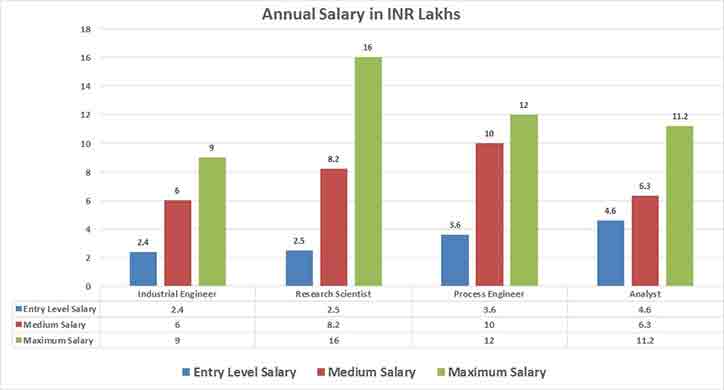
1. What is B.Tech in Engineering Physics?
B.Tech in Engineering Physics is a 4‑year undergraduate engineering programme that combines core physics and engineering subjects to prepare students for technology, research, and advanced scientific careers. The course focuses on applying physics principles to modern engineering problems and technologies.
To be eligible, students usually need to have completed Class 12 (10+2) with Physics, Chemistry, and Mathematics from a recognised board, typically with a minimum percentage (such as around 50% or as per college requirements). Admissions are often based on engineering entrance exams (like JEE Main, JEE Advanced, or state entrances).
The programme lasts 4 years, typically divided into eight semesters, including classroom study, laboratory work, electives, and a final project or internship.
The syllabus includes physics‑based core courses like Classical and Quantum Mechanics, Thermodynamics, Electromagnetism, Solid State Physics, Computational Physics, and Electronics, along with engineering maths, programming, and electives like nanotechnology or photonics.
Admission is usually based on entrance exams such as JEE Main, JEE Advanced, BITSAT, VITEEE, or state‑level tests. Some colleges may combine exam scores with 12th grade performance or institute‑specific criteria.
You will develop analytical thinking, complex problem‑solving, mathematical modelling, laboratory techniques, experimental methods, and advanced computing skills — all valuable in tech and research fields.
Graduates can work as Research Scientist, Photonics Engineer, Material Scientist, Semiconductor Engineer, Optics Specialist, Nuclear Physicist, Aerospace Engineer, Data Analyst, and more in tech, research, and industry roles.
Job opportunities exist in research institutions, aerospace and defence, semiconductor and optics industries, renewable energy, nuclear energy, telecommunications, government laboratories, and tech companies.
Starting salaries typically range from around ₹5 LPA to ₹12 LPA or more, depending on skills, role, and organisation. Roles in specialised areas like quantum computing or advanced research can command higher packages.
Yes — it’s a promising choice if you enjoy physics, technology, advanced mathematics, and research. It opens doors to diverse fields like nanotechnology, photonics, aerospace, quantum technologies, and R&D, and also provides a solid foundation for higher studies (M.Tech/PhD) and specialised careers.
Watch the video
B Tech in Engineering Physics Courses | Course details, Colleges, Top recruiting companies, Salary
Other Popular Courses
Applications for Admissions are open
 K.R. Mangalam University, GurgaonGurgaon
 City College JayanagarBengaluru
 Nims UniversityJaipur
 Bhagwant Institute of TechnologyMuzaffarnagar
 Acharya Bangalore Business SchoolBangalore
 Guru Nanak Ayurvedic Medical College & HospitalMuktsar
 Vidya Siri College of PharmacyBangalore
 I.T.S Engineering CollegeGreater Noida
 SDGI Global UniversityGhaziabad
 ATLAS SkillTech UniversityMumbai
 Manav Rachna University, FaridabadFaridabad
 GNIOT Institute of Management Studies (GIMS)Greater Noida
 Hierank Business SchoolNoida
 Ajeenkya DY Patil UniversityPune
 Pimpri Chinchwad UniversityPune
 Greater Noida Institute of TechnologyGreater Noida
 DBS Global UniversityDehradun
 Lamrin Tech Skill UniversityRupnagar
 Gian Sagar medical College & HospitalPatiala
 ITS Dental College, Greater NoidaGreater Noida
 Desh Bhagat UniversityFatehgarh Sahib
 Rai Technology UniversityBangalore
 Kalka Dental collegeMeerut
 JK Business School GurugramGurgaon
 IILM University, GurugramGurgaon
 Solan Homoeopathic Medical College & HospitalSolan
 Amity University, GurugramGurgaon
 Shri Bhawani Niketan Shiksha Samitijaipur
 I.T.S College of Health and Wellness Sciences, Greater NoidaGreater Noida
 UID Ahemdabad & Delhi NCRGurgaon