Need Counselling

MBA Human Resource Management
 Job Pressure
Medium
 Academic Pressure
Medium
 Early Salary
2 LPA - 3.6 LPA
Mid Level Salary2.7 LPA - 10.8 LPA
Senior Salary7.1 LPA - 35.6 LPA
Table of Contents
- MBA in HR Management Course Highlights
- About MBA in HR Management Course
- Why MBA in HR Management?
- MBA in HR Management Eligibility Criteria
- MBA in HR Management Syllabus
- MBA in HR Management Career Options
- MBA in HR Management Scope (Job Types)
- Top Recruiting Companies
- MBA in HR Management Salary
- Watch the video
MBA in HR Management Course Highlights
| Course Level | PostGraduate |
| Full Form | Master of Business Administration in Human Resource |
| Duration | 2 years |
| Examination Type | Semester |
| Eligibility | Minimum 50% - 60% in Bachelors |
| Admission Process | Entrance Exam |
| Fees | INR 3 Lakhs - 8 Lakhs per annum |
| Subjects | Quantitative Techniques for Management, Marketing Management, Managerial Economics, Human Resource Management |
| Average Salary | INR 4Lakhs - 10 Lakhs per annum |
| Scope | MBA HR Abroad, Ph.D in HR, Professional Diploma Courses like CFA, PMP CRMA etc. |
| Top Recruiters | HSBC, HDFC, ICICI, Genpact, JP Morgan, Standard Chartered, Barclays etc. |
About MBA in HR Management Course
MBA in Human Resource Management or HRM is a post graduate degree course with two years of duration. It is offered in many universities in India and can be done in full time or part time. It involves the business strategies, hiring and training of employees and development of business by applying various techniques
The prime objective of this course is to provide students the in-depth understanding of developing business with limited resources.
Why MBA in HR Management?
MBA in HRM educates students with the required skills and techniques of management. It improves their critical thinking, enhances their creative skills and innovative ideas.
MBA in HR Management Eligibility Criteria
- Students applying for this course must have a Bachelor’s degree or any equivalent from a recognized university.
- They must have scored a minimum of 55% aggregate. Some of the colleges hold their own eligibility test whereas a common entrance is organized at national level.
MBA in HR Management Syllabus
| MBA in HR Subjects List 1st Year | |
|---|---|
| Quantitative Techniques for Management | Principles of Management and Organisational Behaviour |
| Marketing Management | Research Methods for Management |
| Managerial Economics | Corporate Communication |
| Human Resource Management | Operations Management |
| Accounting and Finance for Managers | - |
| MBA in HR Subjects List 2nd Year | |
| Personal Management Concepts | Performance Management: Systems and strategies |
| Compensation Management | Strategic Management |
| Methodology of Training and Development | Business Environment and Ethics |
| Industrial Relations Management | Organisational Development and Change |
| Human Resource Development and Planning | - |
MBA in HR Management Career Options
HR Manager, HR Consultant, Training and Development Manager, Nonprofit Human Resource Expert, Employee Education Consultant, HR Recruiter, Human Resource IT Specialist, HR Entrepreneur.
MBA in HR Management Scope (Job Types)
1) Private Sector Career options after MBA in Human Resource Management
- Human Resources Manager
- Employee Relations Manager
- Compensation or Benefit Analyst/Manager
- HR Information Systems Manager
- Training and Development Manager
- Labor Relations Manager
- Staffing Director
2) Private Sector Employment areas after MBA in Human Resource Management
- Banks
- Media Houses
- Corporate Houses
- IT Firms
- Consultancies
3) Public Sector Employment areas after MBA in Human Resource Management
- Ministry of Human Resource Development
Apply Now Get More Information
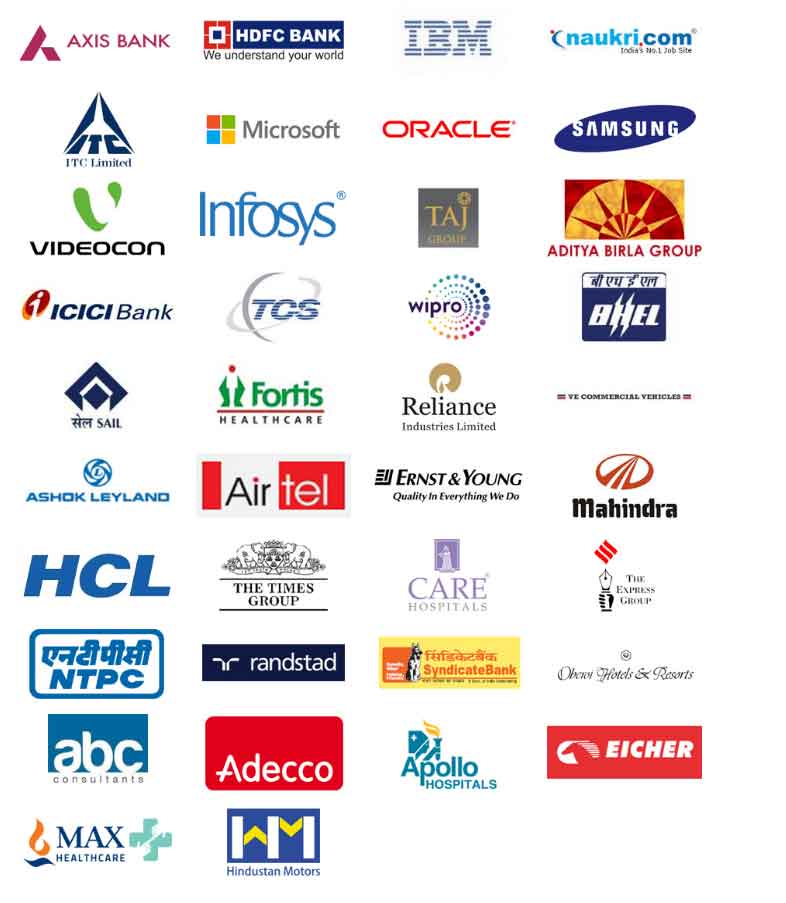
Top Recruiting Companies
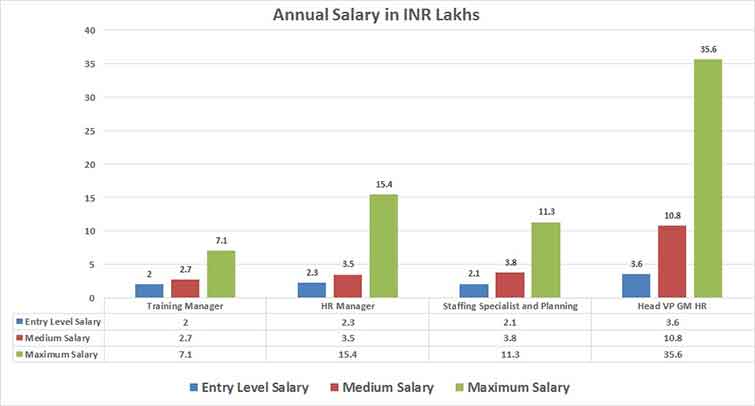
MBA in HR Management Salary
| Master of Business Administration [MBA] (Human Resource Management) | Entry Level Salary (LPA) | Medium Salary (LPA) | Maximum Salary (LPA) |
|---|---|---|---|
| Training Manager | 2 | 2.7 | 7.1 |
| HR Manager | 2.3 | 3.5 | 15.4 |
| Staffing Specialist and Planning | 2.1 | 3.8 | 11.3 |
| Head VP GM HR | 3.6 | 10.8 | 35.6 |
Frequently Asked Questions (FAQs)
What is MBA in Human Resource Management? Who is eligible to apply for this MBA programme? What subjects will I study in MBA Human Resource Management? What skills will I gain from this programme? Is practical experience or internship part of the MBA curriculum? What career roles can I pursue after completing this MBA? Which industries hire MBA HR Management graduates? Can this MBA lead to leadership or strategic roles? Is higher study possible after an MBA in HR Management?
10. What is the future scope of careers in HR?
MBA in Human Resource Management is a two-year postgraduate business programme that focuses on managing people, talent, performance, training and organisational development while giving a strong foundation in core management principles. It prepares you to handle the strategic and operational aspects of workforce management.
To enrol, you generally need a bachelor’s degree from a recognised university (in any stream) with the minimum aggregate required by the institute. Admissions may also consider entrance exam scores (e.g., CAT, MAT, CMAT, XAT) and/or interview rounds.
The curriculum covers core business subjects plus HR-specific topics such as Human Resource Management, Organisational Behaviour, Talent Acquisition & Retention, Performance Management, Labour Laws, Compensation & Benefits, Training & Development and HR Analytics.
You develop key skills such as strategic HR planning, talent management, employee relations, leadership, communication, conflict resolution and data-driven decision-making that are essential for HR leadership roles.
Most programmes include internships, live projects, case studies and field exercises so you can apply HR theories to real-world organisational situations and gain practical exposure.
Graduates can work in roles such as HR Manager, Talent Acquisition Specialist, Training & Development Manager, Compensation & Benefits Analyst, HR Business Partner, Performance Manager, Industrial Relations Officer and HR Consultant.
HR professionals are needed across technology firms, banking and finance, healthcare, manufacturing, retail, hospitality, startups, consultancies and NGOs, as almost every organisation needs HR expertise.
Yes — as you gain experience, you can move into senior HR leadership positions such as HR Director, Head of Talent, Chief Human Resources Officer (CHRO) or leadership roles in organisational development and business strategy.
Yes. Many graduates pursue specialised master’s degrees, professional HR certifications (like SHRM, HRCI), doctoral research or executive programmes to deepen their HR expertise and enhance career prospects.
With increasing focus on people-centric workplace culture, talent strategy, workforce analytics and organisational effectiveness, demand for skilled HR professionals is growing steadily across sectors worldwide.
Watch the video
MBA in HR, MBA in Human Resource Management, Career Scope, Jobs & Salary
Other Popular Courses
Applications for Admissions are open
 SDGI Global UniversityGhaziabad
 Swami Devi Dyal Hospital and Dental CollegePanchkula
 Muthoot Business SchoolKochi
 I.T.S College of Health and Wellness Sciences, Greater NoidaGreater Noida
 Acharya Bangalore Business SchoolBangalore
 Desh Bhagat UniversityFatehgarh Sahib
 Om Sterling Global UniversityHisar
 MERI CollegeNew Delhi
 Greater Noida Institute of TechnologyGreater Noida
 Apeejay Stya UniversitySohna
 ATLAS SkillTech UniversityMumbai
 Shri Bhawani Niketan Shiksha Samitijaipur
 Atria UniversityBangalore
 Hierank Business SchoolNoida
 Manav Rachna University, FaridabadFaridabad
 IIFA Lancaster Institute of DesignBangalore
 Bennett University, Greater NoidaGreater Noida
 Rai Technology UniversityBangalore
 Shoolini UniversitySolan
 ITS Dental College, Greater NoidaGreater Noida
 Harmony Ayurvedic Medical College & HospitalFirozpur
 Guru Nanak Dev Dental College & Research InstitutePatiala
 Karnavati UniversityGandhinagar
 GD Goenka University, GurgaonGurgaon
 Guru Kashi UniversityBathinda
 Sri Sukhmani Institute of ManagementNew Delhi
 City College JayanagarBengaluru
 Bhojia Dental College and HospitalSolan
 Lovely Professional UniversityJalandhar
 SRM University - APGuntur