Need Counselling
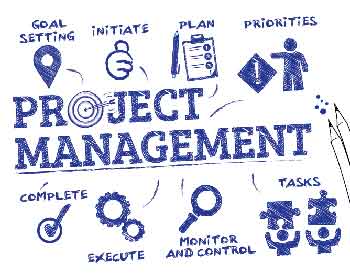
MBA Project Management
 Job Pressure
Medium
 Academic Pressure
Medium
 Early Salary
3.5 LPA LPA - 6.5 LPA LPA
Mid Level Salary7.5 LPA LPA - 12.5 LPA LPA
Senior Salary15.5 LPA LPA - 20 LPA LPA
Table of Contents
MBA in Project Management Highlights
| Duration | 2 Years |
| Course-Level | Postgraduate |
| Eligibility | Bachelor’s degree with the minimum work experience |
| Admission Process | Merit and Entrance-based |
| Course Fee | Up to INR 10 Lakhs |
| Average Salary | INR 3-20 Lakhs per annum |
| Top Recruiting Organizations | BG India, NDSC, SGC India Private Limited, Telford International, Bechtel India Private Limited, IBM BTO Business Consulting Services, L&T Infotech, HCL Technologies, Capgemini, Infosys, Tech Mahindra, Honeywell |
| Job Profiles | Computer Scientist, Database Administrator, Project Leader, Software Publisher, Research Assistant, Operations Manager, and many other positions |
About MBA in Project Management
The full form of MBA is a Master of Business Administration. It is a Post Graduate degree which helps in becoming business experts. It is one of the most popular qualifications and is widely recognized in India. It was first discovered in the USA during the late 19th century. MBA provides training and develops the learners with the essential crafts to be strong leaders, managers and administrators.
What Does a Project Mean?
A project is undertaken to fulfill the particular aims of a company. It can be both long -term or short-term. Each project brings new opportunities and various sets of tasks to accomplish. For the completion of the project and these tasks, the company requires a management team. Project Management helps an organization or an individual to solve various complex problems.
The management team is accountable for placing together the business plans and ensuring the company's objectives are met.
What does Project Management mean?
Project management includes the preparation and development of a company's resources to move a particular task, event, or service towards completion. It applies accurate knowledge, methods, tools and abilities to meet the requirements of the project.
Eligibility Criteria
The most basic necessity to do an MBA program is to get a Bachelor's degree in any respective field. A minimum of aggregate 55% marks is required in the Bachelor's degree from any recognised university. Students with a business background in education are preferred.
Although, few dual BA-MBA programs do exist but they often require severe entrances conditions and extraordinary academic history.
Admission Process
To get admission in a prestigious MBA school one must write a common entrance exam accompanied by a Personal Interview. Many Universities also consider the grades scored in Undergraduate Degree.
This entrance exam is commonly known as GMAT or CAT. Usually is considered one of the tough entrance exams to crack in India.
GD & PI are further followed by and are carried through the Management of the individual institutes.
To do an MBA in Project Management, one needs to get admission to a prestigious institution like the following :
MBA in Project Management Syllabus
| Year I | Year II |
|---|---|
| Project Risk Management | Project Execution and Control |
| PERT and CPM | Project Termination |
| Project Quality Management | Value Engineering |
| Resources Considerations in projects | Case Studies |
| Project Planning | Project Performance Measurement |
| Basis of Project Management | Purchasing and Contracting for Projects |
| Project Identification and Selection | Project Management Information System |
| Organizational Structure and Organizational Issues | - |
MBA in Project Management College of India
1. L&T Institute of Project Management ( L&T IPM ) :
Designed for perfection in Project Management, the L&T Institute was established in Vadodara in 2008. The Institute soon verified itself as a core of perfection in Project Management.
2. National Institute of Constructive Management and Research
Commonly known as NICMAR, is a non-profit administration Institute established in the year 1983 in Maharashtra. The Institute provides education in the field of Management and Construction Engineering. Also, it provides a platform for high-level research and practices through print and audiovisual media, discussions and workshops.
3. National Institute of Industrial Engineering ( NITIE ) :
NITIE is listed number one Institute for MBA in operations in the nation. Located at Mumbai, it is lined with the top IIM's and receives decent placement every year.
4. Swami Vivekananda Institute of Information Technology :
SVIT offers education in Engineering and Management courses at UG and PG level. It was instituted in the year 2004 and is ranked among the top 25 colleges for studying Management.
The eligible candidates can seek admissions in any of these colleges through an online or offline mode. They can also register themselves on their respective websites to get additional information.
Types of jobs after MBA in project manager
1.Project Manager :
A Project Manager is a professional who is in overall charge of planning and execution of a particular project. Project Manager has the responsibility of initiating, planning, designing, execution, monitoring and closure of a project.
2. General Manger :
A second career option for those with an MBA in Project Management concentration is that of general manager.
A General Manager is an official who helps in running the regular business exercises of a particular unit or firm.
3. Operation Manager :
An Operation Manager is more concerned with the working class of an organisation. It is responsible for the effective and strong management of labour, productivity, quality check and safety measures as built and set for the Operations Department.
4. Executive Officer :
An executive manager sets the vision and goals of his department, or the entire firm or organization. The most familiar type of Executive Managers is CEO( Chief Executive Officer), COO (Chief Operating Officer), CFO (Chief Financial Officer) and many more. Being an Executive Manager brings a lot of perks and rewarding experience as well as massive responsibilities along with it.
5. Project Analyst :
A Project Analyst is commonly known as a Business Analyst. A Project Analyst analyzes, reviews and records the necessities of a project throughout its lifecycle. He or she supports the entire project unit complete the plan within its planned scope, program and accounts.
6.Entire Costs:
The MBA can be an expensive degree. One must carefully perform financial planning. The tuition fees depend upon organisation to organisation and the duration of the programme. In India, it can cost starting from around 30,000 - 2,00,000 Rupees.
Besides all, if you think you can manage the business world well and can carry out an organisation's duties well enough, then this course might be the one for you!
Frequently Asked Questions (FAQs)
What is MBA in Project Management? Who is eligible to apply for this course? What subjects will I study in MBA Project Management? What skills will I develop through this programme? Is practical experience part of the MBA project management course? What career opportunities are available after MBA in Project Management? Which industries hire MBA Project Management graduates? Can I pursue certifications along with this MBA? How does this MBA prepare me for leadership roles?
10. Is MBA in Project Management suitable for fresh graduates?
MBA in Project Management is a two-year postgraduate management programme that equips students with advanced business skills plus specialised training in planning, executing, monitoring and closing projects across industries. It blends core MBA subjects with project management methodologies and tools.
To be eligible, candidates generally need a bachelor’s degree in any discipline from a recognised university with a minimum aggregate (often around 50 %). Some programmes may consider entrance exam scores like CAT, MAT, GMAT or institute-level tests.
The curriculum typically includes core management subjects such as marketing, finance, HR and strategic management, along with project-specific topics like project planning and scheduling, risk management, cost and quality control, leadership, and program coordination.
Students gain strategic thinking, leadership, analytical reasoning, risk assessment, resource planning, communication, budgeting, and project execution skills, all essential for leading teams and delivering projects successfully.
Many colleges include internships, live projects, case studies and industry simulations so students gain real-world exposure to how projects are managed in actual business environments.
Graduates can pursue roles such as Project Manager, Program Manager, Project Analyst, Risk Manager, Project Coordinator, Change Management Specialist or Project Consultant across sectors like IT, finance, construction, healthcare, logistics and consulting.
Professionals with this specialisation are in demand across a wide range of industries including IT & technology firms, construction and engineering companies, healthcare organisations, finance and banking, manufacturing, consulting businesses and marketing agencies.
Yes. Many students pursue professional project management certifications like PMP (Project Management Professional), PRINCE2 or CAPM, which can further enhance skills and job prospects in global project management roles.
The programme not only teaches technical project management techniques, but also builds leadership, team management, strategic decision-making and stakeholder communication skills — all vital for senior positions such as program manager and operations leader.
Yes — many MBA Project Management programmes accept fresh graduates and help them build practical and managerial skills that lead to project leadership roles early in their careers. Work experience can be beneficial but is not mandatory for most regular tracks.
Other Popular Courses
Applications for Admissions are open
 Greater Noida Institute of TechnologyGreater Noida
 Rai Technology UniversityBangalore
 Centurion University of Technology and Management, BhubaneswarBhubaneswar
 Shri Bhawani Niketan Shiksha Samitijaipur
 Bhojia Dental College and HospitalSolan
 Alliance UniversityBangalore
 Desh Bhagat UniversityFatehgarh Sahib
 Apeejay Stya UniversitySohna
 Nims UniversityJaipur
 Manav Rachna University, FaridabadFaridabad
 Guru Kashi UniversityBathinda
 Mai Bhago Ayurvedic Medical CollegeFirozpur
 I.T.S Dental college, Murad NagarGhaziabad
 Sunder Deep Group of InstitutionsGhaziabad
 Kalka Group of InstitutionsMeerut
 City College JayanagarBengaluru
 Bhagwant Institute of TechnologyMuzaffarnagar
 Muthoot Business SchoolKochi
 UNITEDWORLD INSTITUTE OF DESIGNAhmedabad
 Somnath Goel Paramedical InstituteYamunanagar
 Guru Nanak Ayurvedic Medical College & HospitalMuktsar
 Ajeenkya DY Patil UniversityPune
 JK Business School GurugramGurgaon
 Karnavati UniversityGandhinagar
 Chanakya UniversityBangalore
 IILM University, GurugramGurgaon
 Swami Devi Dyal Hospital and Dental CollegePanchkula
 ITS Dental College, Greater NoidaGreater Noida
 Solan Homoeopathic Medical College & HospitalSolan
 Atria UniversityBangalore