Need Counselling
MBA in Supply Chain Management
 Job Pressure
Medium
 Academic Pressure
Medium
 Early Salary
1 L LPA - 2 L LPA
Mid Level Salary2.5 L LPA - 3.5 L LPA
Senior Salary8.5 L LPA - 10.5 L LPA
Table of Contents
- MBA in Supply Chain Management Highlights
- MBA in Supply Chain Management Eligibility Criteria
- A career in Supply Chain Management
- MBA in Supply Chain Management Advantages
- MBA in Supply Chain Management Future Scope
- MBA in Supply Chain Management Job Scope
- Frequently Asked Questions (FAQs) — MBA in Supply Chain Management
MBA in Supply Chain Management Highlights
|
Course |
MBA in Supply Chain Management |
|
Full-Form |
Master of Business Administration in Supply Chain Management |
|
Duration |
2 Years |
|
Eligibility |
Ug Degree in Any Stream with an Aggregate of 40% Marks |
|
Level |
Post-Graduate |
|
Average Tuition Fee |
INR 5,000 - INR 2lakh |
|
Average Salary |
INR 3 LPA - INR 12 LPA |
|
Top Recruiting Companies |
HCL, IBM, Adobe, Nokia, Toyota |
|
Admission Process |
Entrance and Merit-Based Followed by Personal Interview |
MBA in Supply Chain Management Eligibility Criteria
Every faculty and university have set their minimum eligibility criteria for the course. The minimum eligibility demand that's followed by most of the leading universities and faculties are:
- The student should be a graduate.
- Candidates ought to score a minimum forty-fifth mark in Bachelor’s degree.
- There ought to be no backlog in any subject.
- 5% moderation for SC/ST candidates which suggests SC/ST candidates got to score a minimum of four-hundredth marks in any stream.
A career in Supply Chain Management
Are you looking forward to managing big budgets, handling complex transactions, and negotiating with multiple suppliers? Then, take the calling from the field of supply-chain management as a career option. In this era when our world has become a global village, we can get anything from any corner of the world, thanks to the concept of supply-chain management which essentially involves managing logistics with a multiple-level system for distribution.
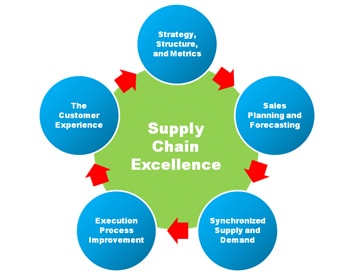
Supply–chain management comprises designing, planning, implementation, control, and monitoring of all activities in a supply chain including the origin of goods till their consumption. The aim of this field is to create a net value, build a competitive infrastructure, manage supply versus demand and evaluate performance at a global level.
Supply-chain management comprises many components like planning and control, working and organization structure, information structure, product facility structure, leadership and power structure, management methods and risk and reward structure, and so on.
A supply-chain management professional focuses on configuring distribution networks; information, cash flows, inventory management, and distribution strategy. In the present age of globalization, manufacturing firms should necessarily have an effective supply-chain system to reach their commodities to global customers in good time.
With the demand for supply-chain managers on the rise due to globalization, many technical and management institutes in India are offering courses closely related to this branch of management at diploma and post-graduate levels. In order to qualify for a course in this field, students should have graduated with a degree in finance or retail management; or should have completed a Bachelor of Engineering, Bachelor of Business Administration, or Bachelor of Technology in any branch from a deemed university.
Some renowned universities and institutes offering courses in supply-chain management in India are:
- Indian Institute of Material Management, Navi Mumbai.
- Centre for Supply Chain Management, Gurgaon.
- Indian Institute of Material Management, Hyderabad.
- Indian Institute of Management.
- Supply Chain Management Institute, Mumbai.
- CII Institute of Logistics, Chennai.
- National Institute of Retail Management, Bangalore.
- University of Petroleum and Energy Studies, Dehradun.
On completion of a course in supply-chain management, students can pursue their careers in this challenging profession as supply planners, purchase executives, supply managers, commodity buyers, procurement officers, inventory managers, implementation managers, material managers, head of procurement, and head of supply and so on. They can get hired by small-sized firms or even big-banner organizations depending on their skills, enthusiasm to work, qualifications, and experience.
Beginners in this field can expect to start with a salary of 10,000 to 15,000 rupees per month. On gaining two/ three eyras of experience, they can earn between 18,000 to 22,000 rupees per month. Executives working in higher levels of management can earn anywhere between eight lakh to twelve lakh rupees per year.
This career can be demanding and hectic, very similar to marketing or sales wherein professionals need to catch up with month-end pressures and need to constantly evolve new tactics and negotiating skills to deal with vendors. But the advantage of entering into this field is good chances of growth due to constant demand for supply-chain managers which is not volatile. After gaining bags of experience, one can even branch out into consultation.
MBA in Supply Chain Management Advantages
MBA Supply Chain Management can assist you to find out to manage the method of producing units and client dealing.
- It will give you to find out exhaustive concerning the functions of Supply chain Management.
- It helps to grasp the national and international markets.
- It is a dynamic business and it's across the planet today.
- Candidates is a vicinity from product producing to product delivery.
Job opportunities for MBA in Supply chain management are going to be supply chain manager, supply arranger, business manager, business manager, etc.
MBA in Supply Chain Management Future Scope
Future scope aims to draw in innovators and innovation seekers. master's degree provides a decent career begin and results in a large scope for career development and skills.
Some of the simplest jobs when master's degree in Supply Chain Management squares measure university professors, they will add the sphere of banking, etc.
They can pursue alternative degree programs
They can work as Associate in Nursing analysts, project managers, Supply chain managers to realize on-field expertise.
Apply Now Get More Information
MBA in Supply Chain Management Job Scope
- Industry Analyst: They work in market sectors like automotive, technology, and financial work.
- Project Manager: They help in maintaining and implementing plans… controlling the project effectively and efficiently.
- Operations Director: They look after the profits and growth of the company and are responsible for directing, coordinating, and controlling the organization.
- Transport Manager: Are responsible for matters related to transportation: Implementing, Directing, Coordinating.
Frequently Asked Questions (FAQs) — MBA in Supply Chain Management
- What is MBA in Supply Chain Management?
MBA in Supply Chain Management is a two-year postgraduate programme that focuses on planning, managing and optimising the flow of goods and services from suppliers to customers — covering procurement, logistics, distribution, demand forecasting, inventory control and operations strategy. - Who is eligible to apply for this course?
Students must have completed a bachelor’s degree from a recognised university to be eligible for MBA in Supply Chain Management. Some institutions evaluate admissions based on entrance test scores, group discussions and interviews. - What subjects will I study in this programme?
The curriculum typically includes Supply Chain Strategy, Logistics Management, Operations Planning, Procurement and Sourcing, Inventory Management, Project Management, Business Analytics, Strategic Leadership and Financial Management. - What skills will I develop during this MBA?
Students develop key skills such as strategic thinking, analytical problem-solving, demand forecasting, logistics planning, negotiation, team leadership and data interpretation — all critical for effective supply chain leadership. - What career opportunities are available after completing this degree?
Graduates can pursue roles such as Supply Chain Manager, Logistics Manager, Operations Manager, Procurement Specialist, Inventory Analyst, Distribution Manager and Supply Chain Consultant across sectors that depend on efficient supply networks. - Which industries hire MBA in Supply Chain Management graduates?
Professionals with this qualification are needed in manufacturing, retail, e-commerce, automotive, pharmaceuticals, FMCG, logistics firms, consulting and technology companies where supply chain operations are vital. - Is internship or industry experience part of the programme?
Many institutions incorporate internships, industry projects, case studies and practical simulations to give students hands-on exposure to real supply chain challenges and improve employability. - Can I pursue higher studies after this MBA?
Yes. Graduates can choose advanced programmes such as specialised master’s degrees, certifications in supply chain and logistics, or doctoral research to deepen expertise and enhance career prospects. - What is the typical salary range for entry-level graduates?
Salary packages vary by industry, company and location. Entry-level professionals in Supply Chain Management generally receive competitive packages, with significant growth potential as they gain expertise and leadership experience. - How does this MBA prepare me for the future business environment?
The programme equips students with strategic planning, operational expertise, data analytics skills and leadership capabilities needed to manage complex global supply networks — an asset in today’s data-driven and interconnected business world.
Other Popular Courses
Applications for Admissions are open
 Om Sterling Global UniversityHisar
 DBS Global UniversityDehradun
 Swami Devi Dyal Hospital and Dental CollegePanchkula
 MERI CollegeNew Delhi
 Bennett University, Greater NoidaGreater Noida
 GNIOT Institute of Management Studies (GIMS)Greater Noida
 Acharya Bangalore Business SchoolBangalore
 Greater Noida Institute of TechnologyGreater Noida
 Rai Technology UniversityBangalore
 Hierank Business SchoolNoida
 Guru Nanak Dev Dental College & Research InstitutePatiala
 City College JayanagarBengaluru
 Saraswati Group of Colleges, MohaliMohali
 Gian Sagar medical College & HospitalPatiala
 UNITEDWORLD INSTITUTE OF DESIGNAhmedabad
 JK Business School GurugramGurgaon
 NIIT UniversityAlwar
 HRIT UniversityGhaziabad
 Ajeenkya DY Patil UniversityPune
 Kalka Group of InstitutionsMeerut
 Bhojia Dental College and HospitalSolan
 Karnavati UniversityGandhinagar
 Muthoot Business SchoolKochi
 ATLAS SkillTech UniversityMumbai
 Chandigarh University OnlineMohali
 Atria UniversityBangalore
 GD Goenka University, GurgaonGurgaon
 Alliance UniversityBangalore
 Centurion University of Technology and Management, BhubaneswarBhubaneswar
 Chanakya UniversityBangalore