Need Counselling
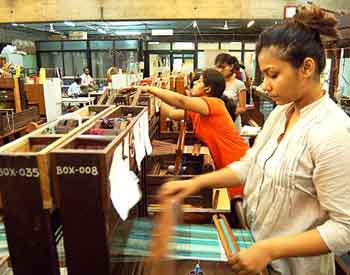
M.DES in Textile Design
 Job Pressure
Medium
 Academic Pressure
Medium
Table of Contents
- M.Des. Textile Design Course Overview
- M.Des. Textile Design Eligibility
- M.Des. Textile Design Course Content
- M.Des. Textile Design Syllabus
- M.Des. Textile Design Career Perspectives
- Watch the video MDES in Textile Design? MDES in Textile Design in Hindi, Course, Eligibility, College, Scope
- Watch the video M. DES in Textile Design
- View the all Best Design Colleges in India
M.Des. Textile Design Course Overview
Textile Design is one of the areas of specialization in the Master of Design course. The course duration is 2 years. It is a postgraduate degree course. The course includes the advanced level study of creating designs for different types of fabrics, understanding and studying the weave, knit, texture and material of different fabrics. It also encompasses the technical details of textile production and detailed study of the properties of fibres, yarn, dyes, etc. The students who have completed their Bachelor of Design in Textile Designing would find the course similar to what they have already learnt, but at a very advanced level with a lot more details and new concepts and techniques.
M.Des. Textile Design Eligibility
- The basic eligibility to seek admission in this course is a Bachelor’s degree or equivalent in any stream from a recognized university.
- Some reputed institutes may require the aspiring candidates to pass an entrance exam in order to seek admission in this course.
M.Des. Textile Design Course Content
This degree course includes a comprehensive and advanced study of the following subjects:
- Study of Aesthetics
- Study of Textile
- Material Study
- Applied Art on Textile
- C.A.D
- Methods of Design
- Ergonomics
- Colour Mixing
- Graphic Designing
- Weave Design
- Dyeing
- Embroidery
- Marketing and Merchandising
- Print Designs
- Printing
- Properties of Different Fabric Materials
- Textiles and Clothing
- Textile Design
- Textile Printing
- Pattern Making
- Textile Finishing
- Surface Development Techniques
- Quality Analysis
M.Des. Textile Design Syllabus
Syllabus of Textile Design as prescribed by various Universities and Colleges.
| Sem. I | Sem. II |
|---|---|
| Textile Texture | Loom's Process |
| Yarn Process | Industrial Visit Project Work |
| Textile Theory | Textile Chemistry |
| Fiber Theory | Weaves Process |
| Sem. III | Sem. IV |
| Finishing Process Articles on Printing Industrial Visit | Project on Woven & Knitting Fabrics |
| Introduction to Finishing Advance Weaving Process | Knitting Industrial Visits |
| Textile Science (Printing & Dying) | Project on Different Visits |
| - | Market Dynamics |
M.Des. Textile Design Career Perspectives
After completing this degree, you can work in the apparel manufacturing industry or a buying agency as a buyer or a production manager. You can also work as a Textile Design Consultant or an Independent Textile Designer. You can work as a Colorist or a Textile Printing and Dyeing Consultant or an Embroidery Designer. You can become a Fabric Analyzer, a Fashion Merchandiser and a Fashion Media specialist. Becoming an Exhibition Designer or a Fashion Resource Manager are also some other available options. This degree also provides the basis for further research by pursuing M Phil and PhD in the field of design. You can also teach textile designing in vocational institutes or colleges and universities.
Frequently Asked Questions (FAQs)
What is M.Des in Textile Design? How long is this programme? Who is eligible to apply? What subjects are taught in this programme? Will there be practical training and industry exposure? What skills will I develop during the course? What career opportunities are available after M.Des in Textile Design? Which industries hire M.Des Textile Design graduates? Is this degree useful for international careers?
10. What is the expected salary range after graduation?
M.Des (Master of Design) in Textile Design is a postgraduate creative design programme focused on the advanced study of textiles, fabrics and surface design. It teaches students how to conceptualise, innovate and develop textile products for fashion, interiors and other applications by blending creativity with technology and industry knowledge.
The course typically lasts 2 to 2.5 years (full‑time), divided into semesters that include studio work, practical projects, industry visits and a final thesis or major project.
Candidates generally need a bachelor’s degree from a recognised university with a minimum aggregate (often around 50–55 %) in a field such as design, fine arts, fashion, textile design, or a related discipline. Some institutions may require portfolios or entrance exams like NID DAT, CEED or institute‑specific tests.
Students study topics such as textile materials and design fundamentals, weaving and knitting, dyeing & printing, surface ornamentation, CAD for textiles, sustainable textile practices, trend analysis, technical textiles and product development — plus industry projects and research work.
Yes. M.Des Textile Design programmes place a strong emphasis on hands‑on studio practice, workshops, internships, industrial visits and collaborations with textile units to give students real‑world experience and exposure to current industry practices.
You’ll gain creative design thinking, material and fabric expertise, digital design (CAD), surface and print techniques, trend forecasting, sustainable design practices and portfolio development — all essential for professional textile design roles.
Graduates can work as Textile Designer, Fashion Designer, Surface Pattern Designer, Product Developer, Textile Technologist, Trend Forecaster, Interior Textile Designer, Research & Development Specialist, and Entrepreneur, among other creative and technical roles.
Professionals are in demand in fashion houses, textile manufacturers, home furnishing and décor brands, apparel companies, export units, design studios, research centres, and sustainable fashion ventures.
Yes — because the programme covers global design trends, sustainable textiles and technical skills, graduates can pursue opportunities in countries with strong fashion and textile industries, such as Italy, the UK, the US and other design hubs, or work with global brands.
Salary varies based on role, experience and employer, but many graduates start with competitive packages, often ranging from around ₹6 LPA to ₹8 LPA or more, especially in reputed fashion and textile companies.
Watch the video MDES in Textile Design? MDES in Textile Design in Hindi, Course, Eligibility, College, Scope
Watch the video: What is MDES in Textile Design? MDES in Textile Design in Hindi, Course, Eligibility, College, Scope
Watch the video M. DES in Textile Design
Watch the video: M. DES in Textile Design
View the all Best Design Colleges in India
View the all: Best Design Colleges in India
Other Popular Courses
Applications for Admissions are open
 Shoolini UniversitySolan
 ATLAS SkillTech UniversityMumbai
 DBS Global UniversityDehradun
 Om Sterling Global UniversityHisar
 IILM University, GurugramGurgaon
 Manav Rachna University, FaridabadFaridabad
 Amity University, GurugramGurgaon
 Desh Bhagat UniversityFatehgarh Sahib
 IIFA Lancaster Institute of DesignBangalore
 GD Goenka University, GurgaonGurgaon
 Greater Noida Institute of TechnologyGreater Noida
 Ajeenkya DY Patil UniversityPune
 ITS Dental College, Greater NoidaGreater Noida
 Somnath Goel Paramedical InstituteYamunanagar
 Muthoot Business SchoolKochi
 Harmony Ayurvedic Medical College & HospitalFirozpur
 I.T.S Engineering CollegeGreater Noida
 IILM University, Greater NoidaGreater Noida
 Manav Rachna International Institute Of Research And StudiesFaridabad
 Atria UniversityBangalore
 Saraswati Group of Colleges, MohaliMohali
 Kalka Group of InstitutionsMeerut
 JK Business School GurugramGurgaon
 K.R. Mangalam University, GurgaonGurgaon
 Bennett University, Greater NoidaGreater Noida
 Lamrin Tech Skill UniversityRupnagar
 Amity University, MohaliMohali
 Sri Sukhmani Institute of ManagementNew Delhi
 Sunder Deep Group of InstitutionsGhaziabad
 Vidya Siri College of PharmacyBangalore