Need Counselling
BSc Nursing
 Job Pressure
 Academic Pressure
 Early Salary
1.5 L LPA - 2.5 L LPA
Mid Level Salary4 L LPA - 5 L LPA
Senior Salary10.5 L LPA - 12 L LPA
Nursing
We remember Florence Nightingale when we talk of nursing. She is known as the founder of modern nursing and the dedication she showed during the wartime to nurse the wounded soldiers is unparallel and then onwards she is known as “lady with the lamp”.
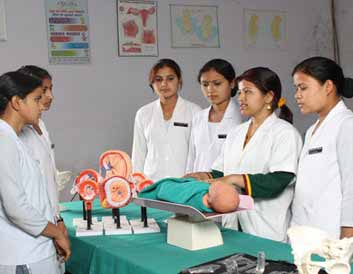
Nursing gives a sense of satisfaction and it is also a rewarding career. Nurses play an important role in the health sector taking care of the sick and helping doctors in several ways. It is said that if the doctor is considered as the head, nurses act like hands. They are so important to the field. Nurses administer medicines to the patients and manage the everyday routine of the patients. Patients can recover fast with the help of a skillful nurse.
Nowadays even men show interest in becoming male nurses. There are several institutes in Rajasthan, Karnataka, and Kerala that give admission to men as well.
The demand for nurses in private and public hospitals is increasing. Several institutes are being set up to cater to the growing needs of this profession.
But you need to remember that you should have a strong urge to serve humanity. Then only you will be able to do justice to the profession. You may have to take care of critically ill patients, work in odd situations and many times work for long hours too. You should be adaptable to situations and work with various doctors under their guidance.
Nursing is offered in India at diploma, graduate, and also postgraduate levels. Most of the colleges offer quality education and are successful in producing nurses who are skilled and trained.
For getting admitted into a Bachelor’s Degree in Nursing, the student must have cleared a 10+2 stream from a recognized board or university. They should have studied chemistry, physics, and biology at their 10+2 level. The duration of the nursing course is usually three to four years.
Master’s degree in nursing is of two years and the candidate must have completed a bachelor's degree in nursing.
For a diploma course, the student must have completed standard tenth or its equivalent from a recognized board or university. The diploma is usually one or two years courses.
Job prospects are excellent in the nursing field. The demand for skilled and qualified nurses is always on the rise and the ratio of patients to nurses is very low as of now.
Nurses can opt to work in government, private hospitals, old age homes, nursing homes, defense, Indian Red Cross Society, Indian Nursing Council, and other state nursing councils.
The pay package at the entry-level is around Rs8000-Rs 15000. With experience, it can increase up to Rs70,000 for senior category nurses.
Students who are interested in doing specialization can opt for various areas like Neonatal nursing, Neuro nursing, Critical care nursing, Emergency, and Disaster Nursing, Psychiatric Nursing, Cardio-Thoracic nursing, Oncology nursing, and several other related fields.
Ultimately you have to decide whether you are suitable for the nursing profession as there are set qualities that will help nurses to excel in this field.
Frequently Asked Questions (FAQs) 2. Who is eligible to study B.Sc Nursing? 3. How long is the B.Sc Nursing course? 4. How do admissions work for B.Sc Nursing? 5. What subjects are studied in B.Sc Nursing? 6. What skills will I gain from this degree? 7. What job roles are available after B.Sc Nursing? 8. Where do B.Sc Nursing graduates work? 9. What is the average salary after completing B.Sc Nursing? 10. Is B.Sc Nursing a good career choice?
1. What is B.Sc Nursing?
B.Sc Nursing (Bachelor of Science in Nursing) is a 4‑year undergraduate professional programme that trains students to become qualified nurses who provide healthcare, patient care, and support in clinical and community settings. It includes classroom learning, practical labs, and hospital training.
To be eligible, students must have passed Class 12 (10+2) with Physics, Chemistry, Biology (PCB) and English, usually with 45–50% aggregate marks. Some colleges may have additional criteria or entrance exams.
The programme typically lasts 4 years, divided into eight semesters, combining theory, labs, and hands‑on clinical experience.
Admission can be based on Class 12 marks, state‑level or university entrance exams (e.g., nursing CET, NEET UG for some institutes, or college entrance tests), depending on the college or state.
Students study subjects like anatomy, physiology, microbiology, nursing foundation, medical‑surgical nursing, community health nursing, paediatric nursing, mental health nursing, and midwifery along with clinical attachments.
You will learn patient care skills, clinical procedures, communication, teamwork, critical thinking, problem‑solving, empathy, and medical ethics, all essential for nursing practice.
Graduates can work as Staff Nurse, ICU Nurse, Emergency Nurse, Community Health Nurse, Nurse Educator, Nursing Superintendent, Clinical Nurse Specialist, Public Health Nurse, or Military Nurse.
They can be hired in hospitals, clinics, nursing homes, elderly care centres, schools, community health programmes, NGOs, armed forces medical units, and research or public health organisations.
In India, fresh graduates earn around ₹2.5 LPA to ₹5 LPA per year on average, which increases with experience and senior roles. Senior nurses and specialised roles can earn ₹6 LPA or more annually.
Yes — it’s a stable and respected healthcare career with strong demand in India and abroad. With rising healthcare needs, nurses are always in demand, and the degree also offers options for higher studies, specialisations, and global opportunities.
Other Popular Courses
Applications for Admissions are open
 Alliance UniversityBangalore
 Centurion University of Technology and Management, BhubaneswarBhubaneswar
 Institute of Management StudiesNoida
 Muthoot Business SchoolKochi
 SRM University - APGuntur
 UID Ahemdabad & Delhi NCRGurgaon
 Kalka Group of InstitutionsMeerut
 Shri Bhawani Niketan Shiksha Samitijaipur
 Lamrin Tech Skill UniversityRupnagar
 Somnath Goel Paramedical InstituteYamunanagar
 Greater Noida Institute of TechnologyGreater Noida
 Guru Nanak Ayurvedic Medical College & HospitalMuktsar
 Solan Homoeopathic Medical College & HospitalSolan
 Kalka Dental collegeMeerut
 Sri Sukhmani Institute of ManagementNew Delhi
 K.R. Mangalam University, GurgaonGurgaon
 City College JayanagarBengaluru
 GNIOT Institute of Management Studies (GIMS)Greater Noida
 Gian Sagar medical College & HospitalPatiala
 Swami Devi Dyal Hospital and Dental CollegePanchkula
 Apeejay Stya UniversitySohna
 Bhojia Dental College and HospitalSolan
 Hierank Business SchoolNoida
 Desh Bhagat UniversityFatehgarh Sahib
 Bhagwant Institute of TechnologyMuzaffarnagar
 Ajeenkya DY Patil UniversityPune
 IIFA Lancaster Institute of DesignBangalore
 JK Business School GurugramGurgaon
 Manav Rachna International Institute Of Research And StudiesFaridabad
 I.T.S College of Health and Wellness Sciences, Greater NoidaGreater Noida