Need Counselling
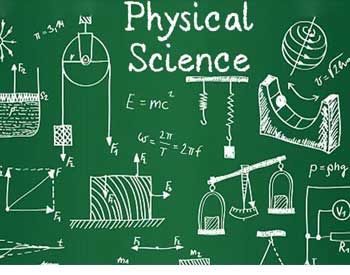
B.Sc Physical Sciences
 Job Pressure
Medium
 Academic Pressure
Medium
 Early Salary
1.5 LPA - 2.2 LPA
Mid Level Salary2.2 LPA - 5.1 LPA
Senior Salary3.6 LPA - 21.2 LPA
Table of Contents
B.Sc Physical Sciences Course Highlights
| Full Form | Bachelor of Science in Physical Science |
| Degree | Bachelors |
| Duration | Course Duration of Bachelor of Science [B.Sc] (Physical Sciences) is 3 Years. |
| Minimum Percentage | 60% in 10+2 from the Recognized Board |
| Average Fees Incurred | INR 30K - 50K |
| Average Salary Offered | INR 1 LPA - 4 LPA |
| Employment Roles | Astronaut, Astronomer, Chemist, Hydrologist, Nurse, College Professor, etc |
B.Sc Physical Science Syllabus
| Semester I | Semester II |
|---|---|
|
Chemistry |
Environmental Science |
|
Computer Science |
Electricity and Magnetism |
|
Mechanics |
Algebra |
| Semester III | Semester IV |
|
Calculus |
Waves and Optics |
|
Thermal Physics and Statistical Mechanics |
Introduction to Partial Differential equations |
|
Real Analysis |
Mathematics Methods |
| Semester V | Semester VI |
|
Theory of equations |
Industrial chemicals & environment |
|
Logic and sets |
Quantum Chemistry |
|
Linear Algebra |
Computational Physics |
B.Sc in Physical Sciences Course Scope(Job Types)
Private Sector Career Options
- Research Scientist
- Clinical Research Scientist
- Chemical Research Scientist
- Pharmacist
- Quality Control Manager
- Assistant Professor
- Chemist
- Astronomer
Private Employment Area
- Food Industry
- Biotechnology Labs
- Pharmaceutical Industry
- Research Institutes and in Water Conservation Organizations
Public Employment Area
- Ministry of Panchayati Raj
- Ministry of Railways
Apply Now Get More Information
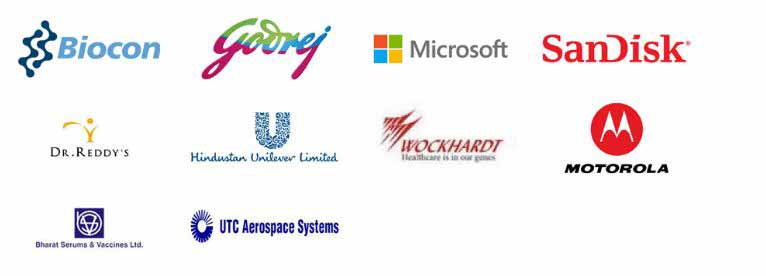
Top Recruiting Companies
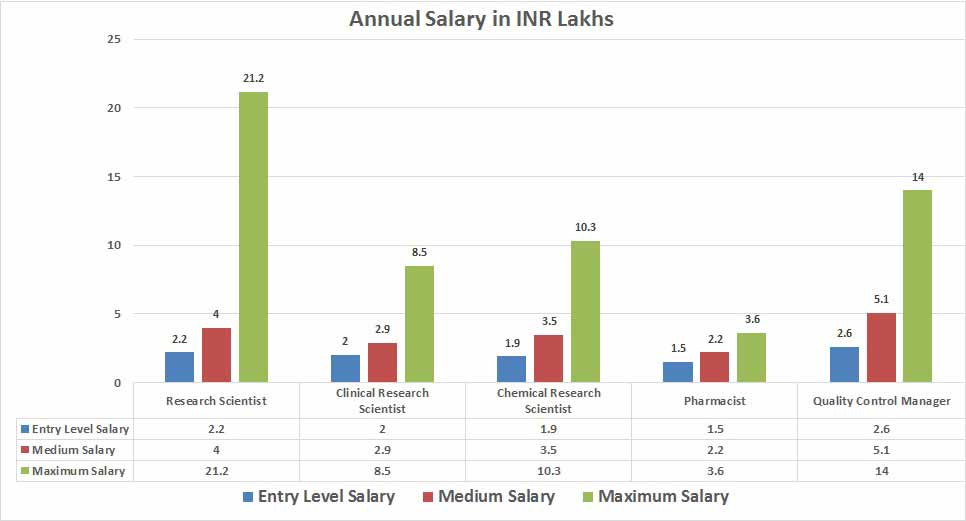
Salary Trends
| Bachelor of Science [B.Sc] (Physical Sciences) | Entry Level Salary (LPA) | Medium Salary (LPA) | Maximum Salary (LPA) |
|---|---|---|---|
| Research Scientist | 2.2 | 4 | 21.2 |
| Clinical Research Scientist | 2 | 2.9 | 8.5 |
| Chemical Research Scientist | 1.9 | 3.5 | 10.3 |
| Pharmacist | 1.5 | 2.2 | 3.6 |
| Quality Control Manager | 2.6 | 5.1 | 14 |
Frequently Asked Questions (FAQs) 1. What is B.Sc. Physical Sciences? 2. What are the eligibility requirements for this course? 3. How long is the B.Sc. Physical Sciences program? 4. What subjects are covered in the syllabus? 5. How is admission into B.Sc. Physical Sciences done? 6. What careers can I pursue after completing this degree? 7. What is the average salary after B.Sc. Physical Sciences? 8. Can I pursue higher studies after this course? 9. What skills are important for success in this field? 10. In which industries can Physical Sciences graduates work?
It is a 3-year undergraduate Bachelor of Science program that provides foundational knowledge in physics, chemistry and mathematics, focusing on scientific principles, analytical thinking and practical lab skills.
Typically, students must have completed 10+2 (Senior Secondary) with Physics, Chemistry and Mathematics (PCM), and many colleges ask for a minimum aggregate percentage (often around 50–60%, depending on the institution).
The course usually lasts 3 years, divided into six semesters.
The curriculum typically includes Mechanics, Electricity & Magnetism, Calculus, Thermal Physics, Waves & Optics, Algebra, Quantum Chemistry, Computational Physics and more.
Many colleges offer merit-based admission based on 12th class science marks; some may also consider entrance exam scores.
Graduates can work in roles such as research scientist, chemical research scientist, assistant professor, chemist, astronomer, quality control manager, and more in both private and public sectors.
Salary ranges vary by role and experience — entry-level salaries often start around INR 1–4 LPA, and with experience can go significantly higher.
Yes. Graduates can continue with M.Sc. in physical sciences, physics, chemistry or mathematics, or go for professional courses, research, teaching and specialized certifications.
Key skills include analytical thinking, quantitative reasoning, problem-solving, laboratory techniques and scientific communication.
They are employable in research institutes, educational institutions, pharmaceutical and chemical industries, environmental agencies, electronics firms, analytical labs, and government organisations.
Other Popular Courses
Applications for Admissions are open
 Ajeenkya DY Patil UniversityPune
 K.R. Mangalam University, GurgaonGurgaon
 I.T.S Engineering CollegeGreater Noida
 Muthoot Business SchoolKochi
 Manav Rachna University, FaridabadFaridabad
 Greater Noida Institute of TechnologyGreater Noida
 SRM University - APGuntur
 Karnavati UniversityGandhinagar
 Gian Sagar medical College & HospitalPatiala
 MERI CollegeNew Delhi
 UPES UniversityDehradun
 Vidya Siri College of PharmacyBangalore
 City College JayanagarBengaluru
 Doon Business SchoolDehradun
 I.T.S College of Health and Wellness Sciences, Greater NoidaGreater Noida
 Woxsen UniversityHyderabad
 UID Ahemdabad & Delhi NCRGurgaon
 Acharya Bangalore Business SchoolBangalore
 DBS Global UniversityDehradun
 GNIOT Institute of Management Studies (GIMS)Greater Noida
 GD Goenka University, GurgaonGurgaon
 Bhojia Dental College and HospitalSolan
 Guru Nanak Dev Dental College & Research InstitutePatiala
 Presidency UniversityBangalore
 Kalka Group of InstitutionsMeerut
 Kalka Dental collegeMeerut
 Shri Bhawani Niketan Shiksha Samitijaipur
 Shoolini UniversitySolan
 Graphic Era University, DehradunDehradun
 Ramkumari College of Veterinary SciencesJhunjhunu