Need Counselling
MBA Business Economics
 Job Pressure
Medium
 Academic Pressure
Medium
 Early Salary
2.5 LPA LPA - 4.5 LPA LPA
Mid Level Salary6.5 LPA LPA - 7.5 LPA LPA
Senior Salary13.5 LPA LPA - 18 LPA LPA
Table of Contents
- MBA in Business Economics Course Highlights
- About MBA in Business Economics Course
- Why MBA in Business Economics?
- MBA in Business Economics Eligibility
- MBA in Business Economics Syllabus
- MBA in Business Economics Career Options
- MBA in Business Economics Scope (Job Types)
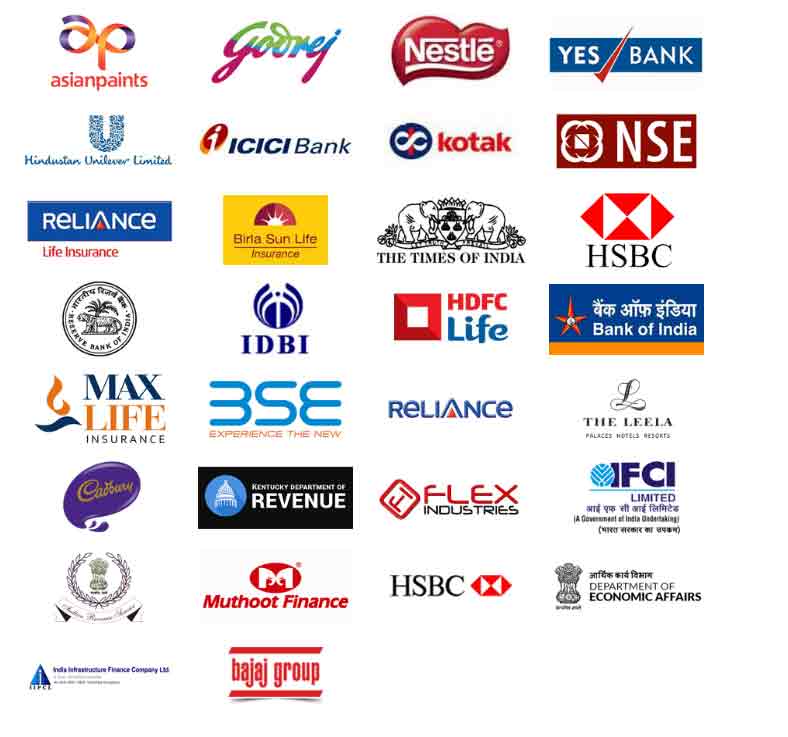
- Top Recruiting Companies
- MBA in Business Economics Salary
- Frequently Asked Questions (FAQs) — MBA in Business Economics
MBA in Business Economics Course Highlights
| Full Form | Master of Business Administration in Business Economics |
| Degree | Masters |
| Duration | Course Duration of Master of Business Administration [MBA] (Business Economics) is 2 Years. |
| Age | No age limit |
| Minimum Percentage | A minimum of 50% average marks in graduation |
| Subjects Required | Not Specified |
| Average Fees Incurred | INR 5 - 20 LPA |
| Average Salary Offered | INR 10 LPA (Source: Payscale) |
| Employment Roles | Banks, Investment Banking, Business Development, Stock Broking Firms, Financial Institutions, Industrial Organizations, Non-Profit Organizations, Export Companies, and Marketing Firms. |
About MBA in Business Economics Course
MBA in Business Economics is a postgraduate degree course that is offered in many universities in India. It can be done on a regular basis or on a correspondence basis. It generally requires two years to complete.
Students who are willing to pursue their careers in the field of economics can opt for this course.
Why MBA in Business Economics?
MBA in Business Economics provides students the grounding in fundamentals of Business Statistics. This improves their problem solving skills and analytical skills.
MBA in Business Economics Eligibility
- Students applying for this course must have a Bachelor’s degree from a recognized university. They must have scored a minimum of 55% aggregate.
- A common entrance exam is held for MBA on the basis of which students are admitted to colleges.
- There are some colleges which hold their own eligibility test.
MBA in Business Economics Syllabus
| Semester I | Semester II |
| Operations Management | Marketing Management |
| Business Analytics | Operation Research and Management |
| Managerial Economics | Corporate Finance |
| Accounting for Managers | Business Research Methodology |
| Foundation of Management | Human Resource Management |
| Business Statistics | Organizational Behaviour |
| Business Environment | Indian Social and Political System |
| Computer Application and E-Commerce | International Business |
| Semester III | Semester IV |
| Fundamentals of Econometrics | Data Mining and Data Warehousing |
| Business Analytics | Economics of Business Strategy |
| Mathematical Statistics | Business Analysis using MS Excel |
| Market Microstructure | Applied Multivariate Analysis |
| Econometrics | Feasibility Analysis |
| Time Series Econometrics | Programming in Oracle |
MBA in Business Economics Career Options
Corporate Manager, Economist, Recruiter, Stock Analyst, Retail Strategist, Public Relations Representative, Market Researcher, Financial Analyst etc.
MBA in Business Economics Scope (Job Types)
1) Private Sector Career options after MBA in Business Economics
- Corporate Manager
- Economist
- Recruiter
- Stock Analyst
- Retail Strategist
- Public Relations Representative
- Market Researcher
- Financial Analyst
Apply Now Get More Information
2) Private Sector Employment areas after MBA in Business Economics
- Business Journals
- Investment Firms
- Research Agencies
- Business School
- Credit Companies
- Mortgage Companies
- Insurance Companies
3) Public Sector Employment areas after MBA in Business Economics
- Ministry of Commerce and Industry/ Ministry of Business
- Ministry of Corporate Affairs
- Ministry of Finance
- Banks
- Insurance Sector
- Educational Institutes
Top Recruiting Companies
MBA in Business Economics Salary
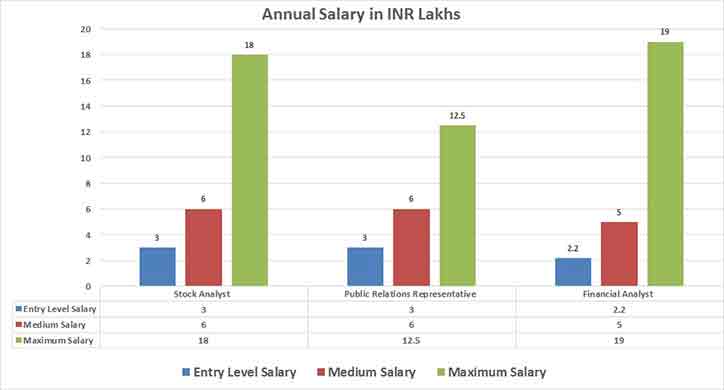
| Master of Business Administration [MBA] (Business Economics) | Entry Level Salary (LPA) | Medium Salary (LPA) | Maximum Salary (LPA) |
|---|---|---|---|
| Stock Analyst | 3 | 6 | 18 |
| Public Relations Representative | 3 | 6 | 12.5 |
| Financial Analyst | 2.2 | 5 | 19 |
Frequently Asked Questions (FAQs) — MBA in Business Economics
- What is an MBA in Business Economics?
MBA in Business Economics is a two-year postgraduate programme that combines core business management training with advanced economic analysis and strategic decision-making skills. It prepares students to interpret economic trends and apply economic principles to business challenges. - Who is eligible to apply for this course?
Candidates must hold a bachelor’s degree from a recognised university with a minimum aggregate (typically around 50–55 %) to be eligible for MBA in Business Economics. Many institutions also accept entrance exam scores for admission. - What subjects will I study in MBA Business Economics?
The curriculum usually includes managerial economics, business analytics, corporate finance, international business, econometrics, data analysis, business strategy, marketing, accounting, statistics and related electives, giving a blend of business and economic academic exposure. - What skills will I develop during this programme?
Students build analytical thinking, economic modelling, data interpretation, forecasting, strategic planning, problem-solving and decision-making skills that are highly valued in both business and economic roles. - What career opportunities are available after MBA in Business Economics?
Graduates can pursue diverse roles such as Business Economist, Financial Analyst, Market Research Analyst, Corporate Manager, Economic Consultant, Strategy Analyst, Policy Analyst, and Business Development Manager. - Which industries hire MBA Business Economics graduates?
Professionals with this degree are in demand across financial services, consulting firms, corporate strategy departments, research agencies, government ministries, international trade bodies and investment firms. - Is practical experience like internships part of the course?
Many programmes include internships, industry projects, case studies and data analysis assignments to give students practical exposure and real-world experience in economic applications. - Can I pursue higher studies after completing this MBA?
Yes. Graduates often choose to further their education with specialised master’s degrees, professional certifications (like CFA or FRM), research degrees or doctoral programmes to deepen expertise and enhance career prospects. - What is the salary range for MBA in Business Economics graduates?
Salary varies by role, sector and experience. Typical entry-level packages for roles like analyst or researcher may start from competitive figures, with mid-level and senior professionals earning significantly higher salaries based on expertise and industry demand. - How does MBA in Business Economics prepare me for modern business challenges?
This programme equips students with the ability to analyse market trends, forecast economic conditions, interpret business data, make strategic decisions and assess global economic impacts, making them valuable in dynamic business environments.
Other Popular Courses
Applications for Admissions are open
 I.T.S Dental college, Murad NagarGhaziabad
 NIIT UniversityAlwar
 Desh Bhagat UniversityFatehgarh Sahib
 UID Ahemdabad & Delhi NCRGurgaon
 Gian Sagar medical College & HospitalPatiala
 Bhojia Dental College and HospitalSolan
 Mai Bhago Ayurvedic Medical CollegeFirozpur
 Shoolini UniversitySolan
 I.T.S College of Health and Wellness Sciences, Greater NoidaGreater Noida
 Amity University, GurugramGurgaon
 Saraswati Group of Colleges, MohaliMohali
 Baddi University of Emerging Sciences & TechnologySolan
 Ramkumari College of Veterinary SciencesJhunjhunu
 Atria UniversityBangalore
 Karnavati UniversityGandhinagar
 Chanakya UniversityBangalore
 Om Sterling Global UniversityHisar
 GD Goenka University, GurgaonGurgaon
 Swami Devi Dyal Hospital and Dental CollegePanchkula
 K.R. Mangalam University, GurgaonGurgaon
 DBS Global UniversityDehradun
 Kalka Group of InstitutionsMeerut
 Ajeenkya DY Patil UniversityPune
 Manav Rachna International Institute Of Research And StudiesFaridabad
 Apeejay Stya UniversitySohna
 GNIOT Institute of Management Studies (GIMS)Greater Noida
 Lamrin Tech Skill UniversityRupnagar
 Shri Bhawani Niketan Shiksha Samitijaipur
 Centurion University of Technology and Management, BhubaneswarBhubaneswar
 Jayoti Vidyapeeth Women’s UniversityJaipur