Need Counselling

MBA Environmental Management
 Job Pressure
Medium
 Academic Pressure
Medium
 Early Salary
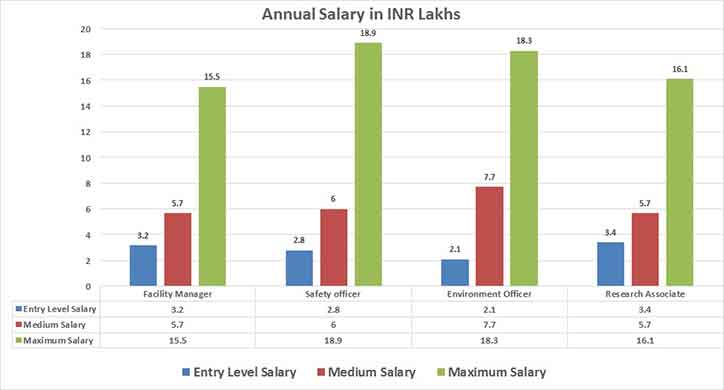
2.1 LPA - 3.4 LPA
Mid Level Salary5.7 LPA - 7.7 LPA
Senior Salary15.5 LPA - 18.9 LPA
Table of Contents
- MBA in Environment Management Course Highlights
- About MBA in Environmental Management Course
- Why MBA in Environmental Management?
- MBA in Environmental Management Eligibility
- MBA Environmental Management Syllabus
- MBA in Environmental Management Career Options
- MBA in Environmental Management Scope (Job Types)
- Top Recruiting Companies
- MBA in Environmental Management Salary
MBA in Environment Management Course Highlights
| Program Full Name | MASTER OF BUSINESS ADMINISTRATION IN ENVIRONMENT MANAGEMENT |
| Program Level | Degree |
| Duration of the Program | 2 Years |
| Examination Type | Semester |
| Eligibility | BBA/BA/B.Sc./B.Com |
| Admission Process | Entrance Exam and Merit Based |
| Average Program Fee | Upto Rs. 1 Lakh |
About MBA in Environmental Management Course
MBA with a specialization in Environmental Management is a master’s degree which is offered in many universities in India. It basically requires two years to complete when done on a regular basis. Students can also pursue this course through distance learning.
The course is designed to provide students an insight of environmental management.
Why MBA in Environmental Management?
The course introduces students with the fundamental and conceptual knowledge of the environment. It helps students to handle global environmental issues with the of effective business practices.
MBA in Environmental Management Eligibility
- Students must have a Bachelor’s degree or any equivalent from a recognized university.
- They must have scored a minimum of 55% aggregate to apply for MBA (Environmental Management).
- A common entrance exam is held for MBA on the basis of which students are admitted.
- There are many colleges in India which hold their own eligibility test.
MBA Environmental Management Syllabus
| First Year | Second Year |
|---|---|
| Business Communication | Operations Research |
| Financial & Management Accounting | Sustainable Devlopment |
| Fundamentals of Environment | Environmental Finance |
| Statistics of Management | Natural Rescource Conversation & Management |
| Financial Management | Corporate Social Responsibility |
| Eco-marketing | Organization Behavior |
| Production Management | Project 2 |
| Operations Management | Environmental Impact Assessment |
| Disaster Management | Project Management |
| Project 1 | - |
| Environmental Economics | - |
| Pollution & Disaster Management | - |
MBA in Environmental Management Career Options
Conservation Manager, Entrepreneur, Corporate green policy expert, Environmental Finance Consultant, Sustainability Manager, Energy Efficiency Finance Manager, Project Manager, etc.
MBA in Environmental Management Scope (Job Types)
1) Private Sector Career options after MBA in Environmental Management
- Environmental Specialist
- Safety officer
- Strategy Consultant
- Facility Manager
- Research Associate
2) Private Sector Employment areas after MBA in Environmental Management
- Environmental Consulting Companies
- Wildlife Sancturies
- Wildlife and Forest Department
3) Public Sector Employment areas after MBA in Environmental Management
- Ministry of Environment and Forests
- Ministry of Earth Sciences
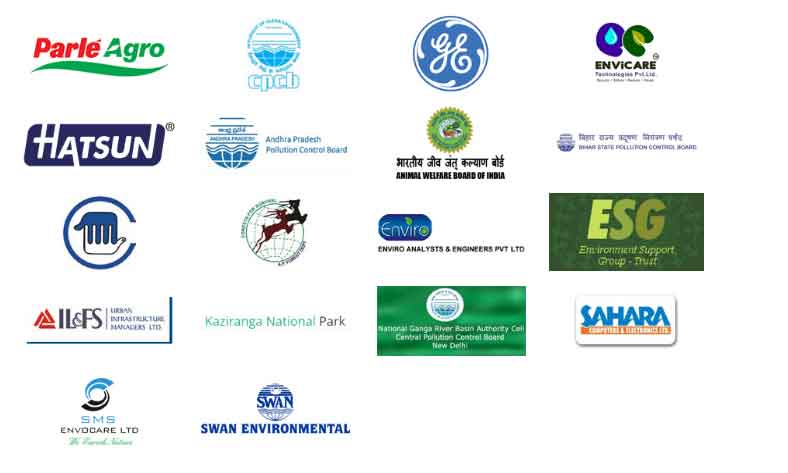
Top Recruiting Companies
MBA in Environmental Management Salary
| Master of Business Administration [MBA] (Environmental Management) | Entry Level Salary (LPA) | Medium Salary (LPA) | Maximum Salary (LPA) |
|---|---|---|---|
| Facility Manager | 3.2 | 5.7 | 15.5 |
| Safety officer | 2.8 | 6 | 18.9 |
| Environment Officer | 2.1 | 7.7 | 18.3 |
| Research Associate | 3.4 | 5.7 | 16.1 |
Frequently Asked Questions (FAQs)
What is MBA in Environmental Management? Who is eligible to apply for this MBA? What subjects are included in the MBA in Environmental Management curriculum? What practical skills will I develop in this programme? Is work experience required to join this MBA specialisation? What career opportunities are available after MBA in Environmental Management? Which industries hire MBA Environmental Management graduates? Will this degree help in sustainability and green business careers? Can I pursue higher studies after this MBA? What is the future scope for professionals with this qualification?
MBA in Environmental Management is a two-year postgraduate programme that combines core business administration skills with knowledge about environmental issues, sustainability, natural resource management and regulatory practices. It prepares students to handle environmental challenges using effective business strategies.
Candidates must hold a bachelor’s degree from a recognised university, usually with at least 55 % or equivalent. Admissions often use entrance exams and merit-based criteria as part of the selection process.
The course blends core management subjects like accounting, communication, operations and finance with environment-focused topics such as environmental economics, sustainable development, eco-marketing, environmental impact assessment and natural resource conservation.
Students gain strategic planning, sustainability analysis, environmental impact assessment, eco-marketing, environmental finance and project management skills, enabling them to design sustainable business solutions.
Most programmes accept fresh graduates, though some institutions may give preference to candidates with work experience or require entrance exam scores for admission.
Graduates can work in roles such as Environmental Specialist, Sustainability Manager, Environmental Consultant, Environmental Compliance Officer, Environmental Analyst, Energy Efficiency Manager and Corporate Green Policy Expert.
Professionals are hired by environmental consulting firms, government ministries, wildlife departments, renewable energy companies, corporate sustainability divisions and NGOs focused on sustainability and environmental policy.
Yes. The programme helps you understand sustainability strategies, regulatory compliance, pollution control and resource management, making you competitive for roles that combine environmental responsibility with business leadership.
Yes. Graduates often pursue specialised master’s degrees, doctoral research, or professional certifications in sustainability, environmental policy or ESG reporting to enhance expertise and career growth.
With increasing demand for sustainable business practices, climate risk management and environmental compliance, graduates are well positioned to take on leadership roles in both private and public sectors where environmental strategy and business planning intersect.
Other Popular Courses
Applications for Admissions are open
 GNIOT Institute of Management Studies (GIMS)Greater Noida
 UNITEDWORLD INSTITUTE OF DESIGNAhmedabad
 Muthoot Business SchoolKochi
 K.R. Mangalam University, GurgaonGurgaon
 Om Sterling Global UniversityHisar
 Solan Homoeopathic Medical College & HospitalSolan
 HRIT UniversityGhaziabad
 Bhagwant Institute of TechnologyMuzaffarnagar
 Hierank Business SchoolNoida
 Atria UniversityBangalore
 Gian Sagar medical College & HospitalPatiala
 Saraswati Group of Colleges, MohaliMohali
 Amity University, GurugramGurgaon
 I.T.S Engineering CollegeGreater Noida
 Guru Kashi UniversityBathinda
 I.T.S College of Health and Wellness Sciences, Greater NoidaGreater Noida
 Shri Bhawani Niketan Shiksha Samitijaipur
 Swami Devi Dyal Hospital and Dental CollegePanchkula
 SRM University - APGuntur
 Bhojia Dental College and HospitalSolan
 Harmony Ayurvedic Medical College & HospitalFirozpur
 Kalka Group of InstitutionsMeerut
 Bennett University, Greater NoidaGreater Noida
 Chandigarh University OnlineMohali
 Greater Noida Institute of TechnologyGreater Noida
 Alliance UniversityBangalore
 IILM University, Greater NoidaGreater Noida
 Manav Rachna International Institute Of Research And StudiesFaridabad
 Vidya Siri College of PharmacyBangalore
 Mai Bhago Ayurvedic Medical CollegeFirozpur