Need Counselling

MBA Power Management
 Job Pressure
Medium
 Academic Pressure
Medium
 Early Salary
1.5 LPA LPA - 2.5 LPA LPA
Mid Level Salary3.5 LPA LPA - 4.5 LPA LPA
Senior Salary5.5 LPA LPA - 8 LPA LPA
Table of Contents
- MBA in Power Management Course Highlights
- About MBA in Power Management Course
- Why MBA in Power Management?
- MBA in Power Management Eligibility
- MBA Power Management Syllabus
- MBA in Power Management Career Options
- MBA in Power Management Scope (Job Types)
- Top Recruiting Companies
- MBA in Power Management Salary
- Watch the video
MBA in Power Management Course Highlights
| Full Form | Mater of Business Administration in Power Management |
| Degree | Masters |
| Duration | Course Duration of Master of Business Administration [MBA] (Power Management) is 2 Years. |
| Age | No Age limit |
| Minimum Percentage | A minimum of 45% to 50% is required in under-graduation |
| Average Fees Incurred | INR 1 to 4 Lakhs |
| Average Salary Offered | INR 7 – 8 LPA (Source: Payscale) |
| Employment Roles | Power Consultant, Power Auditor, Power Market Reporter, Power Trader |
About MBA in Power Management Course
MBA with a specialization in Power Management is a postgraduate degree course which is offered in many universities in India. It generally requires two years to complete when done on a regular basis. The duration of this course can vary when done in correspondence basis.
MBA in Power Management helps to educate students with the conceptual knowledge and details about power management.
Why MBA in Power Management?
The course develops the skills and abilities of students so that they can apply management theories, concepts and methodologies to resolve issues of the power industry.
MBA in Power Management Eligibility
- Students applying for this course must have a Bachelor’s degree or any equivalent from a recognized university.
- There is a common entrance exam for MBA applicants in the performance of which students are admitted to the colleges.
- Some of the colleges hold their own eligibility test.
MBA Power Management Syllabus
| First Year | Second Year |
|---|---|
| Power Financial Management | Strategic Management |
| Regulatory Framework in Power Sector | Financing |
| Energy Power Trading & Network Administration | Energy Conservation & Audits |
| Solar Power Development & Management | Econometrics Risk Management & Insurance |
| Power Sector Structure & Functioning | Executive Communication Pro |
| Executive Communication Pro | Distribution Automation and Smart Grids |
| Power Generation & PSM | Power Sector Planning & Integrated Power Resources Management |
| Project Management & Contract Administration | Supply Chain & Logistics for Power Industry |
| Principal and Practices of Management | Fuel & Water Resource Management |
| Business Research Methods | Energy & Business law |
| IT Applications in Power Sector Power Economics | Wind & Alternative Source of Energy |
| Operations and Materials management | Hydro & Nuclear Power Resources Management |
| Quantitative Methods Business Communication | Power Pricing & Power Purchase Agreements |
| Power Industry Accounting | Global Power Business |
| Power Transmission & Distribution | HSE for Power Industry |
| Human Resource Management | - |
| Organisation Behavior Marketing Management | - |
MBA in Power Management Career Options
Project Manager, Technician, Industrial Engineer, Production Manager, Service Maintenance Manager, Business Analyst, Commodity Trader, EPC Manager, Technical Consultant.
MBA in Power Management Scope (Job Types)
1) Private Sector Career options after MBA in Power Management
- Engineering Manager
- Project Manager
- Industrial Engineer
- Production Manager
- Service Maintenance Engineer
- Technician
2) Private Sector Employment areas after MBA in Power Management
- Oil exploring Companies
- Power Generation Organizations
3) Public Sector Employment areas after MBA in Power Management
- Ministry of Power
- Ministry of New and Renewable Energy
- Ministry of Petroleum and Natural Gas
- Department of Atomic Energy
Apply Now Get More Information
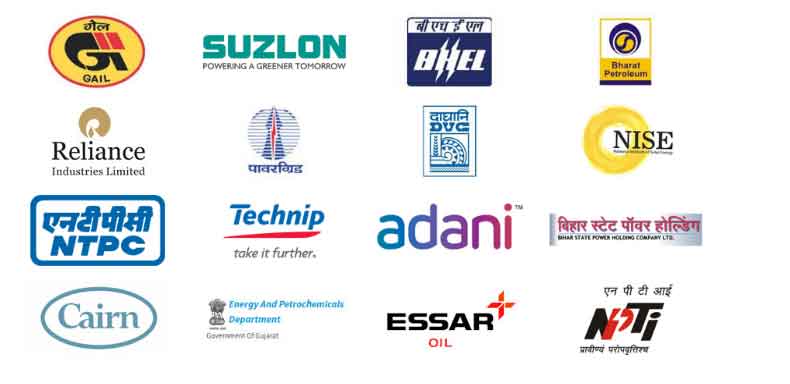
Top Recruiting Companies
MBA in Power Management Salary
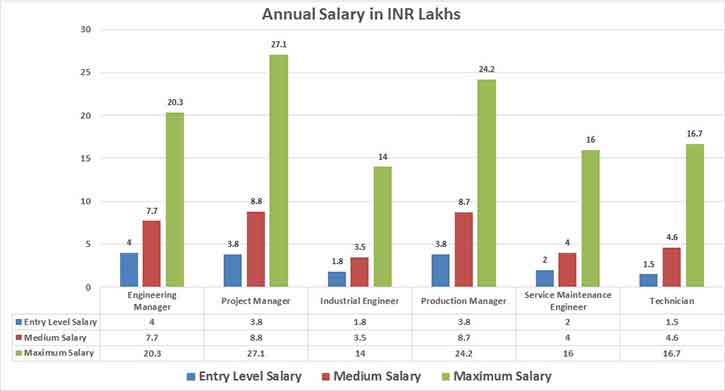
| Master of Business Administration [MBA] (Power Management) | Entry Level Salary (LPA) | Medium Salary (LPA) | Maximum Salary (LPA) |
|---|---|---|---|
| Engineering Manager | 4 | 7.7 | 20.3 |
| Project Manager | 3.8 | 8.8 | 27.1 |
| Industrial Engineer | 1.8 | 3.5 | 14 |
| Production Manager | 3.8 | 8.7 | 24.2 |
| Service Maintenance Engineer | 2 | 4 | 16 |
| Technician | 1.5 | 4.6 | 16.7 |
Frequently Asked Questions (FAQs)
What is MBA in Power Management? Who is eligible to apply for MBA in Power Management? What subjects will I study in this programme? What skills will I develop during this MBA? Is practical training or internship part of the course? What career opportunities are available after this MBA? Which industries hire MBA Power Management graduates? Can I pursue higher studies after this MBA? What is the future scope for MBA Power Management graduates?
10. What salary can graduates of this MBA expect?
MBA in Power Management is a two-year postgraduate programme that blends core business management education with specialised knowledge of the power and energy sector — including generation, transmission, distribution, energy markets, regulation and sustainability.
Candidates must hold a bachelor’s degree from a recognised university with a minimum required percentage. Admissions may be based on entrance exams such as CAT, MAT, CMAT, XAT, CUET or institute tests, followed by group discussion/interview.
The curriculum usually includes core MBA subjects like finance, marketing, HR and operations, along with power-sector topics such as power economics, power pricing, electricity markets, renewable energy, sustainability, energy law, regulation, and analytics.
Students build strategic decision-making, analytical thinking, energy market understanding, financial planning for energy projects, leadership, regulation knowledge and sustainability strategy skills that are valuable in the energy and utility industries.
Yes. Many programmes include summer internships, live projects, industrial visits and case studies to give students real-world exposure to power systems, industry challenges and energy sector operations.
Graduates can pursue roles such as Energy Manager, Power Consultant, Energy Analyst, Regulatory Affairs Specialist, Sustainability Consultant, Project Manager, Power Trading Analyst and Business Development Manager in the energy and utility sectors.
Professionals are in demand across electricity generation and distribution companies, renewable energy firms, power consultancies, regulatory bodies, energy trading houses, infrastructure firms and ESG/sustainability teams in corporates.
Yes. Graduates can continue with specialised master’s degrees, doctoral research, or professional certifications in energy management, renewable energy, sustainability, power systems and related areas to deepen expertise and career prospects.
With global focus on energy transition, renewable growth, sustainability and smart grids, the need for professionals who understand both business and power systems is rising, opening opportunities in leadership, consulting and policy roles.
Salary varies by role, experience and organisation. Entry-level roles in the power and energy sector typically start with competitive packages, and experienced professionals, especially in strategic and analytical roles, can command higher salaries and leadership positions.
Watch the video
MBA in Power Management, Course, Free Scope and Jobs Allschoolscolleges.com
Other Popular Courses
Applications for Admissions are open
 MERI CollegeNew Delhi
 GNIOT Institute of Management Studies (GIMS)Greater Noida
 Rai Technology UniversityBangalore
 Karnavati UniversityGandhinagar
 Presidency UniversityBangalore
 Saraswati Group of Colleges, MohaliMohali
 Atria UniversityBangalore
 Acharya Bangalore Business SchoolBangalore
 IILM University, Greater NoidaGreater Noida
 NIIT UniversityAlwar
 DBS Global UniversityDehradun
 ITS Dental College, Greater NoidaGreater Noida
 Desh Bhagat UniversityFatehgarh Sahib
 Vidya Siri College of PharmacyBangalore
 HRIT UniversityGhaziabad
 Manav Rachna International Institute Of Research And StudiesFaridabad
 Greater Noida Institute of TechnologyGreater Noida
 Apeejay Stya UniversitySohna
 ATLAS SkillTech UniversityMumbai
 Gokul Global UniversitySiddhpur
 I.T.S Dental college, Murad NagarGhaziabad
 Bennett University, Greater NoidaGreater Noida
 Swami Devi Dyal Hospital and Dental CollegePanchkula
 K.R. Mangalam University, GurgaonGurgaon
 Hierank Business SchoolNoida
 Guru Nanak Ayurvedic Medical College & HospitalMuktsar
 I.T.S Engineering CollegeGreater Noida
 Mai Bhago Ayurvedic Medical CollegeFirozpur
 Harmony Ayurvedic Medical College & HospitalFirozpur
 Chanakya UniversityBangalore