Need Counselling
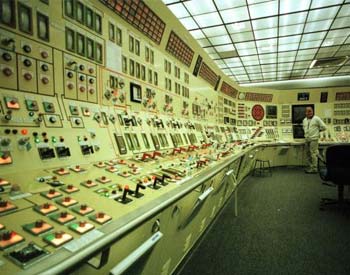
M.Tech Control Systems and Instrumentation
 Job Pressure
Medium
 Academic Pressure
Medium
 Early Salary
3 LPA - 4 LPA
Mid Level Salary5 LPA - 7 LPA
Senior Salary7 LPA - 8 LPA
Table of Contents
- M.Tech. in Control Systems and Instrumentation Course Highlights
- About M.Tech in Control Systems and Instrumentation
- What is M.Tech in Control Systems and Instrumentation?
- M.Tech in Control Systems and Instrumentation Eligibility
- M.Tech. in Control Systems and Instrumentation Syllabus
- M.Tech in Control Systems and Instrumentation Career Options
M.Tech. in Control Systems and Instrumentation Course Highlights
| Examination Type | Semester System |
| Course Level | Postgraduate |
| Duration | 2 years |
| Eligibility | Graduation from a recognized university |
| Admission Process | Based on performance in GATE |
| Course Fee | INR 30,000 - 2 lacs |
| Average Starting Salary | INR 5 - 7 lacs |
| Top Recruiting Organizations' | ISRO, DRDO, NAL, HAL, Caterpillar, Infineon Technologies, Soliton, CISCO, ABB, Tata Consultancy Services, Hyundai, Siemens, Cadburys, Times of India, Ford, Tata Iron & Steel, Ranbaxy, CEAT Tyres, etc. |
| Top Recruiting Areas' | Process and manufacturing industries such as steel, oil, petrochemical, power, and defense production, and suchlike. |
| Top Job Profiles | Control and Instrumentation Engineers, Network Planner, Electronic Communications Technician, among others such. |
About M.Tech in Control Systems and Instrumentation
M.Tech with a specialization in Control and Instrumental Engineering is a postgraduate course which requires two years to complete. It is offered in many universities in India and can be done in regular basis or correspondence basis.
The course is designed to train students with the design, plan, install, operate, control and maintain complex systems/ equipment.
What is M.Tech in Control Systems and Instrumentation?
M.Tech in Control and Instrumental Engineering is the study of designing, developing, operating and maintaining equipment/ machinery. Students are trained in the skills and techniques which are used to monitor and control this machinery and processes.
M.Tech in Control Systems and Instrumentation Eligibility
- Students seeking admission in this course must have a B.Tech degree or any equivalent (in the relevant stream) in which they must have scored a minimum of 50% aggregate.
- SC/ ST students have 5% of relaxation in the minimum aggregate.
M.Tech. in Control Systems and Instrumentation Syllabus
| Semester 1 | Semester 2 | |
|---|---|---|
| Basic Control System | Control Devices | |
| Systems Engineering | Modern Control System | |
| Digital Control Systems | Nonlinear And Adaptive Control | |
| Elective – I | Elective-II | |
| Real-Time Instrumentation Techniques | Optimal And Robust Control | |
| Advance Power Electronics | Multivariable Control System | |
| Robot Dynamics & Control | Measurement System & Error Analysis | |
| Writing Skills & Presentation-I | Writing Skills & Presentation-II | |
| Practicals & Sessionals Simulation Lab | Practicals & Sessionals Control System Lab | |
| Semester 3 | Semester 4 | |
| Power System Dynamics & Control | Microprocessor Based Control System | |
| Intelligent Control | Practicals & Sessionals | |
| Control Systems Design | Dissertation Part-II | |
| Digital Signal Processing | - | |
| Elective-III | - | |
| Advance Control System Lab | - | |
| Drives and Control | - | |
| Dissertation Part-I | - | |
M.Tech in Control Systems and Instrumentation Career Options
Students having M.Tech degree in Control and Instrumental Engineering can seek employment in many areas such as Cement Manufacturing Companies, Thermal Power Plants, Steel Plants, Public/ Private Firms, Chemical Industries, R& D organizations etc.
Frequently Asked Questions (FAQs) 2. Who can study this course? 3. How long does the M.Tech programme last? 4. What subjects are studied in this course? 5. How do admissions work for this course? 6. What skills will I gain from M.Tech in Control Systems and Instrumentation? 7. What jobs can I get after completing this degree? 8. Which industries hire graduates from this programme? 9. What is the average starting salary after this course? 10. Is M.Tech in Control Systems and Instrumentation a good career choice?
1. What is M.Tech in Control Systems and Instrumentation?
M.Tech in Control Systems and Instrumentation is a 2‑year postgraduate engineering programme that focuses on measurement systems, control theory, automation, instrumentation, and advanced system design used in industries to monitor and control machines and processes.
Students with a Bachelor’s degree (B.Tech/B.E.) in Electronics, Electrical, Instrumentation, Electronics and Communication, or related engineering fields from a recognised university are eligible for this programme.
The programme usually lasts 2 years, divided into four semesters of theory, labs, research, and project work.
Students study key subjects such as modern control systems, system modelling, instrumentation techniques, digital control systems, signal processing, and advanced control design along with labs and practical projects.
Admission is mainly based on entrance exam scores such as GATE or university‑level entrance tests, and sometimes college interviews or counselling depending on the institute.
You will learn control system analysis, instrumentation and measurement techniques, automation, system simulation, problem‑solving, and technical research skills applicable to industry and R&D.
Graduates can work as Control Systems Engineer, Instrumentation Engineer, Automation Specialist, Process Control Engineer, Embedded Systems Engineer, Robotics Engineer, or R&D Engineer.
Jobs are available in manufacturing, automation, power generation, aerospace, oil and gas, pharmaceuticals, defence, IT firms, and research laboratories that need control and instrumentation expertise.
Average starting salaries for graduates typically range from around ₹4 LPA to ₹12 LPA, depending on skills, placement record of the institution, and industry demand.
Yes, it’s a good choice if you enjoy automation, electronics, control theory, instrumentation, and problem‑solving, with strong career opportunities in industries focused on smart systems, industrial automation, and advanced technologies.
Other Popular Courses
Applications for Admissions are open
 MERI CollegeNew Delhi
 UID Ahemdabad & Delhi NCRGurgaon
 K.R. Mangalam University, GurgaonGurgaon
 Manav Rachna International Institute Of Research And StudiesFaridabad
 Harmony Ayurvedic Medical College & HospitalFirozpur
 Somnath Goel Paramedical InstituteYamunanagar
 SRM University - APGuntur
 Karnavati UniversityGandhinagar
 Pimpri Chinchwad UniversityPune
 Hierank Business SchoolNoida
 GNIOT Institute of Management Studies (GIMS)Greater Noida
 DBS Global UniversityDehradun
 Lamrin Tech Skill UniversityRupnagar
 Shri Bhawani Niketan Shiksha Samitijaipur
 Bhojia Dental College and HospitalSolan
 Muthoot Business SchoolKochi
 Nims UniversityJaipur
 Guru Nanak Dev Dental College & Research InstitutePatiala
 Kalka Dental collegeMeerut
 Lovely Professional UniversityJalandhar
 Bennett University, Greater NoidaGreater Noida
 UNITEDWORLD INSTITUTE OF DESIGNAhmedabad
 IIFA Lancaster Institute of DesignBangalore
 Chandigarh University OnlineMohali
 GD Goenka University, GurgaonGurgaon
 Rai Technology UniversityBangalore
 Manav Rachna University, FaridabadFaridabad
 City College JayanagarBengaluru
 Shoolini UniversitySolan
 HRIT UniversityGhaziabad