Need Counselling
B.Sc in Industrial Microbiology
 Job Pressure
Medium
 Academic Pressure
Medium
 Early Salary
3L LPA - 6L LPA
Mid Level Salary6L LPA - 8L LPA
Senior Salary8L LPA - 12L LPA
Table of Contents
- B.Sc in Industrial Microbiology Course Highlights
- B.Sc in Industrial Microbiology Course Overview
- Eligibility Criteria for B.Sc in Industrial Microbiology Course
- Require Skills set B.Sc in Industrial Microbiology Course
- Common Entrance Examination for B.Sc in Industrial Microbiology Course
- B.Sc in Industrial Microbiology Course Syllabus
- Job Profile after B.Sc in Industrial Microbiology Course
- Top Recruiting Companies
- B.Sc in Industrial Microbiology Course Approx. Salary Trends in Lakh Per Annum*
- Video B Sc in Industrial Microbiology, jobs after BSc microbiology, Scope, Admission
B.Sc in Industrial Microbiology Course Highlights
| Course Level | Graduate |
| Duration | 3 Years |
| Examination type | Semester System |
| Eligibility | 10+2 with recognized board |
| Admission Process | Counselling after taking Entrance Examination |
| Course Fee | INR 20,000 to 1,90,000 |
| Average Starting Salary | INR 5,00,000 to 10,00,000 |
| Employment Areas | Biochemical Plants, Bottling Plants, Chemical Industries, Colleges & Universities, Cosmetic Industries, Dairy Industries, Fertilizer Industries, Food Beverage Industries, Government and Private Hospitals, Pharmaceutical, Research Organizations, Water Processing Plants, etc. |
| Job Profiles | Bacteriologist, Biochemist, Biomedical Scientist, Biotechnologist, Cell Biologist, Environmental Microbiologist, Food Microbiologist, Geneticist, Immunologist, Industrial Microbiologist, Medical Microbiologist, Mycologist, etc. |
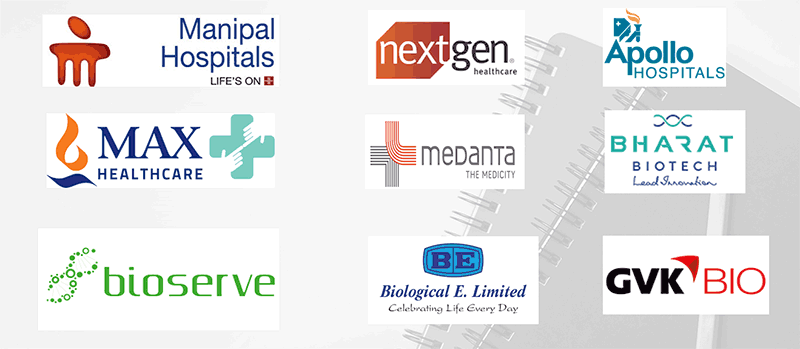
| Top Recruiting Organizations | Apollo Hospitals, Bharat Biotech, Biological E. Limited, Bartronics, Bioserve, GVK Biosciences Private Limited, Ocium Biosolutions Limited., etc. |
B.Sc in Industrial Microbiology Course Overview
B. Sc. Industrial Microbiology or Bachelor of Science in Industrial Microbiology is a course of three years duration. It is an under-graduation specializing in Microbiology. It deals in explaining the usage of microorganisms for the purpose of manufacturing food as well as industrial products for both humans and animals. It is a branch of food microbiology. Both natural isolates, laboratory-selected mutant, or genetically engineered organisms are used in industrial processes as microorganisms. This course is divided into six semesters spanning over three years and is highly career-oriented and fruitful.
Eligibility Criteria for B.Sc in Industrial Microbiology Course
- As a minimum criterion of eligibility, the course requires the candidate to have attained the 10+2 qualification from a recognized educational Board with a minimum aggregate score of 55%-60%, and Physics, Chemistry, Biology, and/or Mathematics as main subjects.
Require Skills set B.Sc in Industrial Microbiology Course
- Good communication and observation
- Ability to answer questions and offer advice
- Dealing with emotionally charged situations
- Decision Making Skills
- Organizational Skills
Common Entrance Examination for B.Sc in Industrial Microbiology Course
- AIIMS Entrance Exams – All India Institute of Medical Science Entrance Exam
- AIPMT- All India –Pre Medical/ Pre Dental Entrance Exam
- AIMS- Amrita Institute of Medical Sciences
- AFMC- Armed Forces Medical College exam
- AIPGDET – All India Post Graduate Dental Entrance Test
- AIPGMET – All India Post Graduate Medical Entrance Test
- All India Common Entrance Exam, Vinayaka Mission University
- AIPGMEE – All India Post Graduate Medical/Dental Entrance Exam
- All India Common Entrance test, Dr. DY Patil Medical College
- AMU Medical Entrance Exam
- BLDE University undergraduate entrance Test
- DUMET – Delhi University Medical/ Dental Entrance Test
- DUPGMET – Delhi University Post Graduate Medical Entrance Test
- DUSET- Delhi University Super- specialty Entrance Test
- Haryana PMT -Haryana Pre- Medical Test
- HP CPMT – Himachal Pradesh Combined Pre Medical Entrance Test HP CPMT Medical Entrance Exam
- JIPMER – Jawaharlal Institute of Post-graduate Medical Education and Research
- KLE UGAIET / PGAIET – KLE University Under Graduate/Post Graduate All India Entrance Test
- KEAM- Kerala Entrance Exam (MBBS, BDS, BV.Sc AND AH)
- Medical Entrance Exams in Delhi
- Medical entrance examinations in Andhra Pradesh
- MP DMAT – All India Dental & Medical Admission Test – Madhya Pradesh
- SRM Institute of Science and Technology Medical Entrance Exam
B.Sc in Industrial Microbiology Course Syllabus
| YEAR I | YEAR II |
|---|---|
| Fundamentals of Industrial Microbiology | Microbial Physiology |
| Microbial Biochemistry | Environmental Microbiology- I |
| Basic Microbial Techniques | Food Microbiology |
| Microbial Genetics | Environmental Microbiology –II |
| Practical-I | Practical-II |
| YEAR III | |
| Agricultural Microbiology | |
| Fermentation Technology | |
| Microbial Bio Fertilizer | |
| Microbial Biotechnology | |
| Practical-III | |
Job Profile after B.Sc in Industrial Microbiology Course
- Bacteriologist
- Biochemist
- Biomedical Scientist
- Biotechnologist
- Cell Biologist
- Environmental Microbiologist
- Food Microbiologist
- Geneticist
- Immunologist
- Industrial Microbiologist
- Medical Microbiologist
- Mycologist
Top Recruiting Companies
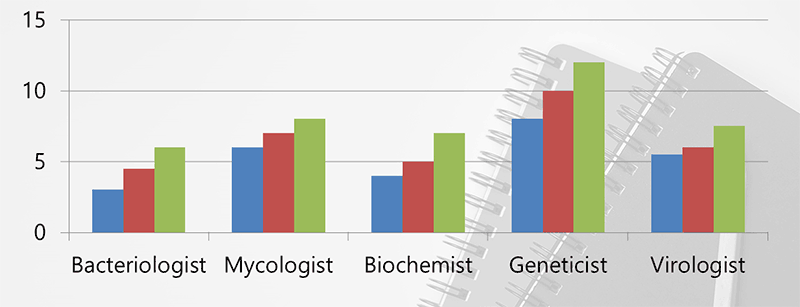
B.Sc in Industrial Microbiology Course Approx. Salary Trends in Lakh Per Annum*
| Job Profile | Average Entry Level Salary | Average Medium Salary | Average Maximum Salary |
| Bacteriologist | 3.0 | 4.5 | 6.0 |
| Mycologist | 6.0 | 7.0 | 8.0 |
| Biochemist | 4.0 | 5.0 | 7.0 |
| Geneticist | 8.0 | 10 | 12 |
| Virologist | 5.5 | 6.0 | 7.5 |
Annual Salary Trend
Frequently Asked Questions (FAQs) 2. Who is eligible to study this programme? 3. How long is the B.Sc Industrial Microbiology course? 4. What subjects are studied in this course? 5. How do admissions work for B.Sc Industrial Microbiology? 6. What skills will I gain from this degree? 7. What career options are available after this course? 8. Where can B.Sc Industrial Microbiology graduates work? 9. What is the average starting salary after completing this course? 10. Is B.Sc in Industrial Microbiology a good career choice?
1. What is B.Sc in Industrial Microbiology?
B.Sc in Industrial Microbiology is a 3‑year undergraduate science programme that focuses on the study and industrial application of microorganisms. It teaches how microbes are used to make products like enzymes, antibiotics, biofuels, and food products in manufacturing and biotech industries.
To be eligible, students must have passed Class 12 (10 + 2) with Physics, Chemistry, Biology, and sometimes Mathematics from a recognised board, usually with around 50 % aggregate marks (criteria vary by college).
The course typically lasts 3 years, divided into six semesters, with a mix of theory, practical labs, and sometimes projects or internships.
Core subjects include industrial microbiology, microbial genetics, microbial biochemistry, fermentation technology, environmental microbiology, agricultural microbiology, and lab techniques to prepare you for real‑world applications.
Admissions are usually based on Class 12 marks (merit), and some colleges may also use entrance exams or counselling as part of the selection process.
You’ll develop laboratory and research skills, microbiological analysis, understanding of fermentation processes, quality testing, problem‑solving, and scientific communication, all useful in industrial biotech jobs.
Graduates can work as Industrial Microbiologist, Bacteriologist, Food or Environmental Microbiologist, Biochemist, Biotechnologist, Cell Biologist, Biomedical Scientist, Mycologist, Geneticist, and Immunologist in various sectors.
Job opportunities exist in pharmaceutical companies, biotechnology firms, food processing and dairy industries, chemical and cosmetic industries, water treatment plants, research labs, and quality control departments.
In India, average starting salaries can range from around ₹5 LPA to ₹10 LPA or more depending on company, skills, and role; specialised roles (like geneticist) may offer higher packages.
Yes — it’s a good choice if you enjoy biology, science, and practical lab work, and want to work in industrial biotech, food tech, pharmaceuticals, or environmental science. It also offers options for higher studies (M.Sc, research, or specialized training) to expand your career further.
Video B Sc in Industrial Microbiology, jobs after BSc microbiology, Scope, Admission
Watch the video: B.Sc in Industrial Microbiology
Other Popular Courses
Applications for Admissions are open
 UPES UniversityDehradun
 I.T.S College of Health and Wellness Sciences, Greater NoidaGreater Noida
 Baddi University of Emerging Sciences & TechnologySolan
 MERI CollegeNew Delhi
 ITS Dental College, Greater NoidaGreater Noida
 Himachal Institute of Dental Sciences, SirmaurSirmaur
 Ajeenkya DY Patil UniversityPune
 Vidya Siri College of PharmacyBangalore
 Swami Devi Dyal Hospital and Dental CollegePanchkula
 SDGI Global UniversityGhaziabad
 Centurion University of Technology and Management, BhubaneswarBhubaneswar
 UNITEDWORLD INSTITUTE OF DESIGNAhmedabad
 Greater Noida Institute of TechnologyGreater Noida
 Ramkumari College of Veterinary SciencesJhunjhunu
 City College JayanagarBengaluru
 Bennett University, Greater NoidaGreater Noida
 Guru Nanak Dev Dental College & Research InstitutePatiala
 Muthoot Business SchoolKochi
 Ganga Group Of InstitutionsNew Delhi
 Manav Rachna International Institute Of Research And StudiesFaridabad
 Manav Rachna University, FaridabadFaridabad
 IILM University, Greater NoidaGreater Noida
 Solan Homoeopathic Medical College & HospitalSolan
 JK Business School GurugramGurgaon
 Atria UniversityBangalore
 Saraswati Group of Colleges, MohaliMohali
 Kalka Group of InstitutionsMeerut
 Mai Bhago Ayurvedic Medical CollegeFirozpur
 Alliance UniversityBangalore
 Jayoti Vidyapeeth Women’s UniversityJaipur