Need Counselling
B.Sc Botany
 Job Pressure
Medium
 Academic Pressure
Medium
 Early Salary
3 LPA - 3.7 LPA
Mid Level Salary6.3 LPA - 7.1 LPA
Senior Salary10.2 LPA - 12.1 LPA
Table of Contents
B.Sc Botany Course Highlights
| Stream | Science |
| Course Level | Undergraduate |
| Duration | 3 years |
| Eligibility | 10+2 with PCM/PCB [Physics, Chemistry, Mathematics or Biology] |
| Admission Process | Merit or Entrance Examination |
| Average Annual Fees | INR 15,000-1,00,000 |
| Average Starting Salary | INR 4-8 LPA |
| Recruiting Areas | Agricultural Research Services, Botanical Survey Senters, Eco-botany,, Environmental Management Units, Fermentation Industries, Farm Management Organizations, Floriculture Sector, etc. |
Top Job Positions |
Plant Pathologist, Ecologist, Nursery Manager, Plant Explorer, Conservationist, Botanist, Ecologist, Farming Consultant, EthnoBotanist, Forester, Horticulturist, etc. |
| Top Recruiting Companies | National Chemical Laboratory, Indian Institute of Ecology, Greenpeace, Environmental Education, Nature Conservation Foundation, Science and Environment Industry, etc. |
About the Programme B.Sc Botany
It is a branch of biology also known as Phytology or Plant Science as it deals with the study of the Kingdom of Plant and its classification. The complete study of plants, their structure, classification, and functions are done under this branch of Science called Botany.
Botany is derived from the ancient Greek word botane which means “Grass”, therefore the study of grass, plant, trees is known as Botany.
B.Sc Botany Course Description
This is a Bachelor's undergraduate degree in Botany therefore it takes a minimum of three academic years to complete this course, which is further divided into six semesters. It can be pursued through distance learning mode or part-time as well.
What is Bachelor of Science [B.Sc] (Botany)?
The course deals with the scientific study of various aspects of plants, fungi, and algae-like structure, metabolism, growth, reproduction, chemical properties, diseases, physiology, and anatomy.
One can further pursue his/her studies for Masters's and doctorate to go for research or in the education sector. One get-acquire job like Ecologist, Administrator, Plant Biochemist, Forester, etc.
Subjects that use to be studied during the course are Diversity of Microbes, Cell biology, Genetics, Plant Anatomy, Plant Embryology, Biology, and Diversity of seed Plants.
B.Sc Botany Eligibility Criteria
- One should complete his/her 10+2 with a recognized Board or equivalent to it with a minimum aggregate of 50%.
- Should complete 10+2 with Science as mandatory subjects.
- Admission can be on the basis of a merit list depending upon the University norms.
B.Sc Botany Syllabus
|
Semester I |
Semester II |
|---|---|
|
Plant taxonomy And Embryology |
Cell Biology, Genetics & Plant breeding |
|
Diversity Of Archegoniates & Anatomy |
Practical Lab |
|
Plant Ecology & Phytogeography |
Microbial Diversity, Algae, and Fungi |
|
Semester III |
Semester IV |
|
Algae Anatomy |
Fungi Anatomy |
|
Bacteria |
Practical Lab |
|
Semester V |
Semester VI |
|
Biodiversity- Mycology, and Phytopathology |
Chemistry |
|
Physics |
Biology |
|
Research Methods |
Practical Lab |
B.Sc Botany Scope(Job Types)
1)Private Sector Career Options
- Ecologist
- Plant Biochemist
- Researcher
- Environmental consultant
- Park Ranger
- Botanist
- Nursery or Green House manager
Apply Now Get More Information
2)Private Employment Area
- Biotechnology Firms
- Plant Resource Laboratories
- Educational Sector
- Food and Chemical Industry
- National Parks etc.
3)Public Employment Area
- Ministry of Consumer Affairs
- Food and Public Distribution
- Indian Railways
- Ministry of Health and Family Welfare
- Ministry of Food Processing Industries
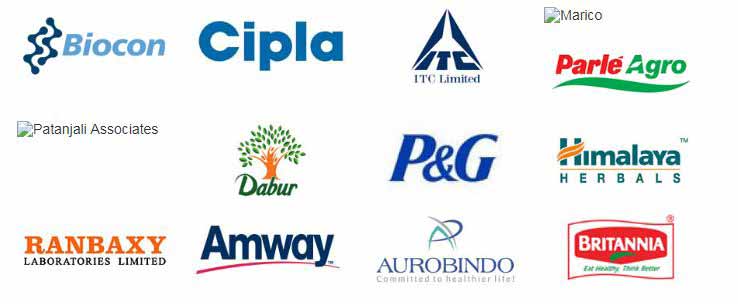
Top Recruiting Companies After B.Sc Botany
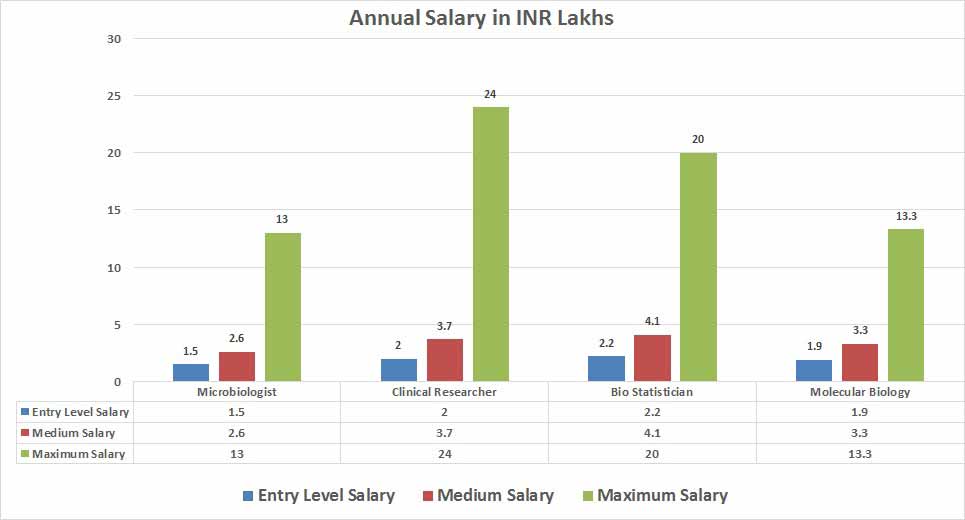
Salary Trends B.Sc Botany
| Master of Science [B.Sc] (Botany) | Entry Level Salary (LPA) | Medium Salary (LPA) | Maximum Salary (LPA) |
|---|---|---|---|
| Ecologist | 3 | 6.3 | 12.1 |
| Plant Breeder | 3.2 | 6.7 | 10.2 |
| Horticulturist | 3.6 | 7.1 | 11.1 |
| Plant Physiologist | 3.7 | 6.7 | 11.2 |
Frequently Asked Questions (FAQs) 1. What is B.Sc in Botany? 2. How long is the programme? 3. What is the eligibility criteria? 4. How are admissions done? 5. What subjects are studied in this course? 6. What skills do students gain? 7. What career options are available after B.Sc Botany? 8. Where can B.Sc Botany graduates work? 9. What salary can I expect after graduation? 10. Can I pursue higher studies after B.Sc Botany?
B.Sc Botany is a three‑year undergraduate science degree that focuses on the scientific study of plants, algae, fungi and related life forms, including their structure, growth, reproduction, physiology, ecology and classification.
The standard duration of B.Sc Botany is 3 years, typically divided into six semesters with both theory and practical laboratory components.
To be eligible, you usually need to have completed Class 12 (10+2) with science stream, including Biology and other science subjects (Physics, Chemistry and/or Mathematics). Minimum marks requirements vary by college (often around 50% or higher).
Admissions are generally merit‑based (12th marks) or through entrance exams conducted by universities or state boards, followed by counselling.
Typical coursework includes cell biology, genetics, plant anatomy and physiology, plant taxonomy, ecology and phytogeography, microbiology, mycology, plant biotechnology and practical laboratory work.
Students develop scientific observation, experimental and laboratory skills, analytical thinking, plant identification, ecological understanding, research methodology and data interpretation.
Graduates can work as botanists, ecologists, horticulturists, plant biochemists, environmental consultants, researchers, nursery/greenhouse managers, conservationists, plant pathologists, agricultural scientists and biology educators.
Jobs are available in research institutions, agricultural and forestry departments, environmental agencies, botanical gardens, seed companies, biotechnology and pharmaceutical firms, education (schools/colleges), NGOs and government agencies like the Botanical Survey of India.
In India, entry‑level salaries for B.Sc Botany roles typically range from around ₹3 LPA to ₹7 LPA depending on the job type and organisation, with higher pay possible in specialised research or managerial roles.
Yes. Common further studies include M.Sc in Botany, Biotechnology, Environmental Science, Forestry and related fields, as well as M.Phil/Ph.D. for research, B.Ed for teaching, or MBA for management roles.
Other Popular Courses
Applications for Admissions are open
 Pimpri Chinchwad UniversityPune
 City College JayanagarBengaluru
 IILM University, GurugramGurgaon
 Ganga Group Of InstitutionsNew Delhi
 Muthoot Business SchoolKochi
 Sunder Deep Group of InstitutionsGhaziabad
 DBS Global UniversityDehradun
 Institute of Management StudiesNoida
 Amity University, MohaliMohali
 Alliance UniversityBangalore
 IILM University, Greater NoidaGreater Noida
 I.T.S College of Health and Wellness Sciences, Greater NoidaGreater Noida
 Kalka Dental collegeMeerut
 Desh Bhagat UniversityFatehgarh Sahib
 Himachal Institute of Dental Sciences, SirmaurSirmaur
 Presidency UniversityBangalore
 Swami Devi Dyal Hospital and Dental CollegePanchkula
 Ajeenkya DY Patil UniversityPune
 JK Lakshmipat Universityjaipur
 Om Sterling Global UniversityHisar
 Baddi University of Emerging Sciences & TechnologySolan
 K.R. Mangalam University, GurgaonGurgaon
 Lamrin Tech Skill UniversityRupnagar
 Sage University, IndoreIndore
 UNITEDWORLD INSTITUTE OF DESIGNAhmedabad
 Kalka Group of InstitutionsMeerut
 Graphic Era University, DehradunDehradun
 I.T.S Dental college, Murad NagarGhaziabad
 Mai Bhago Ayurvedic Medical CollegeFirozpur
 Lovely Professional UniversityJalandhar